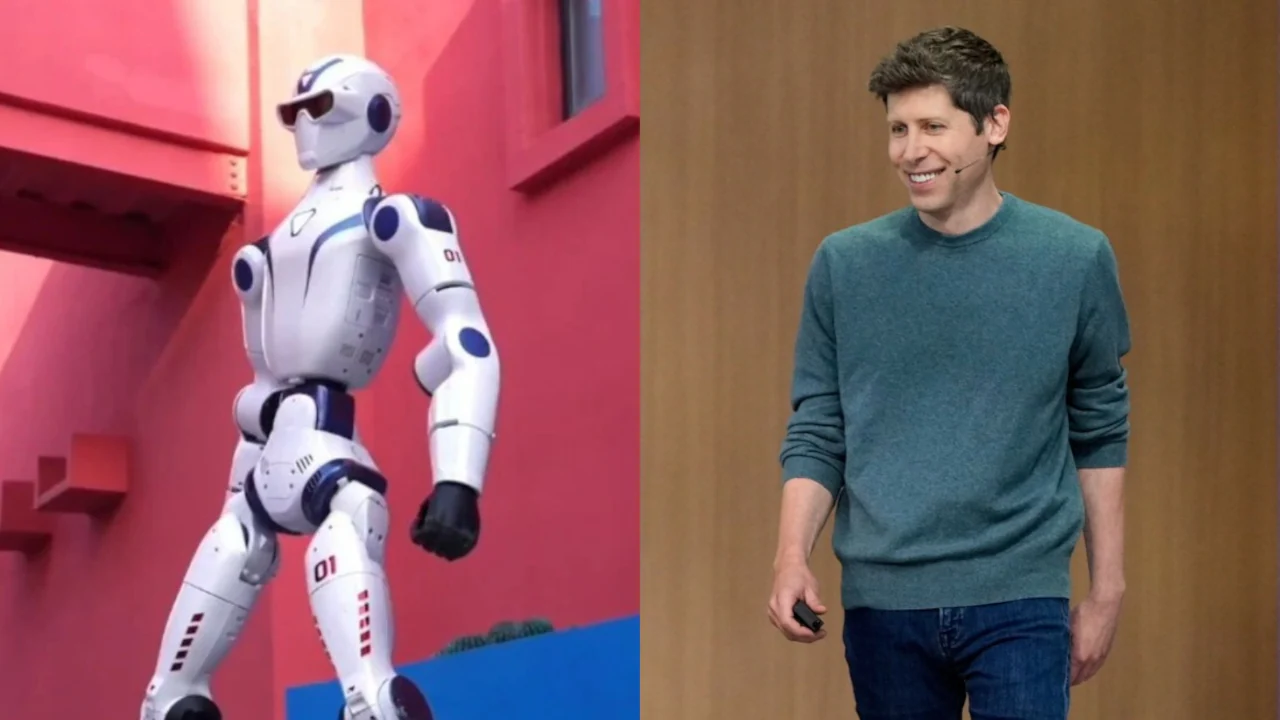
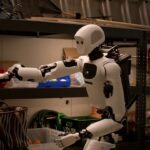
OpenAI is building humanoid robots, but readers should not mistake its early target for a consumer launch. In a Fortune interview published September 15, chief executive Sam Altman said the company was working on the technology and expected a “cool demo” in 2027. He placed robots appearing on streets later still. The distinction between a demonstration and a dependable product is the most important part of the story.
The comment has resurfaced in recent AI and robotics discussions, but it is not a new product announcement this week. OpenAI has not disclosed a robot design, price, release schedule, manufacturing partner or confirmed commercial deployment. What Altman offered was a glimpse of where the company thinks its increasingly capable models might go after chat, coding and digital agents.
A chatbot can generate an answer and be corrected on the next turn. A physical machine must perceive a changing room, move safely through it, grip unfamiliar objects and respond when a human steps into its path. Those demands bring model reasoning together with cameras, sensors, motors, batteries and real-time control. An impressive staged demo would show progress, but it would not by itself establish that the system can work reliably across homes, hospitals or warehouses.
The economics are different too. Running a model is expensive; building, maintaining and insuring a fleet of machines adds another layer of cost. Even if a general-purpose model can tell a robot what to do, the machine still needs durable hardware and enough useful tasks to justify its price. That is why the 2027 date should be read as an engineering milestone, not a delivery promise.
OpenAI has spent years building models that combine language, images and other inputs. Those capabilities could help a machine interpret instructions, identify objects and plan several steps ahead. The transition from software agents to machines is conceptually attractive; a system that can use a website might eventually coordinate with a robot that can act in the physical world. TechBooky has covered OpenAI’s push toward agents that keep working after a user leaves, a related but much less physically demanding direction.
The challenge is closing the loop between perception and action. A model may correctly recognise a cup yet misjudge its weight or the force needed to pick it up. It may follow an instruction while overlooking a person nearby. Training data, simulations and safety checks must address those ordinary failures before a robot can be trusted outside a controlled environment.
The next useful evidence would be a live demonstration with clearly described conditions: what the robot can do without teleoperation, how often it succeeds, and how it handles unfamiliar objects or interruptions. Independent testing would matter more than a polished video. Details about hardware partners, safety processes and intended workplaces would also reveal whether OpenAI is pursuing a research platform, a licensable AI brain or a product of its own.
For now, Altman’s timeline is significant as a statement of ambition. It suggests OpenAI sees embodied intelligence as a possible next chapter for its models. It does not mean a humanoid OpenAI robot will be available to buy in 2027. The gap between those claims is precisely where the hardest robotics work lies.
Related Reading
More contextual TechBooky stories selected from tags, categories and article context.
Paul Balo is the founder of TechBooky and a highly skilled wireless communications professional with a strong background in cloud computing, offering extensive experience in designing, implementing, and managing wireless communication systems.
We use cookies to ensure that we give you the best experience on our website. If you continue to use this site we will assume that you are happy with it.