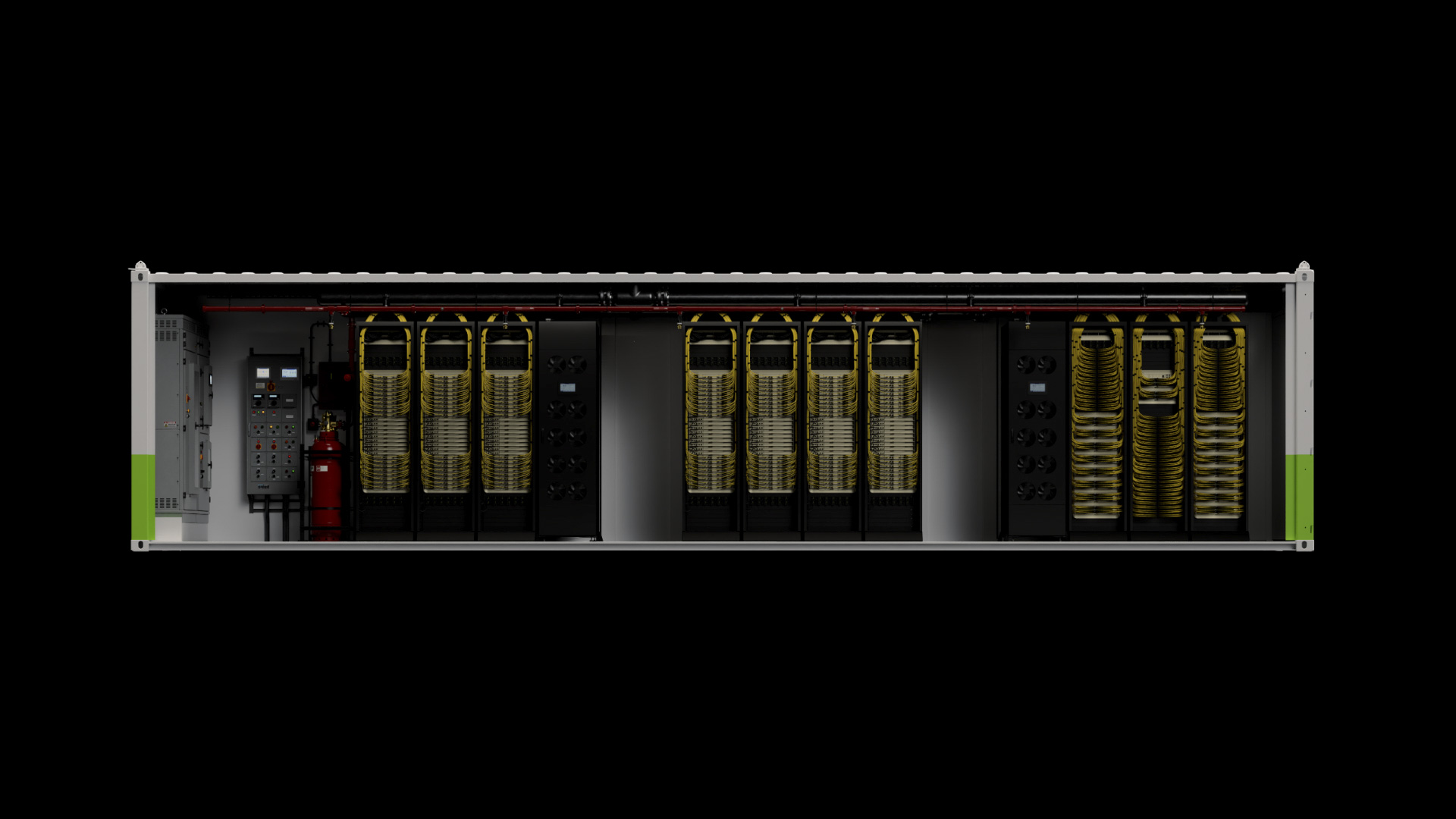
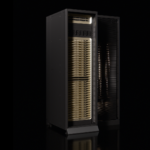
Nvidia wants to change how quickly an AI data centre can start earning its keep. At GTC Berlin on 21 October, the company introduced DSX POD, a factory-built design that packages Vera Rubin computing systems, networking, power distribution and liquid cooling into modular containers. Nvidia says a prepared site could deploy the units in as little as 14 days, rather than the roughly six months it cites for a conventional build. The figure is a company projection, not evidence that every customer can achieve it.
The official announcement describes a reference design rather than a finished data centre shipping today. Partners are expected to deliver modular AI factories worldwide in early 2027. For European operators trying to add capacity quickly, the attraction is obvious, but the 14-day clock starts only when a suitable site, power, cooling connections and network access are already in place.
A traditional large AI installation involves extensive work at the destination. Racks must be assembled, cabled, connected to cooling and power systems, tested and integrated. DSX POD shifts much of that work to the manufacturer. Nvidia says partners will complete rack-to-rack cabling, piping and functional validation before the containers travel to the site. Site preparation and factory integration can then happen at the same time.
That distinction matters more than the container itself. A server room assembled off-site is still constrained by electricity, permitting, network capacity and the supply of advanced chips. Nvidia is pitching a shorter final installation window, not a way to bypass those bottlenecks. The company has not published a price for DSX POD systems or an independent comparison showing what deployment time looks like across different countries and sites.
The design centres on Nvidia Vera Rubin infrastructure, which the company is positioning for large-scale AI training and inference. Nvidia argues that cutting the time between hardware delivery and the first production workload can improve the economics of an investment. A data centre does not generate revenue from AI services while equipment sits unconnected, even if the chips have already been paid for.
European governments and companies have been looking for more local AI computing capacity, both to meet demand and to keep some sensitive workloads closer to home. Modular systems could be attractive where builders can secure grid connections but face long construction schedules or shortages of specialised installation labour. They could also let operators expand in phases instead of waiting for an entire campus to be completed.
Nvidia named partners including Dell Technologies, HPE, Lenovo, Schneider Electric, Vertiv and Bull, alongside manufacturing and infrastructure suppliers. That breadth is important because a reference design succeeds only if partners can produce, deliver and support it at scale. It does not mean every named partner has a finished commercial offer available now.
TechBooky recently covered Nvidia’s push into Germany’s industrial AI market. DSX POD adds the infrastructure side of that story. If European factories, research groups and cloud providers are to run more demanding models locally, they will need enough reliable computing capacity behind the applications.
The real test will arrive when the first partner-built units reach customers in 2027. Buyers will want to know the total cost, energy demand, deployment time from the start of site work, and whether factory integration makes maintenance easier or harder over a system’s life. Until those deployments happen, 14 days should be read as Nvidia’s best-case claim for a prepared site, not a universal timetable.
Related Reading
More contextual TechBooky stories selected from tags, categories and article context.
Paul Femi Balo is the founder and publisher of TechBooky. He covers artificial intelligence, African technology, digital infrastructure, enterprise technology and the global digital economy.
We use cookies to ensure that we give you the best experience on our website. If you continue to use this site we will assume that you are happy with it.