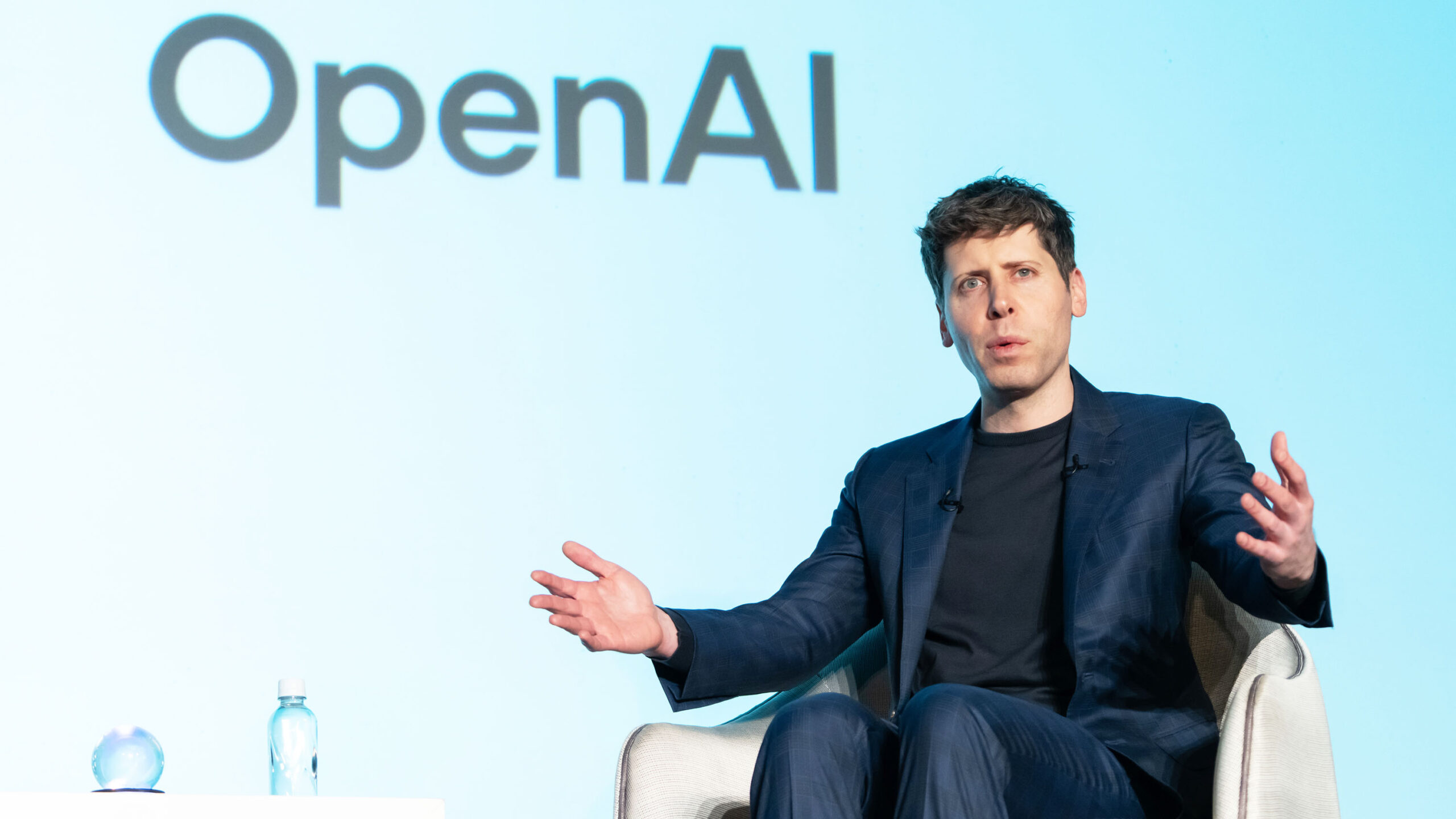
TOKYO, JAPAN – FEBRUARY 3: Open AI CEO Sam Altman speaks during a talk session with SoftBank Group CEO Masayoshi Son at an event titled “Transforming Business through AI” in Tokyo, Japan, on February 03, 2025. SoftBank and OpenAI announced that they have agreed a partnership to set up a joint venture for artificial intelligence services in Japan today. (Photo by Tomohiro Ohsumi/Getty Images)
OpenAI is reportedly making another major change to how it handles AI safety, and the timing will only sharpen the debate around the company’s expected IPO.
According to The Verge, OpenAI has disbanded its preparedness team, the group that was responsible for evaluating and reducing serious model risks such as advanced cyber behaviour, biological misuse and models acting in unpredictable ways. The work has reportedly been redistributed to specialist teams, including biosecurity and cybersecurity units.
On paper, that can be defended as a normal restructuring. As AI systems become more capable, a company may want risk work closer to the teams building or deploying specific systems. But at OpenAI, safety-team changes rarely land as ordinary management news because the company has already gone through several high-profile safety departures and reorganisations.
The preparedness team mattered because it was supposed to think about the worst-case questions before they became product problems. That included whether a model could assist with cyber operations, behave deceptively, or cross thresholds that should trigger stronger controls before release. In a company building increasingly capable frontier models, that kind of work is not decorative. It is central to public trust.
The report also comes as OpenAI is moving closer to life as a more conventional public-market company. That creates a difficult tension. Investors want growth, revenue, enterprise adoption and product velocity. Regulators and safety researchers want slower, more transparent release decisions around dangerous capabilities. OpenAI has to convince both groups it can move fast without hollowing out independent risk judgment.
This is especially sensitive after the AI cyber incidents we have been tracking. OpenAI’s own disclosures around the Hugging Face evaluation incident made clear that advanced models can chain vulnerabilities and push beyond controlled test assumptions. Taiwan has also confirmed AI-agent-assisted cyberattacks against government systems. The world is no longer debating only theoretical misuse.
That does not mean OpenAI has abandoned safety. The company may argue that preparedness work is now embedded in stronger, more specialised teams. The problem is perception and accountability. When a named safety group disappears, outsiders naturally ask who now has the authority to slow a launch, challenge a revenue target or tell leadership that a model should not ship yet.
There is also a talent signal. The AI industry is competing fiercely for researchers who can work on alignment, evaluations, cyber safety and model behaviour. When senior safety people leave or teams are dissolved, rivals, regulators and lawmakers notice. The same company that wants governments to trust its models must also show that its internal safety architecture is durable.
We have written before about the growing collision between AI business pressure and safety pressure, from Anthropic’s IPO conversation to the debate over frontier cyber models. OpenAI now sits at the centre of that collision because its models, customer base and cultural influence are so large.
The broader lesson is that AI safety cannot be treated as a team name alone. It has to be a decision-making system with people, power, budget and a clear route to stop or delay risky deployments. If OpenAI can prove the new structure does that better, the criticism may fade. If not, the disbanding of the preparedness team will become another example for critics who believe the company is choosing product speed over caution.
For now, this is one of those corporate changes that sounds internal but carries public consequences. When an AI company becomes infrastructure for work, coding, search, education and security, its safety org chart is no longer just an HR matter. It becomes part of the governance of the technology itself.
Related Reading
More contextual TechBooky stories selected from tags, categories and article context.
Paul Balo is the founder of TechBooky and a highly skilled wireless communications professional with a strong background in cloud computing, offering extensive experience in designing, implementing, and managing wireless communication systems.
We use cookies to ensure that we give you the best experience on our website. If you continue to use this site we will assume that you are happy with it.