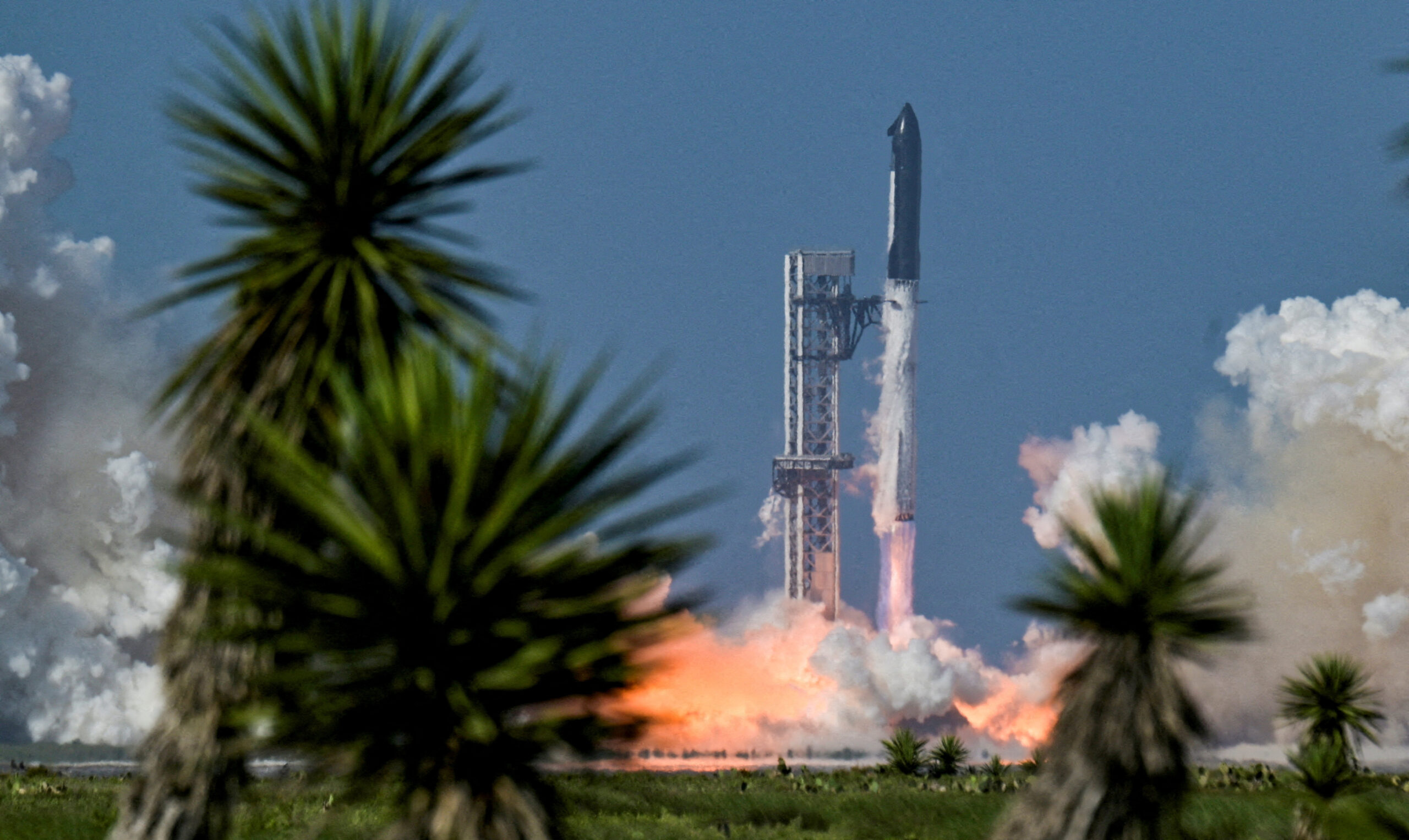
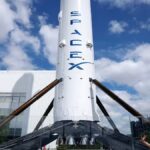
FILE PHOTO: The SpaceX Starship and Super Heavy v3 Booster lift off on its 13th test flight from the SpaceX launch complex in Starbase, Texas, U.S., July 24, 2026. REUTERS/Steve Nesius/File Photo
SpaceX is preparing for one of Starship’s most important test flights yet, and this time the goal is not just another high-altitude demonstration.
The company is targeting September 22 for Starship Flight 14, pending regulatory approval. MarketWatch reported that the mission is expected to send the 407-foot rocket into Earth orbit for the first time, with a flight profile that could include six orbits and a Pacific Ocean splashdown after nearly 10 hours. Investors Business Daily also reported that the launch window opens at 7:15 a.m. CT, with September 23 as a backup date.
This is not only a spaceflight milestone. It is also a business test. The mission is expected to carry production-grade Starlink V3 satellites, making it Starship’s first revenue-generating flight if all goes to plan. Each V3 satellite is expected to add far more capacity to the Starlink network, which is why Starship is so central to SpaceX’s broadband ambitions.
Starship has already delivered dramatic launches, explosions, recoveries and engineering lessons. But SpaceX needs it to become operational. The rocket is meant to lower launch costs, carry heavier payloads, support future lunar and Mars missions and deploy larger Starlink satellites at scale.
The stakes are high because Starship sits behind several of Elon Musk’s biggest promises. NASA’s Artemis programme depends on a Starship variant for lunar landing. Starlink’s long-term capacity depends on getting larger satellites to orbit. SpaceX’s economics depend on eventually reusing both the Super Heavy booster and the Starship upper stage rapidly.
Musk has suggested that if Flight 14 succeeds, a later flight could attempt to catch Starship itself. That would be a massive step beyond catching the booster, and it would move SpaceX closer to the fully reusable system it has promised for years.
For TechBooky readers, the story is not just about rockets. It is about infrastructure. Satellites, broadband, cloud services, AI data transfer and global connectivity increasingly depend on space systems. If Starship finally reaches orbit and begins carrying revenue payloads, SpaceX moves from proving the machine can fly to proving it can change the economics of orbit.
Related Reading
More contextual TechBooky stories selected from tags, categories and article context.
Paul Balo is the founder of TechBooky and a highly skilled wireless communications professional with a strong background in cloud computing, offering extensive experience in designing, implementing, and managing wireless communication systems.
We use cookies to ensure that we give you the best experience on our website. If you continue to use this site we will assume that you are happy with it.