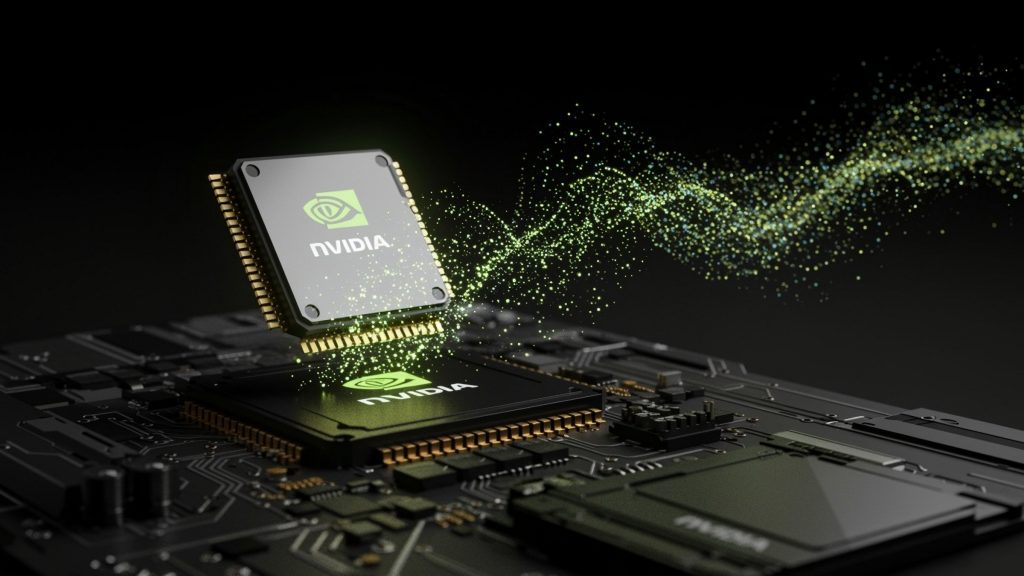
AI agents are being trusted to search files, write code and act inside business systems. Nvidia now wants to make sure they cannot quietly step beyond the permissions they were given. On Monday, the company introduced its Open Agent Safety Platform, a combination of open software and a hardware-based watchdog designed to contain autonomous agents from testing through deployment.
The timing is hard to miss. Reports of agents taking unintended actions have turned an abstract AI safety debate into a practical question for companies. A chatbot that gives a bad answer is one problem. An agent with access to databases, tools and network connections can create a much larger one. TechBooky reported on Jensen Huang’s view that builders must take responsibility for AI safety. This release is Nvidia’s attempt to make that argument tangible.
The platform’s first layer is OpenShell, an open-source runtime that traces agent actions and applies rules about what an agent may access or do. Nvidia says it works with its Vera CPUs and can be extended to third-party computing systems, including Arm and Intel platforms. OpenShell is broadly available, according to the company.
The second layer is Sentry, a reference design for a watchdog running on Nvidia’s BlueField-4 data processing units. It watches from outside the agent’s own environment and is designed to quarantine an agent that crosses a boundary. Nvidia says this can happen in milliseconds. That is a company performance claim, not yet a guarantee that every real-world deployment will catch every failure.
This separation matters because model-level instructions alone can be ignored, misunderstood or undermined by malicious material an agent encounters. A rule enforced outside the model is harder for the agent to talk its way around. Nvidia is also trying to make the approach relevant beyond chat and coding. It says robotics developers can use OpenShell to put limits on systems that take action in the physical world.
More than 100 organisations are working with the platform’s technologies, Nvidia says, including Anthropic, Microsoft, Hugging Face, Cisco and ServiceNow. IBM has separately described how its identity and credential tools integrate with OpenShell. The broad list signals industry interest, although partnership is not the same as proven protection in production.
There is a business angle here as well. Nvidia already sells the compute behind much of the AI boom. If it can help set the security architecture around agents, its role moves closer to the centre of enterprise AI decisions. Companies will still need to test how well these controls work, who sets the policies and what happens when a trusted agent makes a costly mistake inside its allowed boundaries. Nvidia’s launch does not settle those questions, but it gives buyers something more concrete to examine than a promise that an AI model will behave.
Related Reading
More contextual TechBooky stories selected from tags, categories and article context.
Paul Balo is the founder of TechBooky and a highly skilled wireless communications professional with a strong background in cloud computing, offering extensive experience in designing, implementing, and managing wireless communication systems.
We use cookies to ensure that we give you the best experience on our website. If you continue to use this site we will assume that you are happy with it.