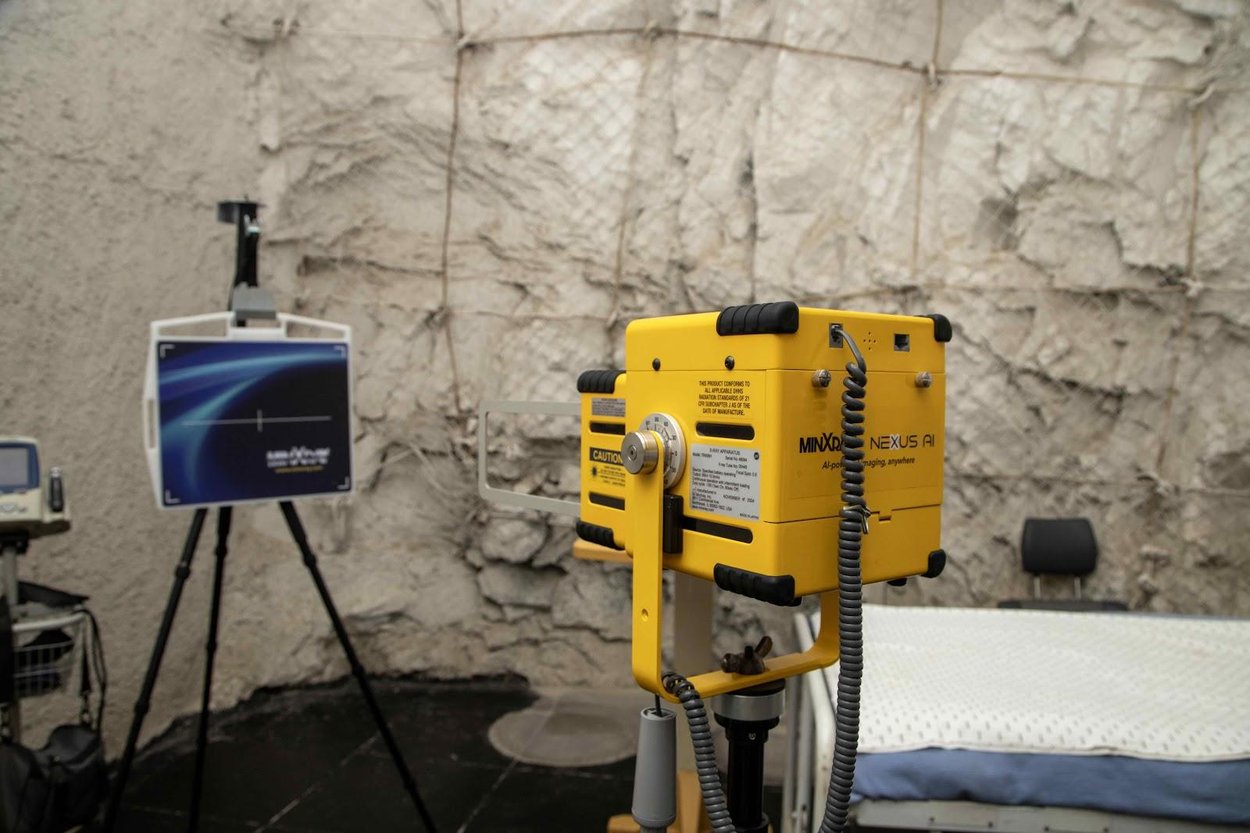
A tuberculosis screening system running far below ground at South Africa’s Mponeng gold mine is an unusually concrete example of what medical AI can do when connectivity and specialist care are hard to reach. Google Research described the deployment in a 23 October report on its longer-running work with partners to bring AI-assisted chest X-ray screening closer to patients.
At Mponeng, Google says Nexus AI has used ultra-portable digital X-ray equipment and offline AI in partnership with the Stop TB Partnership, Harmony Gold and South Africa’s Department of Health. Miners can be screened on site, around four kilometres below the surface, and those flagged as possibly having TB can be referred for confirmatory molecular testing. A fast screening result is not itself a diagnosis.
The setting matters as much as the model. Miners can face elevated respiratory risk from silica dust, while travelling from a deep shaft to a clinic or waiting for a radiologist can delay care. Bringing imaging and triage to the workplace could shorten that route. The meaningful measure is whether suspected cases actually reach reliable testing and treatment, not simply how many X-rays an algorithm reads.
Google frames the mine deployment as one point on a research path stretching from early chest-radiograph models to tools that other organisations can adapt. It cites evaluations, prospective validation and World Health Organization support for computer-aided detection in TB screening. Those are important steps, but performance in a study or one deployment should not be assumed to transfer unchanged to every clinic, population or X-ray machine.
The company has also released medical AI building blocks under its Health AI Developer Foundations programme. MedSigLIP links medical images to language, while the MedGemma family can process imaging and clinical information and, in some configurations, run locally. Google says MedGemma has been downloaded more than ten million times. That download figure describes access to the models, not ten million clinical uses or confirmed patient benefits.
Offline operation can be particularly valuable where internet access is unreliable or expensive. It does not remove the need for trained staff, quality imaging, privacy safeguards and a clear path for follow-up. A screening model that finds more people at risk but cannot connect them to testing or care would solve only part of the problem. False positives and missed cases also need monitoring as deployments expand.
There is a wider African health-tech question here. TechBooky previously covered the Gates Foundation and OpenAI initiative to bring AI support into African clinics. Google’s TB work is a different programme, focused on imaging and screening, but both illustrate how much hinges on fitting technology into local health systems rather than treating a model as a substitute for them.
Google’s latest report is therefore not the announcement of a newly approved AI diagnosis for every clinic. It is an account of research, open models and a real-world screening deployment. The next evidence readers should watch for is independently reported performance across sites, the number of people receiving confirmatory tests and whether earlier detection improves outcomes.
Related Reading
More contextual TechBooky stories selected from tags, categories and article context.
Paul Femi Balo is the founder and publisher of TechBooky. He covers artificial intelligence, African technology, digital infrastructure, enterprise technology and the global digital economy.
We use cookies to ensure that we give you the best experience on our website. If you continue to use this site we will assume that you are happy with it.