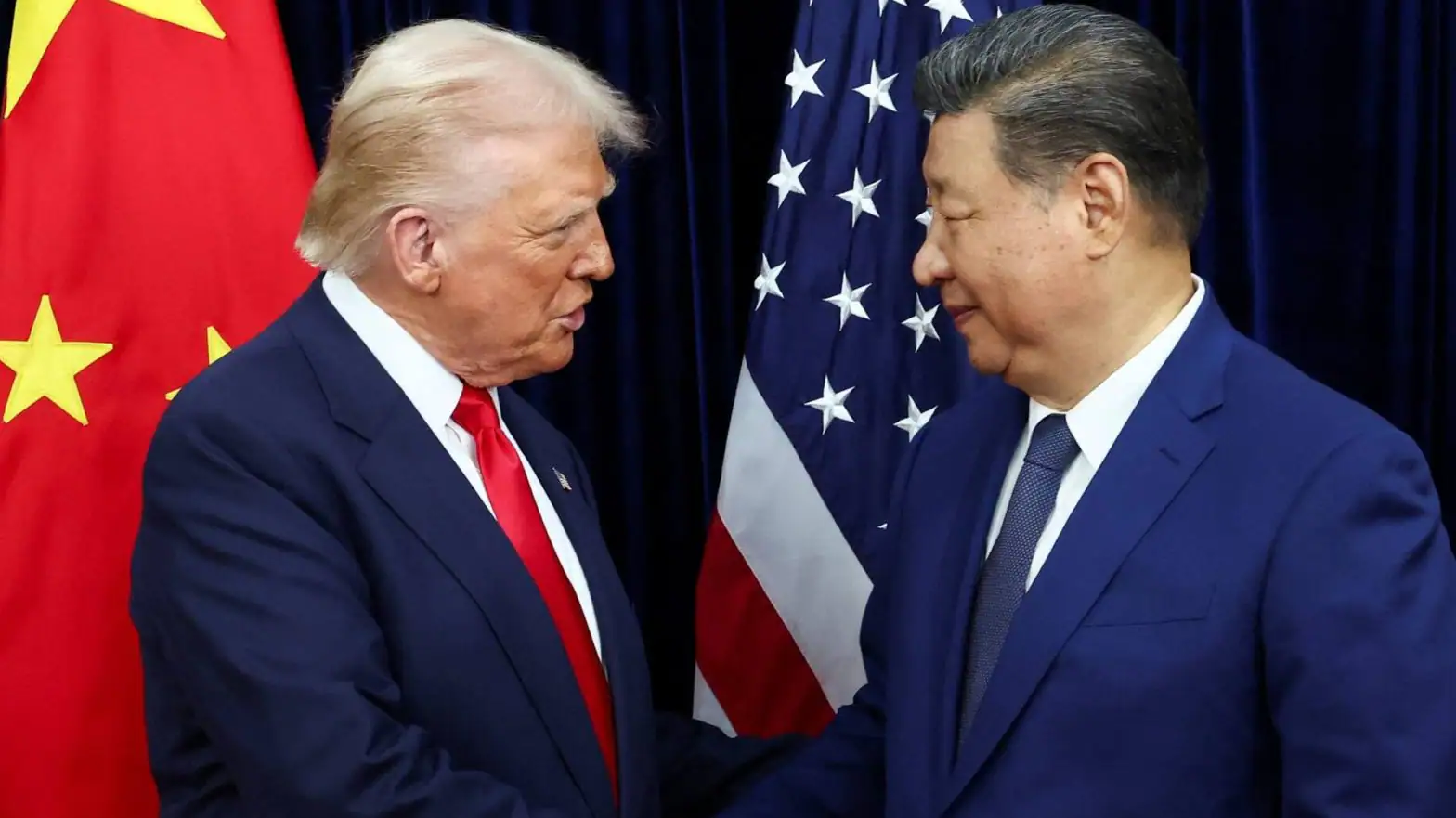
The global race for artificial intelligence is becoming a contest over who controls the systems beneath it. The United States is assembling partners around semiconductor and AI supply chains, while China is building a separate international forum for cooperation. For African governments and companies, the question is not simply whose chatbot performs better. It is whose chips, cloud infrastructure, standards and financing will shape the next decade of digital development.
An Associated Press report published on 25 October describes countries trying to work with both Washington and Beijing as the two powers organise rival AI blocs. Kazakhstan illustrates that balancing act. It joined the US-led Pax Silica initiative in June and was among the founding countries of China’s World Artificial Intelligence Cooperation Organization, or WAICO, the following month. That is an example of hedging, not proof that every country can do so indefinitely.
Pax Silica is an American-led effort to strengthen trusted supply chains across critical minerals, energy, advanced manufacturing, semiconductors and AI infrastructure. A US State Department fact sheet said it had 24 signatories after its June summit. It is not simply a club for using US-made AI software. It is about access to the physical and industrial inputs that make powerful computing possible.
China-backed WAICO puts more emphasis on international AI governance, capacity building and cooperation. China’s official account of its July founding agreement says 29 countries signed, including Kazakhstan, Indonesia, Pakistan and Russia. The two initiatives are not identical in structure or purpose. Treating them as direct substitutes would miss the different forms of influence each is trying to build.
African countries need affordable computing power, reliable electricity, locally useful models and a voice in the rules governing AI. A government considering a data centre or a national language model must also consider equipment supply, financing terms, data protection, maintenance and the risk of depending on one foreign provider. Those are practical decisions, not abstract diplomatic preferences.
There is an opportunity in this rivalry. Competition may give African buyers more options and better terms. But a cheaper model today could become costly if migration is difficult, while a secure chip supply on paper may be of little use without power, connectivity and engineers to run it. Countries will have to judge proposals by the infrastructure and skills they actually deliver.
The important question is therefore not whether Africa will choose the United States or China as a whole. It is whether African institutions can preserve room to choose, negotiate and build their own capabilities as the AI economy becomes more divided. That will be tested one cloud contract, chip shipment and policy agreement at a time.
Related Reading
More contextual TechBooky stories selected from tags, categories and article context.
Paul Femi Balo is the founder and publisher of TechBooky. He covers artificial intelligence, African technology, digital infrastructure, enterprise technology and the global digital economy.
We use cookies to ensure that we give you the best experience on our website. If you continue to use this site we will assume that you are happy with it.