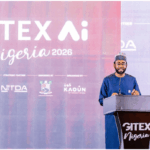
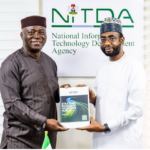
GITEX Nigeria is giving the country a useful moment of visibility, but the harder question is what happens after the lights go off. The event is running from August 31 to September 3 with a focus on AI, startups, digital infrastructure, fintech, cloud, cybersecurity and Nigeria’s wider digital economy ambitions.
That is why this should not be treated as just another conference story. BusinessDay framed the event around Nigeria’s AI ambition and its attempt to connect startups with global capital, customers and markets. That is the right lens because Nigeria does not lack tech events. It lacks consistent execution after the events.
The country has the ingredients that investors like to hear about: a young population, strong fintech adoption, a large domestic market, active developers and a diaspora that understands global technology. But AI requires more than entrepreneurial energy. It requires electricity, compute, data governance, cloud capacity, research depth, procurement reform and patient capital.
This is where the conversation links directly to previous debates around Nigeria’s sovereign cloud push and AI infrastructure strategy . If Nigeria wants to be more than a market for foreign AI tools, it needs local capacity to host, adapt, govern and commercialise AI systems in ways that make sense for Nigerian realities.
GITEX can help if it becomes a bridge rather than a showcase. The best outcome would be more serious startup partnerships, clearer government procurement pathways, stronger enterprise adoption and actual investment into companies solving local problems. The weaker outcome would be speeches, panels and photographs with little follow-through.
The Lagos leg is particularly important because that is where Nigeria’s startup energy is most visible. Recent coverage of GITEX Nigeria’s Lagos opening already showed the fintech and startup angle, but the bigger prize is whether the event can connect early-stage innovation with buyers who can help companies grow beyond demo booths.
AI makes the stakes higher. African countries that move slowly may spend the next decade importing models, infrastructure and standards created elsewhere. Countries that move deliberately could build useful local AI products in health, agriculture, education, logistics, public services, finance and language technology.
So yes, GITEX Nigeria is a big platform. But the real test is not attendance. It is whether Nigeria can turn attention into infrastructure, policy into deployment and startup excitement into companies that survive the noise. That is where the country’s AI ambition will either become real or become another well-branded promise.
Related Reading
More contextual TechBooky stories selected from tags, categories and article context.
Paul Balo is the founder of TechBooky and a highly skilled wireless communications professional with a strong background in cloud computing, offering extensive experience in designing, implementing, and managing wireless communication systems.
We use cookies to ensure that we give you the best experience on our website. If you continue to use this site we will assume that you are happy with it.