Nvidia is using Vera Rubin to make a larger argument about the future of AI infrastructure: the company does not only want to sell GPUs into data centres. It wants to shape the whole AI factory, from accelerators and CPUs to networking, power efficiency, racks and software.
On July 21, Nvidia unveiled Vera Rubin as its next major platform for agentic AI workloads, saying Vera Rubin NVL72 production is ramping with racks running at partners including CoreWeave, Google Cloud, Microsoft Azure and Oracle Cloud Infrastructure. Nvidia also announced Spectrum-6 for gigascale AI factories, pushing the networking layer as part of the same full-stack story.
Wired framed the move as Nvidia trying to own more of the chip and systems layer inside AI data centres. That framing is right. The AI infrastructure war is no longer only about who has the fastest GPU. It is about who controls the architecture that turns thousands of chips into usable intelligence.
Vera Rubin is Nvidia’s post-Blackwell platform for a world where AI agents are expected to run longer, reason more deeply and coordinate more tool use. That changes infrastructure requirements. Agentic workloads can demand more CPU coordination, faster networking, better memory movement and stronger efficiency per watt.
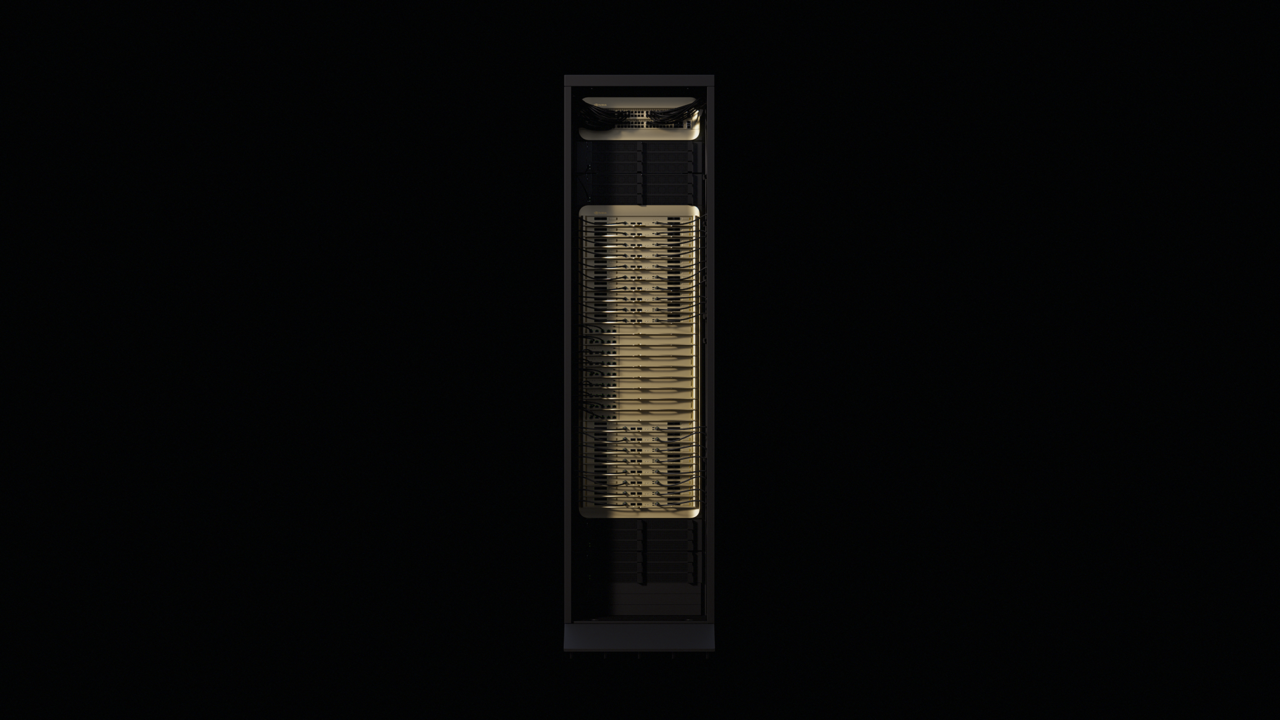
Nvidia is pitching Vera Rubin NVL72 as a rack-scale system, not a loose pile of accelerators. The point is to make it easier for cloud providers and AI labs to deploy enormous amounts of compute while keeping performance, power and networking predictable.
This is the same reason AMD is pushing Helios as a full rack system. The market is moving from chip-versus-chip comparisons to rack-versus-rack and platform-versus-platform competition.
Nvidia’s advantage has always been more than silicon. CUDA, networking, systems software, developer mindshare and deployment patterns have made Nvidia the default choice for AI labs and hyperscalers. Vera Rubin extends that logic into the data-centre stack.
If Nvidia can provide the GPU, CPU, networking fabric, rack design, software libraries and operations tooling, customers get a more integrated deployment path. The trade-off is dependence. The more of the AI factory Nvidia owns, the harder it becomes for customers to switch suppliers later.
That is why rivals are pushing open alternatives. AMD’s Helios AI rack system leans on open standards such as UALink and Ultra Ethernet. Microsoft and Mistral are also talking about sovereign deployment and customer control. The market wants Nvidia performance, but it also wants bargaining power.
Nvidia’s Spectrum-6 announcement matters because networking is now central to AI performance. When tens or hundreds of thousands of GPUs work together, slow communication becomes lost money. The network is not a side component. It is part of the model.
Frontier training, large-scale inference and post-training workloads need systems that move data quickly and reliably across racks. That is why Nvidia keeps expanding beyond GPUs into switches, NICs, fabrics and rack-scale designs.
This also explains why AI infrastructure spending keeps rising. More powerful models require more than bigger accelerators. They require power delivery, liquid cooling, memory, networking, storage, software and operations expertise. The AI boom is becoming an industrial buildout.
For cloud providers, Nvidia’s full-stack approach is attractive and uncomfortable at the same time. It offers speed and performance, but it can deepen vendor dependence. That is why major buyers are also looking at AMD, custom chips and regional AI partnerships.
Microsoft buying into AMD Helios, Google building TPUs and Europe backing Mistral-style sovereign AI are all signs of the same instinct: no large AI customer wants only one road to compute.
Still, Nvidia remains the company everyone has to answer. If Vera Rubin delivers the performance-per-watt and deployment reliability Nvidia is promising, it will keep the company at the centre of the AI infrastructure economy.
The phrase “AI factory” may sound like marketing, but it captures something real. Data centres are no longer passive places where apps run. They are becoming industrial systems that manufacture tokens, reasoning steps, simulations, embeddings and agentic work.
That shift explains why chip news now belongs on the front page of technology coverage. The limits of AI are increasingly physical: chips, power, cooling, networks, racks and sites. Nvidia understands that better than almost anyone.
Vera Rubin is therefore not just another Nvidia product cycle. It is a statement about who controls the machinery of the AI era. For now, Nvidia is telling the market that it intends to control as much of that machinery as possible.
Related Reading
More contextual TechBooky stories selected from tags, categories and article context.
Paul Balo is the founder of TechBooky and a highly skilled wireless communications professional with a strong background in cloud computing, offering extensive experience in designing, implementing, and managing wireless communication systems.
We use cookies to ensure that we give you the best experience on our website. If you continue to use this site we will assume that you are happy with it.