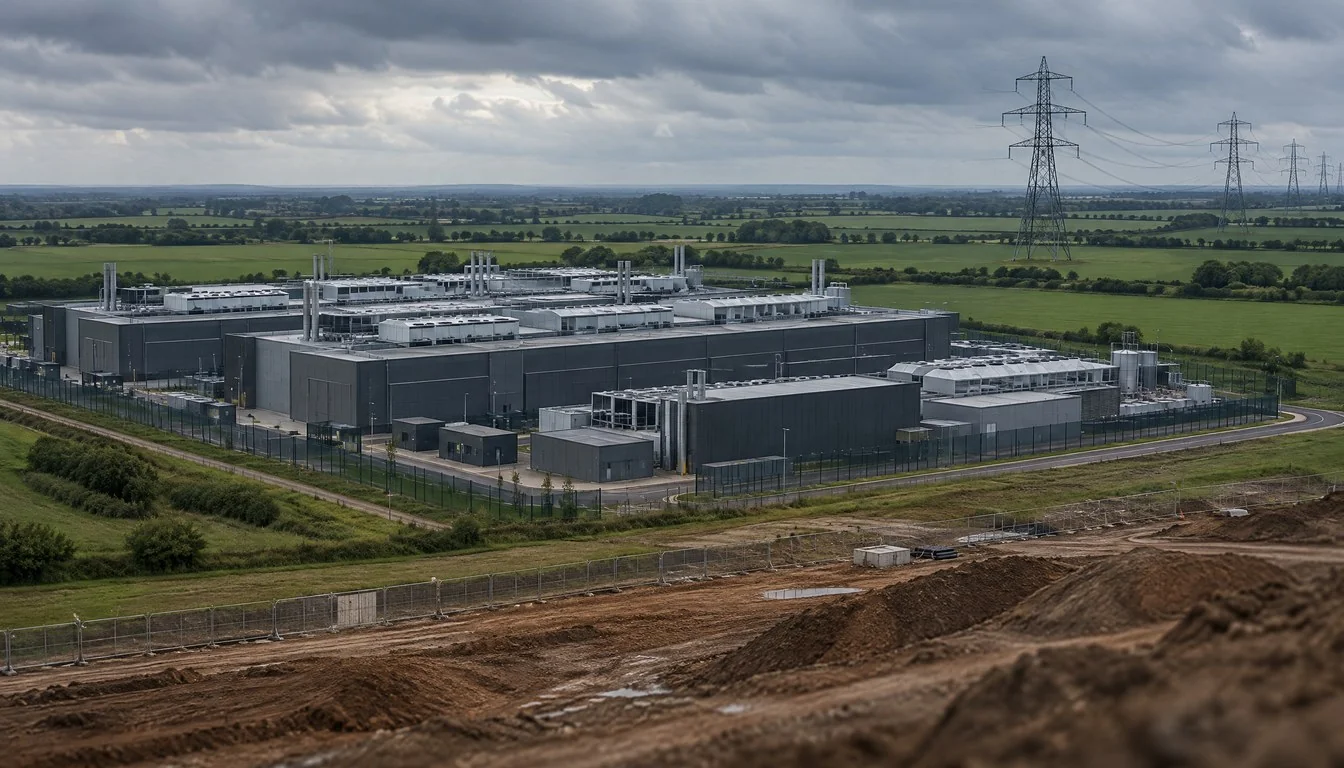
Microsoft has reportedly ended its agreement to be the anchor customer at Nscale’s planned AI data centre in Loughton, Essex, dealing a setback to one of Britain’s most prominent computing projects. Reuters reported the withdrawal on Sunday, citing the Telegraph. Neither company has published a detailed account of the decision.
The development matters because this was not an obscure speculative site. In its own account of its UK AI investment, Microsoft described Loughton as the location of what would be the country’s largest AI supercomputer, with more than 23,000 Nvidia GPUs supplied in partnership with Nscale. Nscale’s original announcement set out the ambition to build a large domestic AI campus there.
The loss of a planned anchor customer does not mean the site itself has been cancelled. Nscale told The Guardian that it remains committed to Loughton and is exploring alternative power sources and other UK locations. The company also said its wider relationship with Microsoft remains strong. That distinction is important: the reported exit concerns this particular Essex agreement, not every Microsoft-Nscale project.
The Loughton plan was already facing questions about when it could secure sufficient electricity. The Guardian reports that power-supply concerns were behind Microsoft’s decision, while Reuters notes that the original Telegraph report did not specify a reason. Until the parties publish more detail, the grid issue should be treated as reported context rather than a fully established company explanation.
Yet the practical problem is clear. GPUs and construction capital are only part of an AI campus. A large installation also needs a reliable, timely grid connection and cooling, and its commercial timetable depends on those physical systems arriving together. A customer planning capacity for a particular year cannot necessarily wait through an open-ended infrastructure delay.
That is why this story reaches beyond one contract. Governments and technology companies have announced huge AI investments, but their schedules must ultimately fit local electricity networks, permitting and construction. A data centre cannot sell usable compute merely because its chips have been ordered.
Nscale may find another customer or another power arrangement for Loughton. It may also develop other sites while the Essex project is reassessed. None of those outcomes is confirmed yet. Microsoft has not publicly laid out an alternative for the capacity originally associated with this campus.
The immediate question for investors and customers is how much of an announced AI capacity pipeline can be delivered on its advertised timetable. TechBooky has previously examined efforts to make AI data centres work with strained grids. Loughton adds a sharper commercial test: when the electricity date slips, the customer may move before the facility is ready. The next useful update will be a direct statement from Microsoft or fresh, documented power and delivery plans from Nscale.
Related Reading
More contextual TechBooky stories selected from tags, categories and article context.
Paul Balo is the founder of TechBooky and a highly skilled wireless communications professional with a strong background in cloud computing, offering extensive experience in designing, implementing, and managing wireless communication systems.
We use cookies to ensure that we give you the best experience on our website. If you continue to use this site we will assume that you are happy with it.