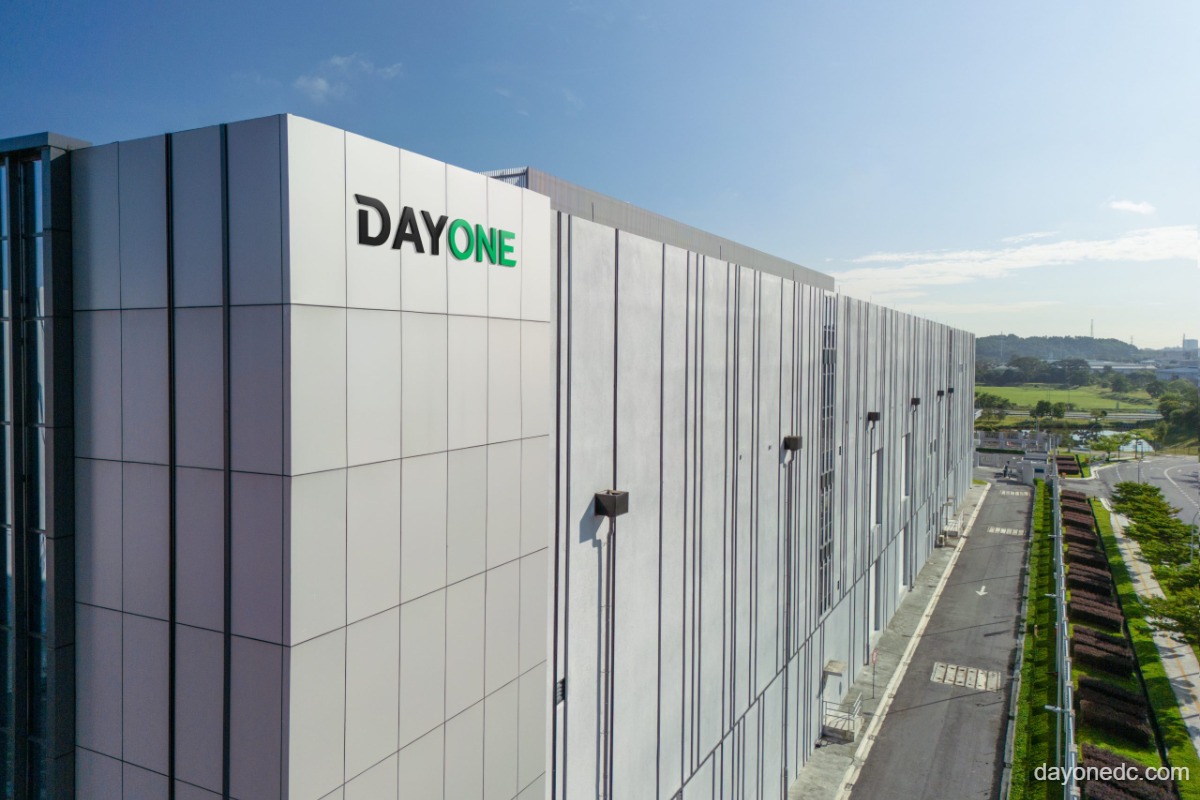
DayOne Data Centers has filed for a US initial public offering, putting one of Asia’s fast-growing data centre operators in front of public investors at a moment when enthusiasm for AI infrastructure is running up against harder questions about cost and concentration.
There is a clear growth story in the numbers. DayOne recorded $512 million in revenue for the six months ended June 30, up from $151.5 million a year earlier. That means it generated more revenue in half of 2026 than it did in all of 2025, when sales were $484.3 million. The company develops and operates large data centres for cloud and technology customers across Asia-Pacific, with projects extending into Europe.
Growth has not removed the cost of building that capacity. DayOne reported a $77.2 million net loss for the first half, compared with a $12.6 million loss in the same period last year. The loss attributable to ordinary shareholders was $81.9 million. Those are different accounting measures, and the distinction matters when comparing coverage of the filing.
A data centre company can sign long contracts and still need enormous amounts of capital before a building begins producing revenue. Investors will want to know how much capacity DayOne can bring online, whether power and construction schedules hold, and how quickly new facilities turn into cash-generating assets. They will also examine customer concentration: the filing says its largest customer accounted for about 69% of first-half 2026 revenue.
That dependence does not by itself make the business weak. Large cloud customers often take substantial blocks of capacity under long-term agreements. But it means any change in one customer’s expansion plans could matter greatly to DayOne’s forecasts. The IPO gives investors a rare opportunity to inspect that trade-off in detail instead of simply accepting a headline about demand for AI.
DayOne’s move also speaks to a wider shift in technology finance. The AI race needs not only chips and models but land, electricity, cooling and buildings that can accommodate them. We have seen a similar appetite for infrastructure in the IPO discussion surrounding AI cloud company Nscale. DayOne’s filing will test whether the public market is ready to fund that physical expansion while accepting its present losses.
For now, this is a filing, not a completed listing. The eventual price and timing will say as much about investor confidence in the AI buildout as the company’s rapid revenue growth does.
Related Reading
More contextual TechBooky stories selected from tags, categories and article context.
Paul Balo is the founder of TechBooky and a highly skilled wireless communications professional with a strong background in cloud computing, offering extensive experience in designing, implementing, and managing wireless communication systems.
We use cookies to ensure that we give you the best experience on our website. If you continue to use this site we will assume that you are happy with it.