AMD has made its most direct move yet against Nvidia in the AI infrastructure race, launching Helios as its first full rack-scale AI system and adding Microsoft as a new buyer. The significance is not only that AMD has another large cloud customer. It is that Microsoft is exactly the kind of hyperscaler whose buying decisions can change the economics of AI hardware.
CNBC reported that Microsoft has joined Meta, OpenAI and Oracle as a buyer of AMD Helios, a rack-level AI system designed to compete more directly with Nvidia systems that have dominated the generative AI buildout. For AMD, that matters because the AI chip battle is moving beyond the single accelerator. The real contest is now full racks, networking, cooling, software and deployment speed.
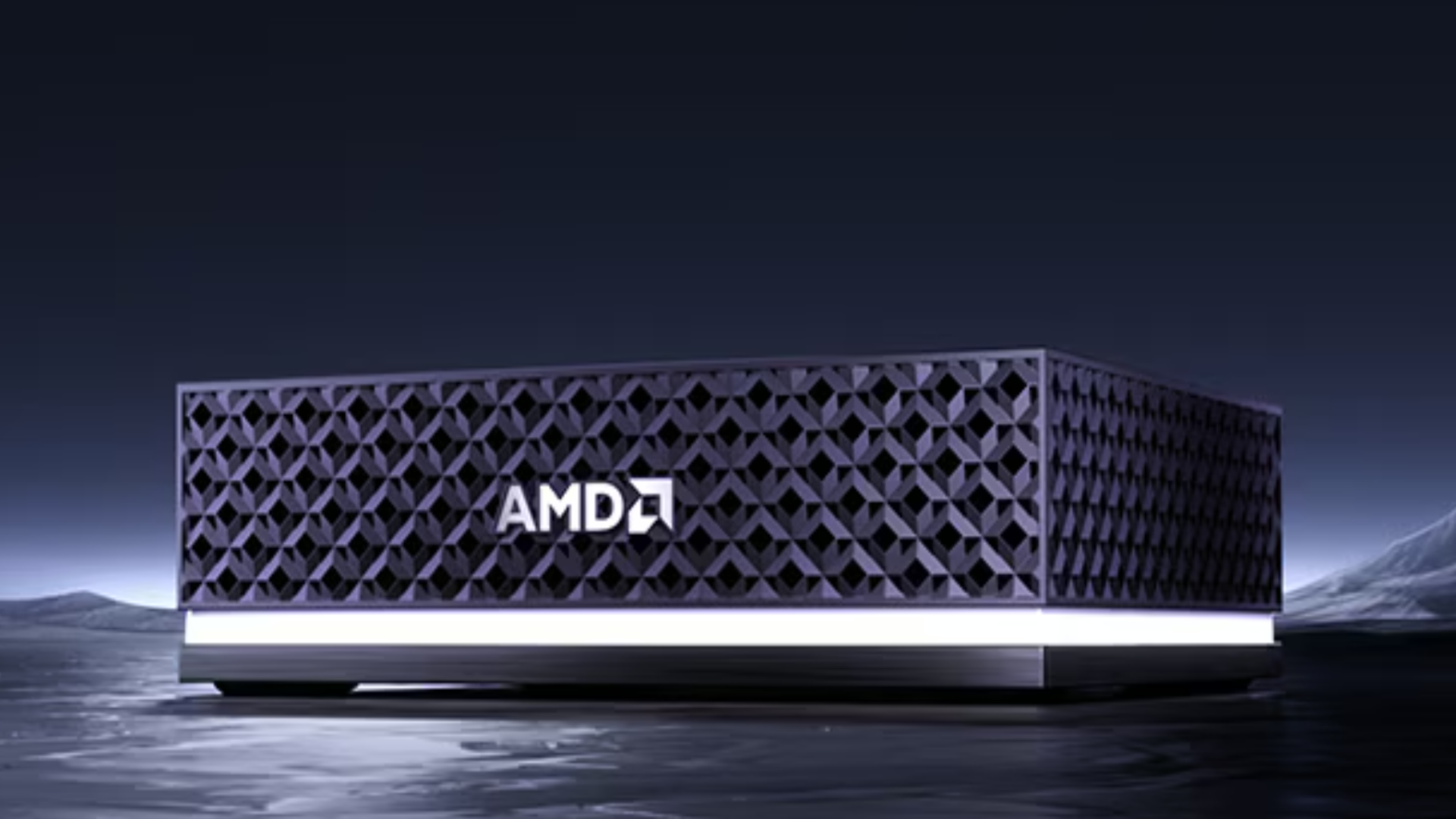
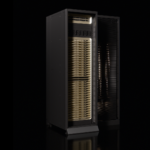
AMD describes Helios as an open, rackscale AI infrastructure design for frontier AI and sovereign computing. A full rack combines 72 AMD Instinct MI455X GPUs, AMD EPYC “Venice” CPUs and AMD Pensando networking. AMD says the design delivers up to 2.9 exaFLOPS of FP4 compute, 1.4 exaFLOPS of FP8 compute and 31 TB of HBM4 memory, with volume deployments expected in the second half of 2026.
Microsoft is one of the most important AI infrastructure buyers in the world. It runs Azure, supports OpenAI workloads, sells AI services to enterprises and has been pouring capital into data centres to keep up with demand. When a company at that scale buys into AMD Helios, it is not just a sale. It is validation that AMD can compete for the largest AI compute contracts.
This does not mean Nvidia suddenly loses its lead. Nvidia still has the most mature AI software ecosystem, a deep CUDA moat, strong networking, trusted deployment patterns and a huge installed base. But Microsoft buying Helios shows that large customers want credible alternatives. They do not want the future of AI compute to depend on one vendor, one supply chain and one pricing structure.
That diversification pressure is visible across the industry. Meta has been expanding its compute relationships, OpenAI has been striking enormous capacity deals, and cloud players are mixing Nvidia GPUs, AMD accelerators and their own custom chips. The recent Anthropic and Meta compute story showed the same theme from another angle: AI companies and cloud providers are locking down capacity wherever they can find it.
The older way of talking about AI chips focused heavily on the GPU itself. That is no longer enough. Frontier training and large-scale inference need accelerators that can move data quickly between each other, share memory efficiently, stay cool, remain serviceable and run reliably across thousands of units.
That is why Helios is a rack-scale pitch. AMD is selling a reference architecture that brings the CPU, GPU, networking and software stack into one design. Supermicro, one of AMD’s early Helios partners, said its 72-GPU double-width Helios rack is built for large-scale AI training, inference, fine-tuning and sovereign AI workloads.
The system also leans heavily on open standards. AMD says Helios uses OCP Open Rack Wide, UALink and Ultra Ethernet. That matters because Nvidia has built a powerful closed-loop advantage around its own hardware, software and interconnects. AMD is arguing that customers should prefer a more open rack architecture that gives them long-term flexibility.
The battle between AMD and Nvidia is becoming a battle over interconnects as much as chips. Nvidia has NVLink and its broader AI factory stack. AMD is pushing UALink and Ethernet-based scale-up and scale-out fabrics. The UALink promoter group originally included AMD, Broadcom, Cisco, Google, HPE, Intel, Meta and Microsoft, which tells you how much the largest buyers want alternatives to proprietary accelerator fabrics.
For cloud providers, open standards are not a philosophical luxury. They can mean more suppliers, lower switching costs, better negotiation power and less lock-in. For countries building sovereign AI infrastructure, openness can also make procurement easier because governments do not want national AI capacity tied completely to one vendor ecosystem.
There is still a catch. Open systems must perform. The AI world rewards what works at scale, not what sounds elegant on paper. Nvidia has spent years proving that its hardware and software can carry massive real-world workloads. AMD now has to prove that Helios can be deployed, cooled, maintained and tuned reliably across hyperscale data centres.
Why Nvidia Should Still Be Taken Seriously
Nvidia remains the benchmark. Its GPUs power much of the modern AI boom, and its advantage is not only silicon. Developers know CUDA. Enterprises know the Nvidia stack. Cloud providers already have deployment playbooks. AI labs already optimise for Nvidia systems. That kind of ecosystem lead is hard to break.
But Nvidia also faces a more complicated market than it did two years ago. Customers are worried about availability, pricing and dependence. AI infrastructure spending has become so large that even small percentage savings can matter. If AMD can offer enough performance, enough memory and enough software maturity, customers will test it.
That is the opening for Helios. It does not need to dethrone Nvidia overnight. It needs to become credible enough that Microsoft, Meta, OpenAI, Oracle and other big buyers can use it as part of a mixed AI infrastructure strategy.
This is also why data-centre news has become mainstream tech news. AI models are no longer constrained only by algorithms. They are constrained by chips, memory, power, cooling, land, grid capacity and supply chains. The recent SpaceX Pentagon AI cloud compute story underlined how far the search for compute capacity is now stretching.
The Microsoft-AMD Helios development fits into that larger picture. AI companies need more compute than the market can comfortably provide. Cloud providers want more bargaining power. Chipmakers want long-term anchor customers. Governments want sovereign capacity. Data-centre operators want systems that can be deployed faster and serviced more easily.
If Helios performs well in the field, AMD could become the strongest second pillar in high-end AI infrastructure. That would not end Nvidia dominance, but it would make the market healthier and more competitive. For Microsoft, that may be the point. The future of AI will be too expensive to build on a single hardware dependency.
Related Reading
More contextual TechBooky stories selected from tags, categories and article context.
Paul Balo is the founder of TechBooky and a highly skilled wireless communications professional with a strong background in cloud computing, offering extensive experience in designing, implementing, and managing wireless communication systems.
We use cookies to ensure that we give you the best experience on our website. If you continue to use this site we will assume that you are happy with it.