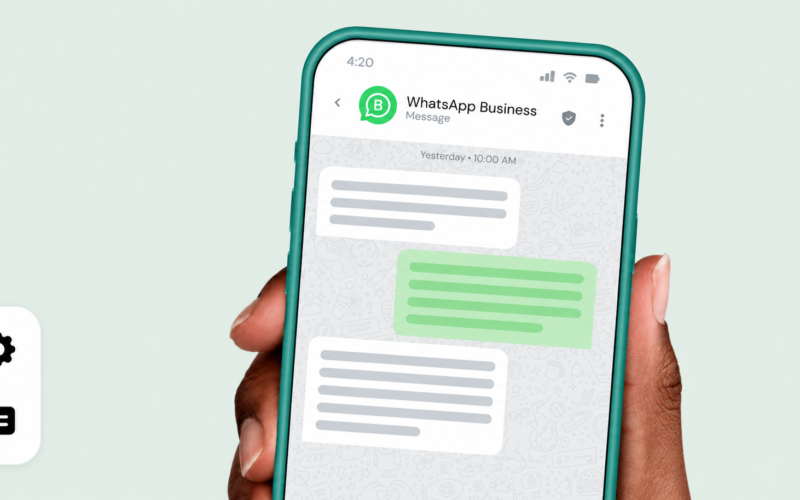
For many small Nigerian merchants, WhatsApp is already where orders arrive and customer conversations happen. Omata AI is testing whether the same familiar chat can also become a practical way to keep track of sales, stock and money owed, without asking shop owners to learn a separate accounting application.
The startup is running a pilot with 10 merchants and has not yet begun earning revenue, founder Stanley Okafor told Disrupt Africa. That makes this an early product test, not evidence of a nationwide launch or proven commercial demand. Its appeal lies in a straightforward proposition. A business owner can send natural-language messages about transactions and use Omata’s system to organise the records behind them.
According to the founder’s account, the service can capture sales, update inventory and track customer balances from messages, with a dashboard available to review the resulting information. The company says a human must approve changes before they become financial records. That approval step matters because a misunderstood instruction or duplicate message could otherwise distort a shop’s books.
Omata is being developed by Autonomous Data Enterprise, which Okafor founded in 2026. It is founder-funded and currently focused on Nigeria. The startup plans a subscription model, but has not disclosed paying-customer figures or demonstrated how well the system performs at scale. Its pilot will need to show that merchants continue using it after the initial novelty wears off.
Small firms often face a software adoption problem rather than a shortage of software. A standalone bookkeeping tool can be useful, but regular entry takes time, training and discipline. If the transaction conversation is already happening in WhatsApp, recording it there may lower that barrier. The potential benefit is not simply AI-generated text. It is a more complete, timely record of what was sold, what remains in stock and which customers still owe money.
Yet convenience brings its own questions. Merchants will need a reliable way to correct mistakes, reconcile cash and transfers, and distinguish a firm order from an enquiry. They should also understand how customer and transaction data are stored and who can access them. As TechBooky has reported on WhatsApp-based business agents, the messaging platform is becoming a broader workplace for small companies. Moving financial records into that workflow raises the bar for accuracy and control.
A ten-merchant trial is enough to test whether the interface makes sense in a real shop, but not enough to establish that the product fits Nigeria’s varied retail market. The more telling measures will be how often owners approve or correct entries, whether stock counts match reality, and whether the service saves them time over several months.
Omata’s early experiment points to a larger opportunity for African business software. Instead of demanding that merchants reorganise their working day around a new app, developers can meet them in tools they already use. Whether that becomes a durable business will depend on trust in the records as much as ease of sending a message.
Related Reading
More contextual TechBooky stories selected from tags, categories and article context.
We use cookies to ensure that we give you the best experience on our website. If you continue to use this site we will assume that you are happy with it.