TechBooky AI Assistant
👋 Welcome to TechBooky AI Assistant

I can help with:
🔎 Tech News
🤖 AI Topics
💻 Gadgets
☁️ Cloud
✍️ Guest Posts
📢 Advertising
🔗 Backlinks
📩 Newsletter
  • AI Search
  • Cryptocurrency
  • Earnings
  • Enterprise
  • About TechBooky
  • Submit Article
  • Advertise With TechBooky
  • Contact Us
TechBooky
  • African
  • AI
  • Metaverse
  • Gadgets
Generic selectors
Exact matches only
Search in title
Search in content
Post Type Selectors
Search in posts
Search in pages
  • African
  • AI
  • Metaverse
  • Gadgets
Generic selectors
Exact matches only
Search in title
Search in content
Post Type Selectors
Search in posts
Search in pages
TechBooky
Generic selectors
Exact matches only
Search in title
Search in content
Post Type Selectors
Search in posts
Search in pages
Home Artificial Intelligence

Sam Altman and the Question of Trust as AI Power Concentrates

Paul Balo by Paul Balo
April 7, 2026
in Artificial Intelligence, Enterprise
Share on FacebookShare on Twitter
Share this story

Send it to someone who should read it.

f Facebook X X in LinkedIn wa WhatsApp tg Telegram @ Email
In Brief
  • A new investigation from The New Yorker lands at an uncomfortable moment for the AI industry.
  • At the exact time when companies like OpenAI are consolidating unprecedented power, the question is no longer just what AI will become but who gets to...
  • And in OpenAI’s case, that increasingly points to one person; Sam Altman.

A new investigation from The New Yorker lands at an uncomfortable moment for the AI industry.

At the exact time when companies like OpenAI are consolidating unprecedented power, the question is no longer just what AI will become but who gets to decide.

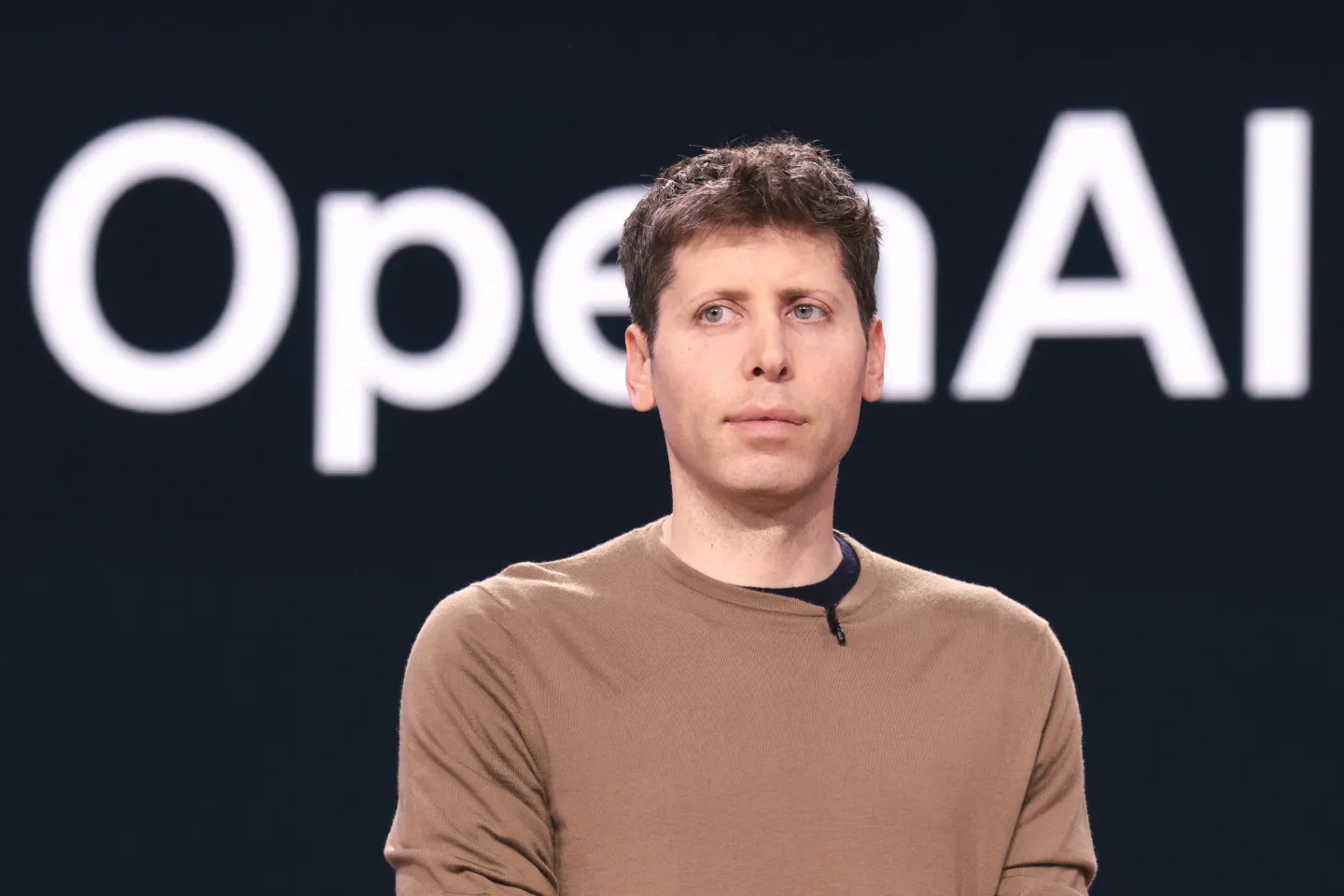
And in OpenAI’s case, that increasingly points to one person; Sam Altman.

For years, Altman has positioned himself as a careful steward of one of the most consequential technologies ever created. Under his leadership, OpenAI went from a relatively obscure research lab to the company at the centre of the global AI boom, powering everything from chatbots to enterprise systems and potentially, in the future, artificial general intelligence.

But the New Yorker’s reporting complicates that narrative.

Based on interviews, internal documents, and accounts from former colleagues, the piece surfaces a pattern of concerns that have followed Altman for years, questions about transparency, governance, and whether the same person pushing AI forward can also be trusted to slow it down when necessary. 

At one point, OpenAI’s own leadership appeared to reach a breaking point. In 2023, the company’s board removed Altman, citing a lack of confidence in his candor—a move that shocked the tech world before being reversed just days later after pressure from employees and investors. 

That episode now reads less like a one-off crisis and more like a preview.

What makes this moment different is scale.

OpenAI is no longer just another startup. It’s a company that could define how intelligence itself is built, distributed, and controlled. Its models are already embedded across industries, and its long-term ambition building systems that can reason, act, and potentially surpass human capabilities—places it in a category few companies have ever occupied.

That level of influence changes the stakes.

According to the reporting, some insiders worried that Altman downplayed safety concerns and sought to move faster than internal guardrails would allow, even as the company publicly emphasized its commitment to responsible AI.

Others described a leadership style that prioritized growth and positioning—particularly as OpenAI transitioned from a non-profit mission to a hybrid, profit-driven structure capable of attracting massive investment. 

In isolation, those tensions might not be unusual for a fast-growing tech company.

In the context of AI, they feel different.

Because AI isn’t just another product cycle.

It’s a technology that could reshape labour markets, national security, and the global balance of power. Even Altman himself has acknowledged that advanced AI could introduce risks ranging from mass job displacement to large-scale misuse if not properly managed. 

Also worth reading
Uncontrollable AI Warnings Start To Feel Real AI Models Are Becoming Too Complex To Understand OpenAI Astra Makes The AGI Claim Harder To Ignore Tech CEOs Tell G20 Not To Slow The AI Race US Backs OpenAI In Copyright Fight GITEX Nigeria Puts AI Ambition On Trial

That creates a paradox at the centre of the industry.

The same companies building AI are also being asked to regulate it. The same leaders racing to deploy more powerful systems are expected to act as gatekeepers for their safe use.

And there is no clear external authority with the technical understanding—or the speed—to fully oversee them.

This is where the question of trust becomes unavoidable.

The New Yorker’s framing is blunt: if a handful of individuals may end up controlling systems that shape the future of humanity, then their judgment, incentives, and behaviour matter as much as the technology itself.

And those are not easily audited.

The reporting points to internal disagreements, strained relationships with former collaborators, and broader scepticism from within the AI community about how decisions are being made and who ultimately benefits. 

At the same time, Altman continues to position himself as part of the solution proposing new economic frameworks, regulatory ideas, and global cooperation models to manage the impact of AI.

That dual role builder and regulator may be the most important tension of all.

None of this suggests a simple conclusion.

Altman remains one of the most influential figures in technology, and OpenAI continues to drive much of the industry’s progress. The company’s tools are widely used, its research is shaping the field, and its ambitions are aligned with what many believe is the next major phase of computing.

But the deeper question raised by this reporting isn’t about one person.

It’s about structure.

What happens when transformative technology is controlled by private companies? What happens when those companies move faster than governance frameworks can keep up? And what happens when trust becomes a prerequisite for safety but trust itself is contested?

For now, there are no clear answers.

Only a growing realization that the future of AI may depend less on what these systems can do and more on who is allowed to decide what they should do.

Related Reading

More contextual TechBooky stories selected from tags, categories and article context.

  • openai and anthropic ceos
    Altman and Amodei Share Awkward Moment at India AI Summit
  • 1778790004276
    Elon Musk Loses Lawsuit Against OpenAI and Sam…
  • altman
    Altman's Return Is A Teachable Moment in AI Governance
  • GettyImages-1797579058
    Sam Altman Is Back To OpenAI As CEO Less Than A Week…
  • sam_altman.0.1546423352.0
    Sam Altman Did Nothing Wrong Says Report, Rejoins…
  • Microsoft-datacenter-cold-aisle-server-racks-for-the-AMD-MI300X
    Microsoft Prepares for OpenAI's GPT-5 Launch
  • nvidia-ceo-affirms-strong-commitment-to-openai-des
    Nvidia CEO Reaffirms Commitment to OpenAI Amid Rumours
  • -1x-1 (17)
    Greg Brockman's Bigger OpenAI Role Points To A…
Keep Reading Smarter

Search TechBooky with AI

Use TechBooky's AI Search to explore the context behind this story and related coverage across the site.

Try AI Search
More On This Topic
Artificial Intelligence Enterprise
Follow TechBooky

Follow TechBooky for more technology stories and newsroom updates.

f Facebook X X in LinkedIn ig Instagram wa WhatsApp

Tags: AIopenaisam altman
Paul Balo

Paul Balo

Paul Balo is the founder of TechBooky and a highly skilled wireless communications professional with a strong background in cloud computing, offering extensive experience in designing, implementing, and managing wireless communication systems.

Search TechBooky
Open TechBooky AI Search Try the AI Assistant

BROWSE BY CATEGORIES

Receive top tech news directly in your inbox

subscription from
Loading

Freshly Squeezed

  • Nigeria’s Chassis Tests Africa’s Cloud GPU Gap September 5, 2026
  • Uncontrollable AI Warnings Start To Feel Real September 5, 2026
  • RAMageddon Shows AI Is Raising Gadget Prices September 5, 2026
  • South Africa Data Centre Boom Faces Water Backlash September 4, 2026
  • Starlink Enters Uganda’s Enterprise Market September 4, 2026
  • AI Models Are Becoming Too Complex To Understand September 4, 2026
  • Nvidia PAIR Turns Home PCs Into Local AI Compute September 4, 2026
  • FlexPay Arrests Put Kenya Fintech Trust On Trial September 4, 2026
  • Nigeria’s ChipMango Raises $1.9M For AI Hardware Talent September 4, 2026
  • Suno Pulls Mary J. Blige AI Ad After Approval Backlash September 4, 2026
  • Google Brings Gemini Voice Into Gmail And Docs September 4, 2026
  • Flock AI Cameras Become A US Election Issue September 4, 2026

Browse Archives

September 2026
M T W T F S S
 123456
78910111213
14151617181920
21222324252627
282930  
« Aug    

Quick Links

  • About TechBooky
  • Advertise With TechBooky
  • Contact us
  • Submit Article
  • Privacy Policy
Generic selectors
Exact matches only
Search in title
Search in content
Post Type Selectors
Search in posts
Search in pages
  • African
  • Artificial Intelligence
  • Gadgets
  • Metaverse
  • Tips
  • AI Search
  • About TechBooky
  • Advertise With TechBooky
  • Submit Article
  • Contact us

© 2025 Designed By TechBooky Elite

Discover more from TechBooky

Subscribe now to keep reading and get access to the full archive.

Continue reading

We use cookies to ensure that we give you the best experience on our website. If you continue to use this site we will assume that you are happy with it.