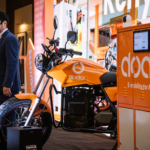
African electric-mobility company Spiro has secured another $18 million from the Africa Go Green Fund to deploy more electric motorcycles and expand battery-swapping infrastructure in Uganda and Rwanda. The new debt financing doubles the fund’s total commitment to Spiro to $36 million.
Africa Go Green, which is managed by Cygnum Capital, said the additional commitment builds on an earlier facility under which it provided $18 million and Nithio contributed $7 million. The September 21 announcement describes the new money as a vote of confidence in Spiro’s growth and operating model.
Spiro says it has deployed more than 135,000 electric motorcycles, completed over 50 million battery swaps and built more than 2,500 swapping stations across seven African markets. Those figures make the company one of the largest attempts to replace petrol-powered motorcycle transport with a battery network designed around how African riders actually work.
For commercial motorcycle riders, charging time is lost income. A conventional electric bike may be cheaper to operate, but waiting hours for a battery can make it impractical for someone earning money trip by trip. Spiro’s model separates the motorcycle from the battery. A rider visits a station, exchanges a depleted pack for a charged one and returns to the road within minutes.
The network becomes more useful as it becomes denser. More stations mean shorter detours, fewer queues and less anxiety about finding power. That is why the financing is not only about putting additional motorcycles on the road. Spiro needs enough swap capacity to support those vehicles reliably and make the service feel as convenient as buying fuel.
The company has already introduced larger battery-swap stations in Kenya and Rwanda. The new facility will concentrate on Uganda and Rwanda, where Spiro plans to grow its customer base while increasing use of the batteries and stations it has already installed. Better utilisation is important because infrastructure businesses become stronger when fixed assets serve more paying riders each day.
Debt financing is also significant. Venture capital is useful for product development and rapid expansion, but long-lived assets such as motorcycles, batteries and stations often need structured debt. A lender’s willingness to increase its commitment suggests Spiro can provide operating data and a repayment case, not only an ambitious clean-technology story.
Spiro’s scale builds on earlier government partnerships. In 2024, Uganda backed a plan involving 140,000 Spiro motorcycles, an example of how policy support can speed adoption when governments want cleaner transport and lower exposure to imported fuel.
The economic argument matters as much as emissions. Motorcycle taxis support millions of livelihoods across Africa, but petrol prices can consume a large share of daily earnings. Electric motorcycles can reduce running costs if batteries remain available, pricing stays predictable and the machines survive demanding roads and heavy commercial use.
There are difficult questions. Battery ownership and replacement costs must be managed over many years. Electricity supply is not equally reliable across every market. Governments also need clear rules for vehicle registration, battery safety, recycling and competition between incompatible swapping networks.
Spiro has assembly operations in Uganda, Kenya, Nigeria and Rwanda, which supports its claim that the system can create more local value than importing finished petrol motorcycles. The challenge is to turn assembly, maintenance and energy services into durable local industries rather than a short-term deployment campaign.
The extra $18 million will not settle those questions, but it gives Spiro more room to prove its model at scale. If the company can make swapping dependable and ownership affordable, East Africa could become one of the clearest examples of electric mobility growing from motorcycles upward rather than from expensive private cars downward.
Related Reading
More contextual TechBooky stories selected from tags, categories and article context.
Paul Balo is the founder of TechBooky and a highly skilled wireless communications professional with a strong background in cloud computing, offering extensive experience in designing, implementing, and managing wireless communication systems.
We use cookies to ensure that we give you the best experience on our website. If you continue to use this site we will assume that you are happy with it.