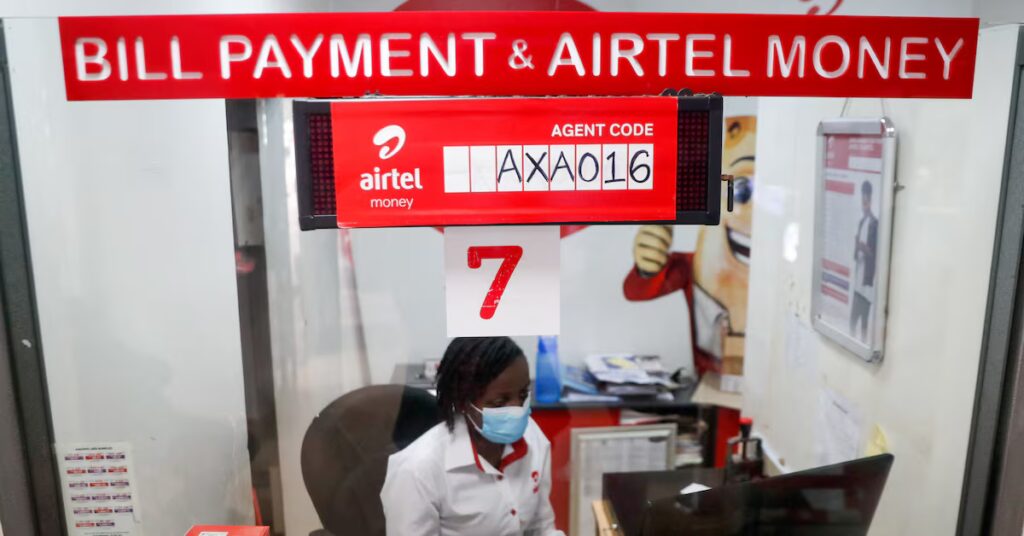
Airtel Money may have to accept a smaller debut on the London Stock Exchange than originally planned. The mobile-payments business is reportedly considering reducing both the amount it wants to raise and the valuation it will ask investors to support after receiving feedback from the market.
The company is now seeking to raise at least $800 million, below an earlier range of $1.5 billion to $2 billion, according to a report summarising the latest IPO discussions. Trading could begin as soon as next week, although the final size and timing may still change.
Airtel Africa previously confirmed London as its preferred listing venue for the payments unit. Separating Airtel Money would allow investors to value the fintech business independently from the group’s telecom operations and give the unit its own access to capital.
The reduced target should not automatically be read as a rejection of African mobile money. Airtel Money serves customers across several fast-growing markets where phones have become important tools for transfers, merchant payments and access to financial services. The business still offers investors exposure to a structural shift away from cash.
What the reported reset does show is that public investors are more demanding than private-market backers. They will examine transaction growth, revenue per user, regulation, currency volatility and the cost of competing with banks and fintech companies. A compelling story about financial inclusion is not a substitute for durable margins.
The choice of London also brings opportunity and pressure. The exchange provides international visibility and a broad pool of institutional capital, but investors have become cautious about technology listings. Airtel Money must persuade them that its growth can withstand weaker currencies and uneven economic conditions across its markets.
For Africa’s technology ecosystem, the listing would remain significant even at the lower end. There have been relatively few large public exits connected to the continent, leaving founders and venture investors with limited examples of how African digital businesses perform after reaching public markets.
TechBooky’s continuing coverage of Airtel Money’s IPO plans has followed the tension between the unit’s scale and the valuation investors are willing to pay. Reducing the offer may be disappointing for the parent company, but pricing the float realistically could produce a healthier debut.
A smaller IPO that trades well would be more useful than an ambitious one that struggles immediately. Airtel Money now has to show that investor caution has changed the price, not the underlying African mobile-money opportunity.
Related Reading
More contextual TechBooky stories selected from tags, categories and article context.
Paul Balo is the founder of TechBooky and a highly skilled wireless communications professional with a strong background in cloud computing, offering extensive experience in designing, implementing, and managing wireless communication systems.
We use cookies to ensure that we give you the best experience on our website. If you continue to use this site we will assume that you are happy with it.