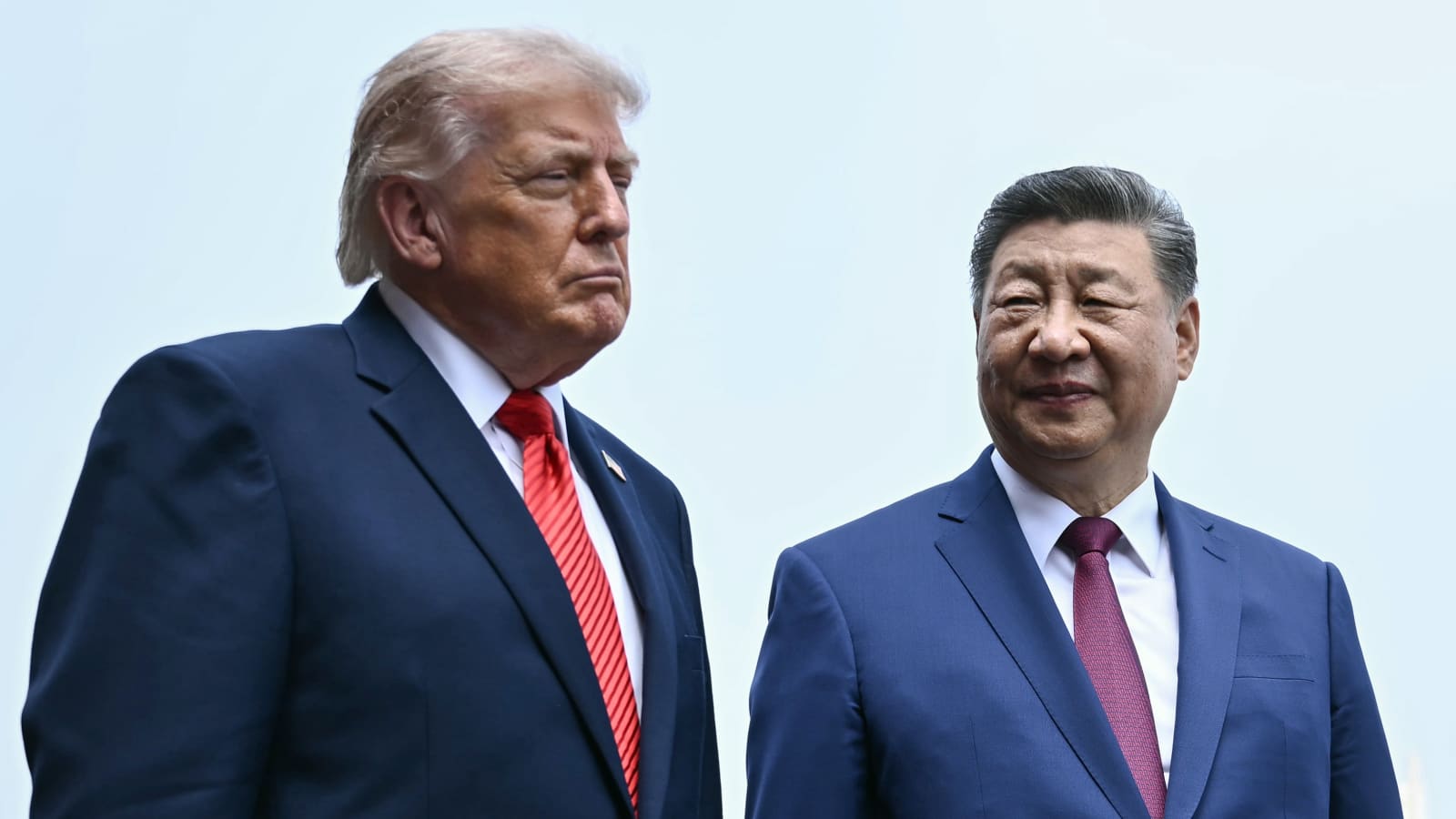
Donald Trump and Xi Jinping will meet in Washington this week with artificial intelligence sitting close to the centre of the agenda. The discussion is expected to cover advanced AI chips, model safety, technology controls and a proposed emergency warning channel that could help both countries communicate if a powerful AI system causes a serious cross-border incident.
The visit is scheduled for Thursday, September 24, according to the White House programme. Trade will remain important, but AI has become inseparable from the wider economic relationship. The United States wants to protect its lead in the most advanced chips and models, while China wants fewer restrictions on the hardware and software needed to train them.
That makes this more than another diplomatic meeting. It is a negotiation over who gets to build the next generation of AI, what rules those systems should follow and whether the two biggest technology powers can create even a narrow layer of trust before the models become more capable.
The first issue is compute. Washington has spent years tightening access to Nvidia’s most advanced accelerators and the manufacturing tools needed to produce high-end chips. Those controls are meant to slow China’s military and frontier AI progress. Beijing has responded by supporting domestic alternatives from companies such as Huawei and encouraging more use of Chinese technology.
The policy has not stopped Chinese AI development. Models from DeepSeek, Moonshot AI and other labs have shown that strong systems can be built with tighter budgets and constrained access to American hardware. Huawei’s expanding chip strategy also gives Beijing a long-term route to reduce dependence on US suppliers, even if the most advanced manufacturing gap has not disappeared.
The second issue is safety. The United States has proposed an emergency AI warning mechanism with China, similar in spirit to crisis communication channels used during the nuclear era. It would not settle the wider rivalry, but it could give both sides a direct way to flag a dangerous model incident, a cyber event involving AI agents or evidence that a system had moved beyond expected controls.
That idea matters because AI failures may not respect borders. A compromised model, automated cyberattack or agent swarm could move across cloud services and networks before officials understand what is happening. A hotline would not prevent every incident, but it could reduce the risk that one side mistakes an accident for a deliberate attack.
Trust is the difficult part. Earlier US-China AI safety discussions exposed deep disagreements over verification, model access and whether safety cooperation could become another route for intelligence gathering. Each country worries that the other may use shared standards to protect its own companies or slow a rival.
There is also a commercial question. American labs want access to a huge market but fear intellectual-property theft and model distillation. Chinese developers want access to chips and global customers but face growing scrutiny over security, censorship and state influence. Any agreement will therefore affect Nvidia, cloud providers, AI laboratories and startups far beyond Washington and Beijing.
The most realistic outcome is not a grand AI peace deal. It is a smaller package that keeps chip restrictions largely intact while opening a formal channel for emergencies and creating regular technical discussions. Even that would be meaningful. The AI race is accelerating, and the two countries with the greatest ability to shape it currently have very few ways to speak when something goes wrong.
Trump and Xi will arrive with different goals, but they share one uncomfortable reality. Neither country can manage frontier AI risk entirely alone. The meeting may show whether competition can leave enough room for practical safeguards, or whether artificial intelligence becomes one more area where every concession is treated as weakness.
Related Reading
More contextual TechBooky stories selected from tags, categories and article context.
Paul Balo is the founder of TechBooky and a highly skilled wireless communications professional with a strong background in cloud computing, offering extensive experience in designing, implementing, and managing wireless communication systems.
We use cookies to ensure that we give you the best experience on our website. If you continue to use this site we will assume that you are happy with it.