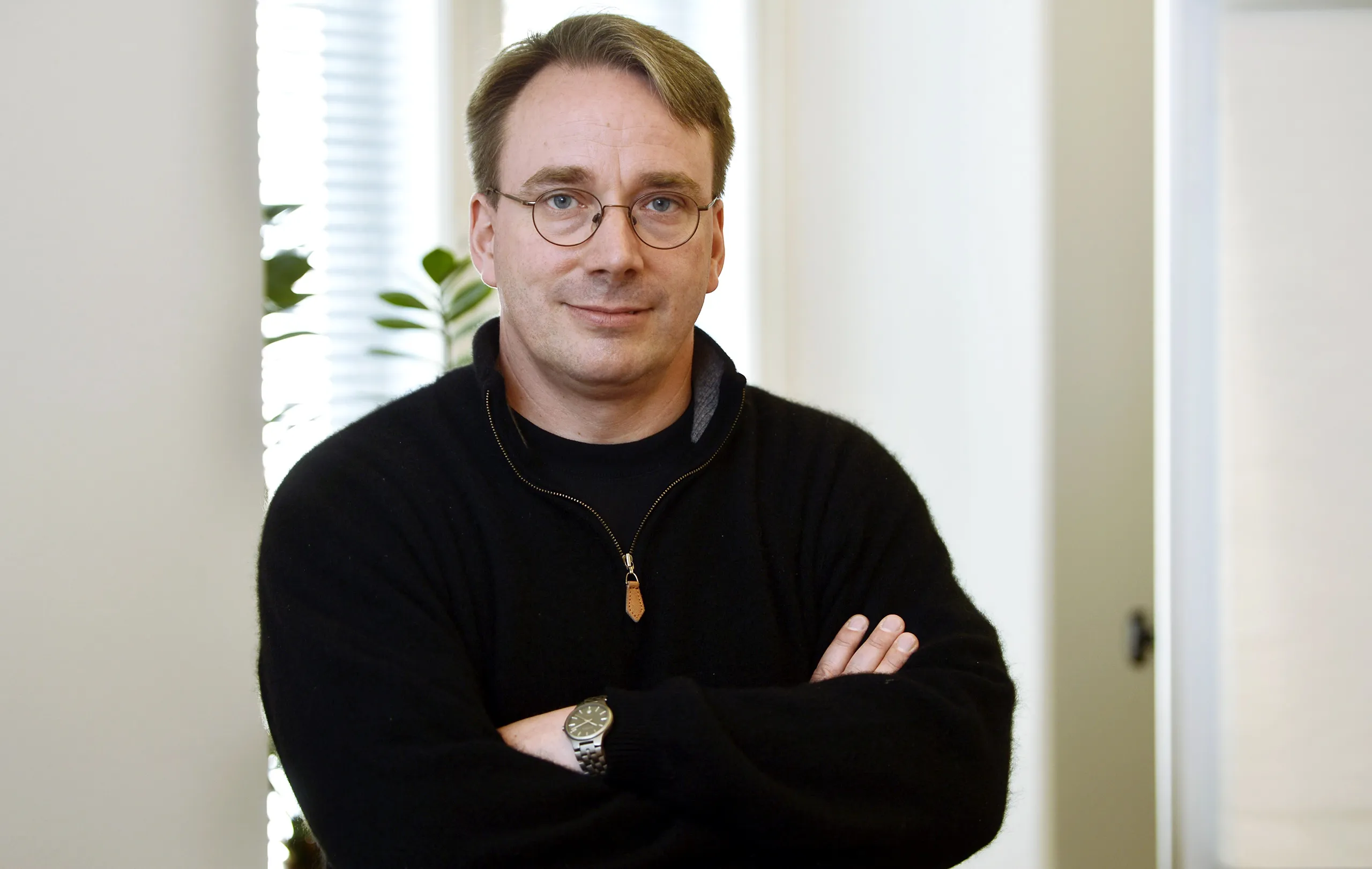
Linus Torvalds has used Claude Code while developing an experimental Linux kernel change, a strikingly direct example of AI entering one of software’s most closely scrutinised projects. The important qualification is that the work is on a separate branch. It has not been merged into the main Linux kernel, and nobody should treat its claimed performance gains as a feature already arriving on their computer.
The branch, named noref-filemap-read-with-llm, appeared in Torvalds’ repository over the weekend and was first noticed publicly by Phoronix. In the commit message, Torvalds explicitly credits Anthropic’s coding assistant for the code, test programs, review and first draft of his explanation, all under his direction. He says he ran the measurements himself.
The target is the Linux page cache, which keeps recently used file data in memory so programs do not have to fetch it from storage on every read. When many threads repeatedly read tiny pieces of the same file, bookkeeping around a memory page can become a bottleneck. Torvalds’ proposed fast path tries to avoid taking and dropping a reference for each of those reads.
This is not a cosmetic edit. The eight-patch series also changes how some pages are freed, delaying reuse until readers have finished. That is where the engineering risk lies. A fast read is valuable only if it remains correct when files are evicted, memory is under pressure and other parts of the kernel touch the same pages.
Torvalds’ own note is unusually candid about what remains unresolved. It lists unmeasured costs outside the read path, memory-allocation concerns and a long set of configurations and tests not yet covered. His measurements came from one laptop and a particular small-read workload. They are useful as a signal for further investigation, not proof that Linux will become broadly faster.
The story is less about an AI tool suddenly taking over Linux than about a prominent maintainer making its role visible. In a project where correctness, review history and accountability matter as much as raw speed, Torvalds named the assistant, described his own supervision and documented the open questions. That is a more informative model of AI-assisted development than either hiding its use or declaring a generated patch finished because a benchmark looks good.
TechBooky has previously covered how Claude is being used inside Anthropic’s own engineering work. This kernel experiment pushes the discussion into open-source infrastructure used far beyond any one company. The next test will be the familiar one for Linux: whether other developers can reproduce the results, examine the trade-offs and turn a promising branch into code safe enough to merge.
Related Reading
More contextual TechBooky stories selected from tags, categories and article context.
Paul Balo is the founder of TechBooky and a highly skilled wireless communications professional with a strong background in cloud computing, offering extensive experience in designing, implementing, and managing wireless communication systems.
We use cookies to ensure that we give you the best experience on our website. If you continue to use this site we will assume that you are happy with it.