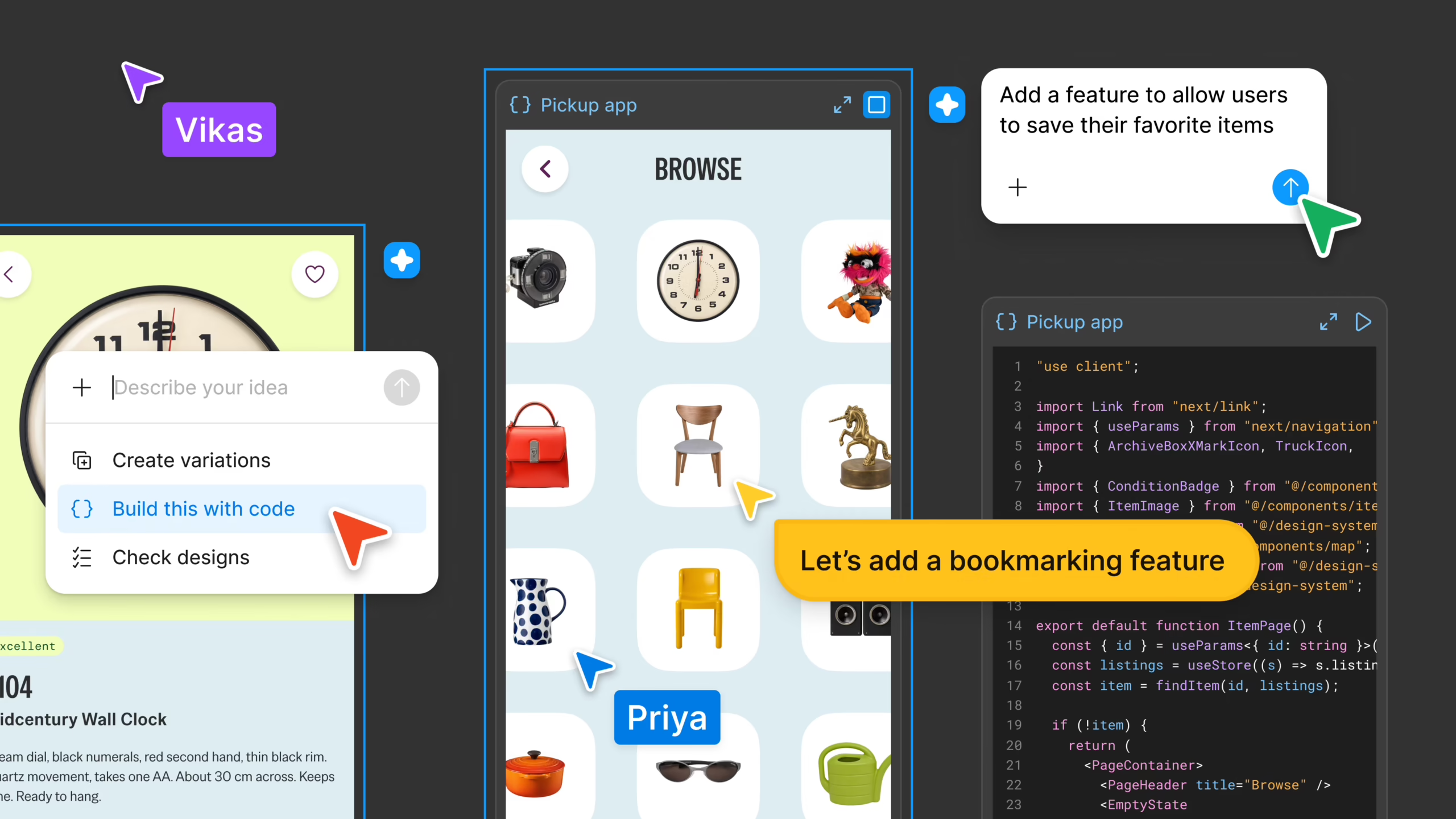
Figma is bringing working code into the design canvas. At its October 15 launch, the company said code layers had entered open beta, letting teams explore code-backed prototypes alongside the visual designs they are building. The move is part of a wider attempt to keep designers, developers and AI agents working from the same context rather than passing files between disconnected tools.
Code layers can start from an existing design, a local folder, a GitHub import or a coded prototype brought in through Figma’s Model Context Protocol integration. Teams can also capture a live website with Figma’s Chrome extension. The idea is not to replace an engineer’s code editor. It is to make a functioning interface visible, discussable and editable on the shared canvas before a prototype hardens into a product.
Figma says the open beta is available on all plans. That broad release matters because a design-to-code workflow only becomes useful when the people making product decisions can actually participate. A prototype in a terminal may be quick to produce, but it is harder for a wider team to inspect the choices behind it.
The second piece of the announcement is Figma Specs, a place for Markdown-based project context that remains connected to designs, diagrams and code layers. Teams can turn rough ideas into a product specification, then pass that context to a coding agent through Figma’s MCP server. Specs is beginning an open-beta rollout across web, desktop and mobile for paid plans.
This is less flashy than generating a screen from a prompt, but it addresses a real weakness in AI-assisted development. Agents can make a convincing first version while missing the decisions that govern a product; its accessibility rules, component conventions, data requirements or business constraints. A shared specification gives humans a place to check those assumptions before asking an agent to build further.
Figma is also letting teams add guidelines to published design libraries so agents can follow established patterns. Guidelines are in open beta, while imports of code sources from GitHub repositories or npm packages are entering closed beta. Both are planned for paid plans, according to Figma’s launch overview.
Figma’s push extends to publishing. The company is bringing the open-source Payload content framework into Figma Make, allowing teams to create data-backed websites and manage their content without handing every edit to a developer. Payload support is rolling out to accounts over the coming weeks and is available on all plans.
Meanwhile, the Figma agent is generally available, and the company says its MCP tools can now work directly with code layers and Specs. It announced 20 additional MCP partner integrations. The underlying bet is clear: AI will not eliminate the need for design decisions. It will make those decisions easier to lose unless the design system, code and project brief can travel together.
That builds on Figma’s earlier work to put an AI assistant inside its collaborative canvas. The challenge now is execution. Teams will judge code layers and Specs by whether they reduce repeated handoffs and preserve the reasoning behind a design, not by how quickly they produce another attractive demo.
Related Reading
More contextual TechBooky stories selected from tags, categories and article context.
Paul Balo is the founder of TechBooky and a highly skilled wireless communications professional with a strong background in cloud computing, offering extensive experience in designing, implementing, and managing wireless communication systems.
We use cookies to ensure that we give you the best experience on our website. If you continue to use this site we will assume that you are happy with it.