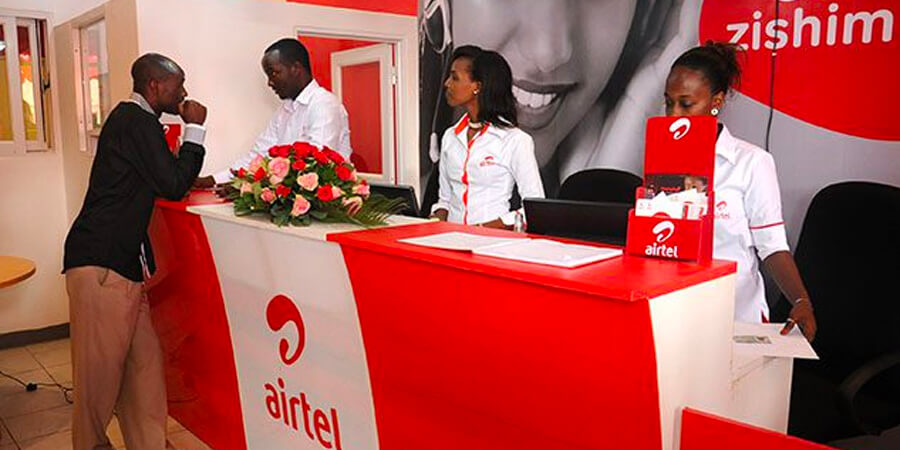
Airtel Money Kenya is going after small businesses more directly, and that matters because Kenya mobile money competition is no longer only about person-to-person transfers. The next fight is merchants, settlements and the daily cash flow of small traders.
TechCabal reported today that Airtel Money Kenya is targeting small businesses with a new digital wallet as it looks to deepen customer engagement after lifting its share of the Kenyan mobile money market to about 10.9 percent. Kenyan Wall Street also reported that Airtel mobile money share has risen to roughly 11 percent and that the company now serves more than six million Airtel Money customers.
The merchant focus makes sense. M-Pesa has dominated Kenya mobile money for years, but the market is slowly becoming more competitive. Airtel has been gaining share, and small businesses are a logical next battleground because they need more than a consumer wallet. They need payments, settlement, supplier transfers, bank movement and simpler ways to separate business money from personal money.
This is where the new wallet strategy fits. A merchant wallet can help small traders receive money, track inflows, pay suppliers and move funds into bank accounts. Earlier this year, Airtel Money also integrated with Absa Bank Kenya to enable easier wallet-to-bank transfers and merchant paybill payments, which shows the company has been building toward a more complete SME payments stack.
The strategic pressure is clear. If Airtel can become more useful to merchants, it can create more reasons for customers to keep money inside Airtel Money rather than simply cashing out or moving back to M-Pesa. Merchant payments create daily usage, and daily usage is what turns a wallet from a product into a habit.
Kenya is an important market because mobile money is already deeply embedded in daily commerce. That makes it harder for challengers to break through, but also more valuable when they do. Even a modest share shift can represent meaningful transaction volume because the market is so large and active.
The challenge is execution. Small businesses do not adopt payment tools because of brand announcements. They adopt them when the tools reduce friction. Fees, settlement speed, bank integration, customer acceptance, dispute handling and agent availability will all matter. If a trader cannot get paid easily or move money quickly, the wallet will not become the default.
Safaricom still has the stronger network effect through M-Pesa, and that advantage is not easy to break. But Airtel does not need to overtake M-Pesa overnight to change the market. If it keeps growing merchant usage, Kenya could finally see a more competitive mobile money environment. That would be good for small businesses, because competition usually forces better pricing, better integrations and better service.
Related Reading
More contextual TechBooky stories selected from tags, categories and article context.
Paul Balo is the founder of TechBooky and a highly skilled wireless communications professional with a strong background in cloud computing, offering extensive experience in designing, implementing, and managing wireless communication systems.
We use cookies to ensure that we give you the best experience on our website. If you continue to use this site we will assume that you are happy with it.