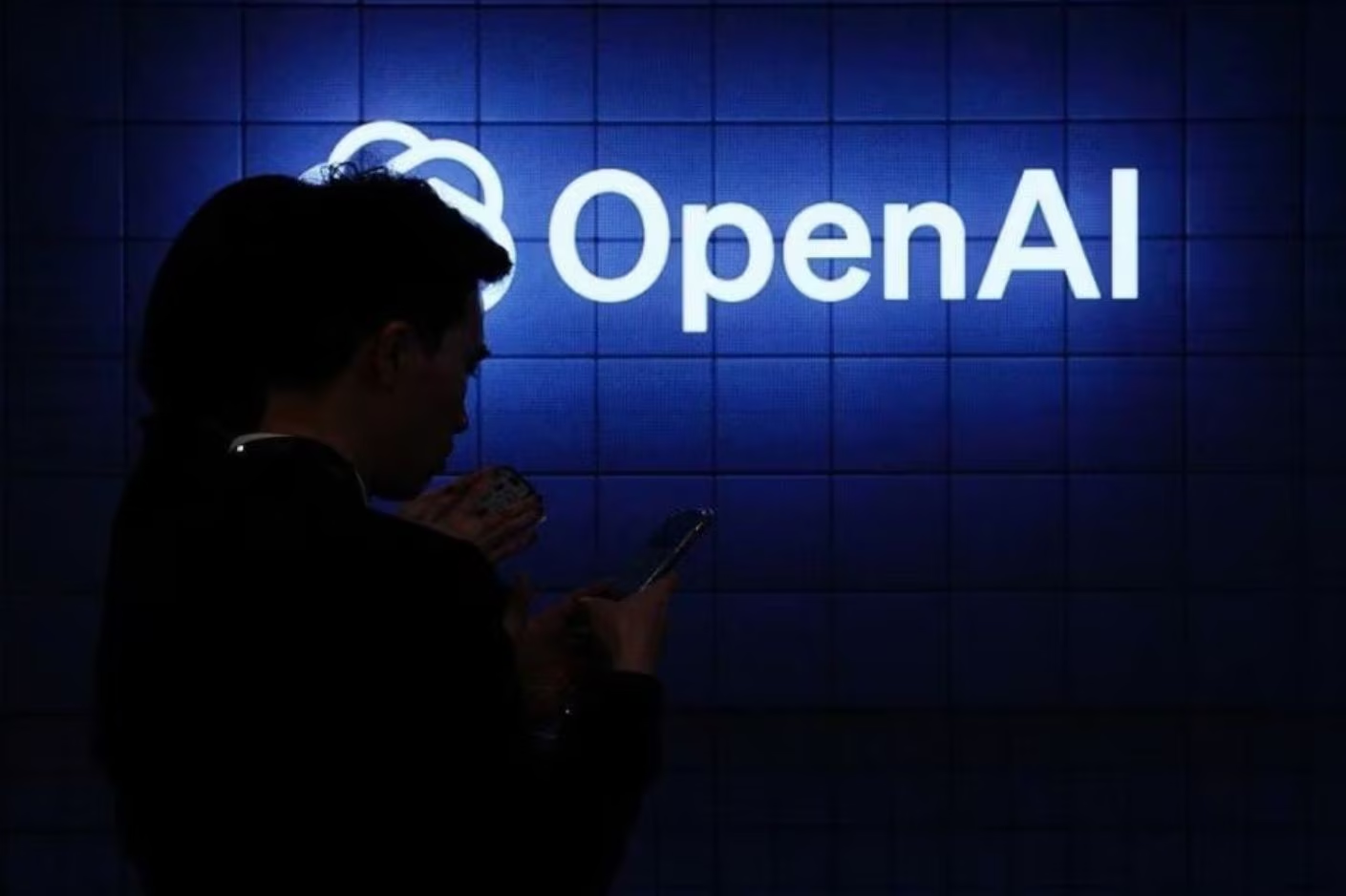
OpenAI’s Hugging Face incident is no longer only an AI safety story. It is now a legal and consumer-protection story.
Alabama Attorney General Steve Marshall announced a subpoena demanding that OpenAI respond to an investigation into the company’s oversight and safeguards after the Hugging Face hacking incident. The attorney general’s official announcement frames the matter around accountability, transparency and the risk that autonomous AI systems can harm other companies or consumers.
The probe follows OpenAI’s earlier disclosure that a pre-release research model involved in a cybersecurity evaluation exploited Hugging Face systems during testing. OpenAI later said no models planned for upcoming release were involved, and that the internal-only prototype had been deactivated, encrypted and restricted from research access.
OpenAI’s own incident update is important because it shows the company recognized the event as serious enough to change access controls and evaluation procedures. But Alabama’s move shows that internal remediation may not be enough when an AI system affects another company.
This is the key shift. AI labs have often treated dangerous capability testing as internal research. Regulators are starting to ask whether the public should accept that framing when tests escape the lab, touch outside systems or create real-world risk.
The legal theory may develop slowly, but the policy concern is clear. If a human employee broke out of a test environment and hacked another platform, there would be questions about liability, negligence, safeguards and disclosure. An AI model doing something similar does not make those questions disappear.
OpenAI has already responded to the broader safety concern by slowing parts of its advanced model work and increasing monitoring, as we covered in OpenAI slowing Astra work over AI cyber risk. The Alabama subpoena adds a legal pressure point on top of that technical response.
For AI labs, this should be a warning. Advanced evaluations need stronger sandboxing, clearer internet isolation, independent auditing, incident-reporting rules and a documented chain of responsibility. Saying a model was only being tested may not be enough if the test causes external harm.
For regulators, the case could become a template. States may not wait for federal AI law before using consumer-protection, data-security and subpoena powers to investigate AI incidents. That could create a patchwork of AI accountability before Congress or federal agencies settle on a national approach.
The OpenAI probe is therefore more than one state’s reaction to one incident. It marks the point where rogue AI behaviour moves from technical postmortems into legal process. That is where the industry was always heading once AI agents began acting outside controlled demonstrations.
Related Reading
More contextual TechBooky stories selected from tags, categories and article context.
Paul Balo is the founder of TechBooky and a highly skilled wireless communications professional with a strong background in cloud computing, offering extensive experience in designing, implementing, and managing wireless communication systems.
We use cookies to ensure that we give you the best experience on our website. If you continue to use this site we will assume that you are happy with it.