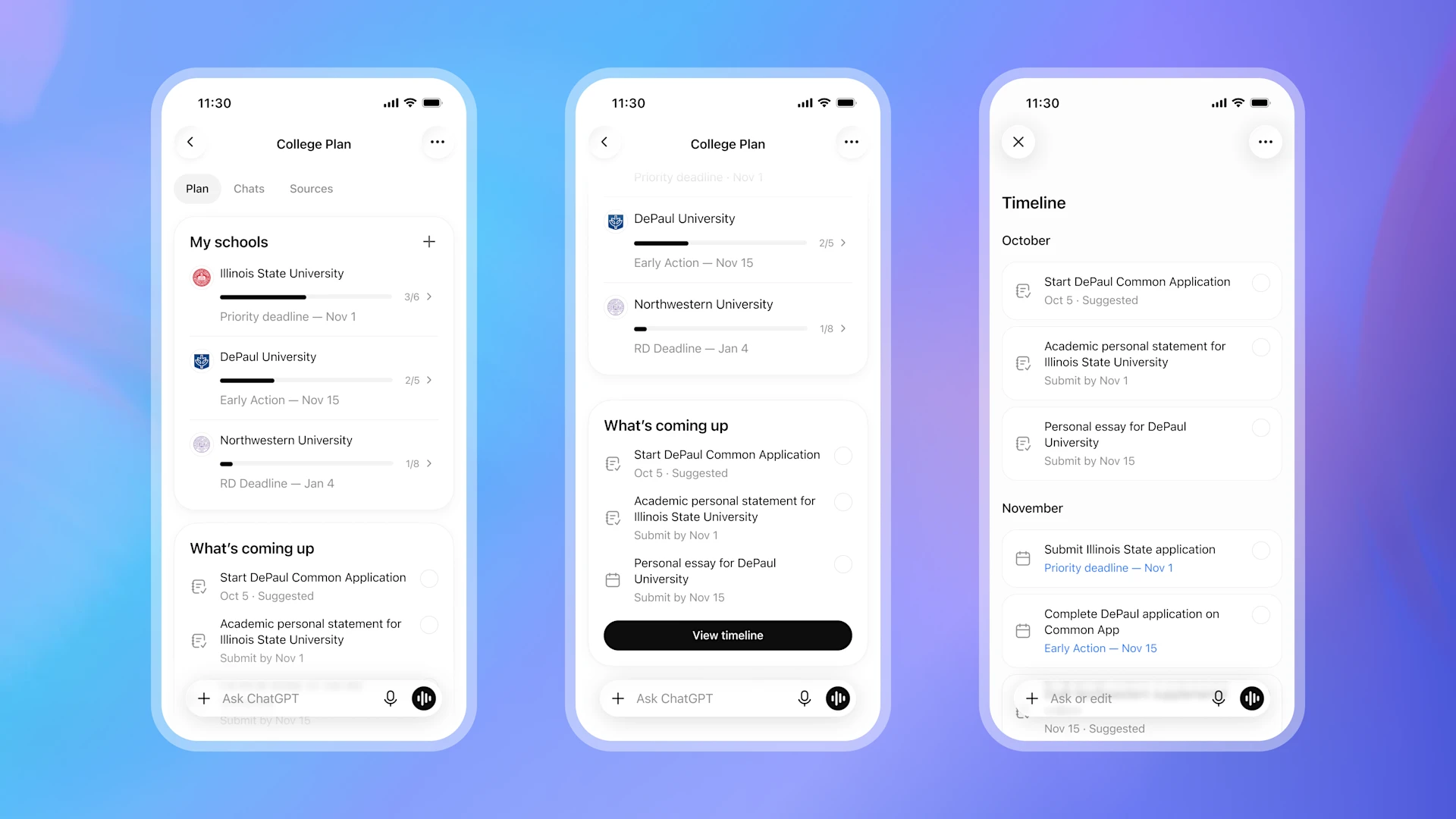
OpenAI wants ChatGPT to help teenagers through one of the most confusing parts of school life: applying to college. The company announced a College Planner on October 7 that will bring application requirements, deadlines, tasks and financial aid steps into a single plan. It is coming soon, rather than being available to every student today.
The first version is aimed at students in US grades 10 through 12 who are applying to four-year colleges. That is an important boundary. OpenAI says it hopes to extend the tool to other countries and to students considering two-year colleges or trade schools, but it has not announced when those expansions will happen. A Nigerian applicant, for example, should not assume the planner already covers local admissions.
For a student juggling different college portals, recommendation requests, essays and scholarship forms, a shared checklist could be genuinely useful. Missing a date can have a greater effect than writing a weak prompt, so the value here is less about having AI choose a dream school and more about keeping the practical work visible. OpenAI’s description suggests students will be able to bring several parts of that process into one place, though the company has not yet shown how reliably the planner will keep changing requirements current.
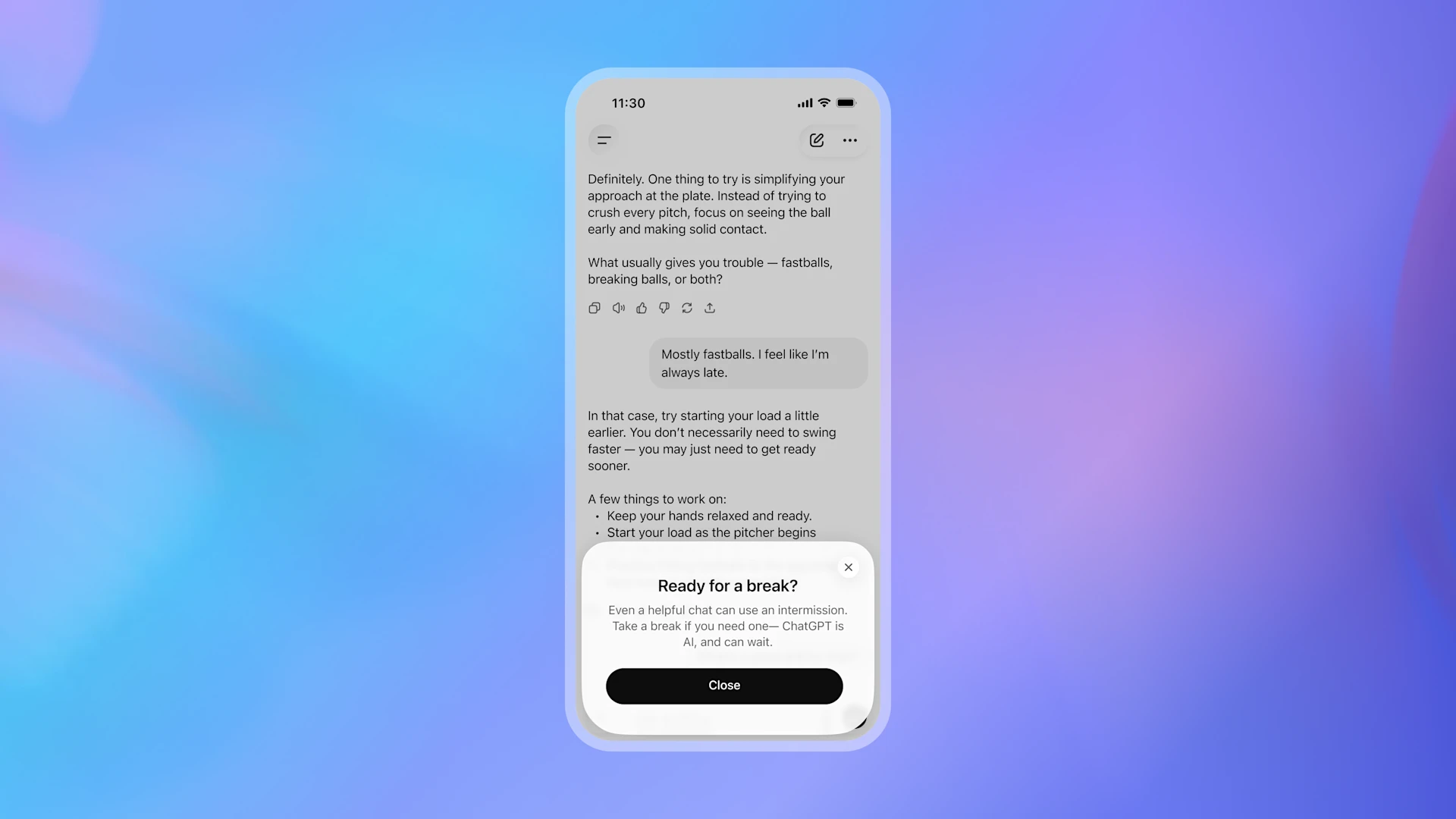
The announcement also builds on tools already in ChatGPT for teens. On iOS, students can capture multiple photos of notes and turn material into flashcards and quizzes. Study Mode is designed to guide a learner through a problem instead of simply supplying an answer. OpenAI’s earlier teen safety controls are relevant context because a planner handling school ambitions and personal decisions needs more than a polished interface.
OpenAI says it is supporting College Advising Corps and is working with the Digital Wellness Lab at Boston Children’s Hospital on a teen advisory effort involving about 22 students during the 2026-27 school year. That gives students a route to influence the product, although it is not a substitute for evidence that the finished planner improves admissions outcomes or reaches families with limited access to counselling.
The useful test will be whether the service can explain a requirement clearly, point to the college or aid agency behind it and admit when it does not know. Application deadlines, eligibility rules and costs can change. Students should still verify high-stakes details with their schools, official admissions pages and financial aid providers. A missed deadline is not something a chatbot can easily undo.
There is a wider opportunity here. Good counselling is unevenly distributed, and a free or widely accessible planning assistant could lower the information barrier for students who do not have one-to-one help. But convenience alone will not solve affordability, uneven internet access or opaque admissions rules. College Planner could become a useful companion to human advisers; for now, it is a forthcoming US-focused tool whose real value will depend on accuracy, reach and trust.
Related Reading
More contextual TechBooky stories selected from tags, categories and article context.
Paul Balo is the founder of TechBooky and a highly skilled wireless communications professional with a strong background in cloud computing, offering extensive experience in designing, implementing, and managing wireless communication systems.
We use cookies to ensure that we give you the best experience on our website. If you continue to use this site we will assume that you are happy with it.