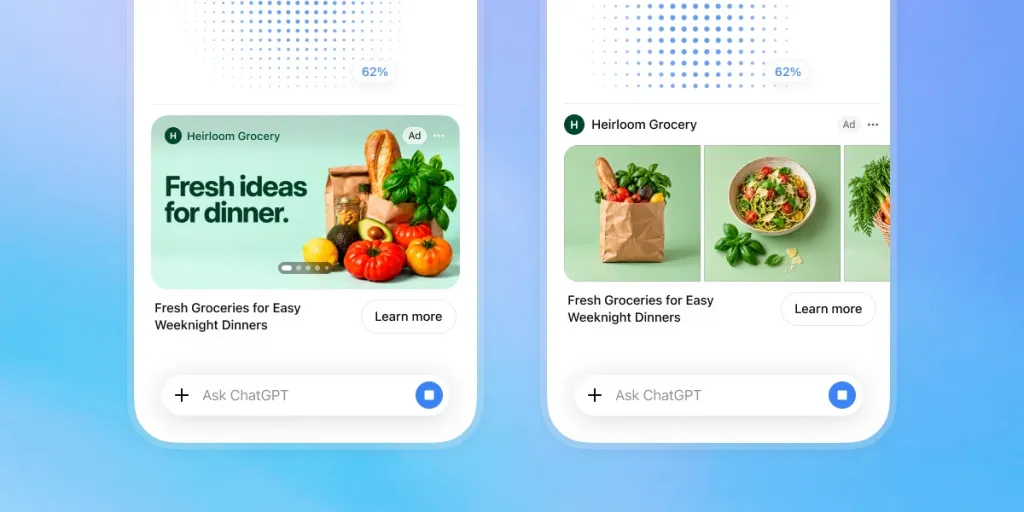
The next time someone asks ChatGPT to create an image, a product advertisement could appear alongside the process. OpenAI is preparing to test a new visual format in the United States later this month, an expansion of its advertising business into one of the chatbot’s most popular creative tasks.
The company says the ads will be clearly labelled and kept separate from the image a user is making. That distinction matters. A sponsored product appearing near an image request is different from secretly placing a brand inside the generated picture, and OpenAI says its ads will not influence ChatGPT’s answers. The initial test will involve a limited group of advertisers, not an immediate worldwide launch.
OpenAI describes the format as a way for people to see products in use or imagine experiences around them. A person planning a room makeover, for example, might be shown a relevant sponsored visual while generating design ideas. The company has not published a complete account of what every placement will look like, so it is too early to say precisely how prominent the ads will feel in practice.
This is a more ambitious advertising pitch than a simple link beneath a chatbot response. Images can make a product tangible at the point when a user is exploring an idea, and advertisers will want to know whether that attention leads to purchases. OpenAI is therefore expanding measurement integrations with firms including Hightouch, Tealium and LiveRamp, as well as attribution partners that help brands connect ad exposure with subsequent actions.
The company says ChatGPT reaches 1.2 billion people weekly. That scale makes advertising a potentially large business, but it also raises a question familiar to every platform that mixes recommendations and paid promotion: can users tell which suggestion is useful and which one has been bought? Clear labelling is the minimum; the real test will be whether the creative flow still feels like a tool rather than a storefront.
OpenAI says it uses placement rules to keep ads away from sensitive or emotionally vulnerable conversations, with automated checks and human oversight. It is also testing brand-suitability evaluations with DoubleVerify and Integral Ad Science. Those arrangements are meant to give advertisers confidence about where ads appear without handing independent assessors access to private conversations. The effectiveness of those safeguards will have to be judged once the format is live.
For users, the practical point is simple. The images they request should remain their requested images, while any commercial message beside them should be identifiable as an ad. Whether the distinction remains obvious during a fast-moving creative session will decide how comfortable this next phase of ChatGPT feels.
Related Reading
More contextual TechBooky stories selected from tags, categories and article context.
Paul Balo is the founder of TechBooky and a highly skilled wireless communications professional with a strong background in cloud computing, offering extensive experience in designing, implementing, and managing wireless communication systems.
We use cookies to ensure that we give you the best experience on our website. If you continue to use this site we will assume that you are happy with it.