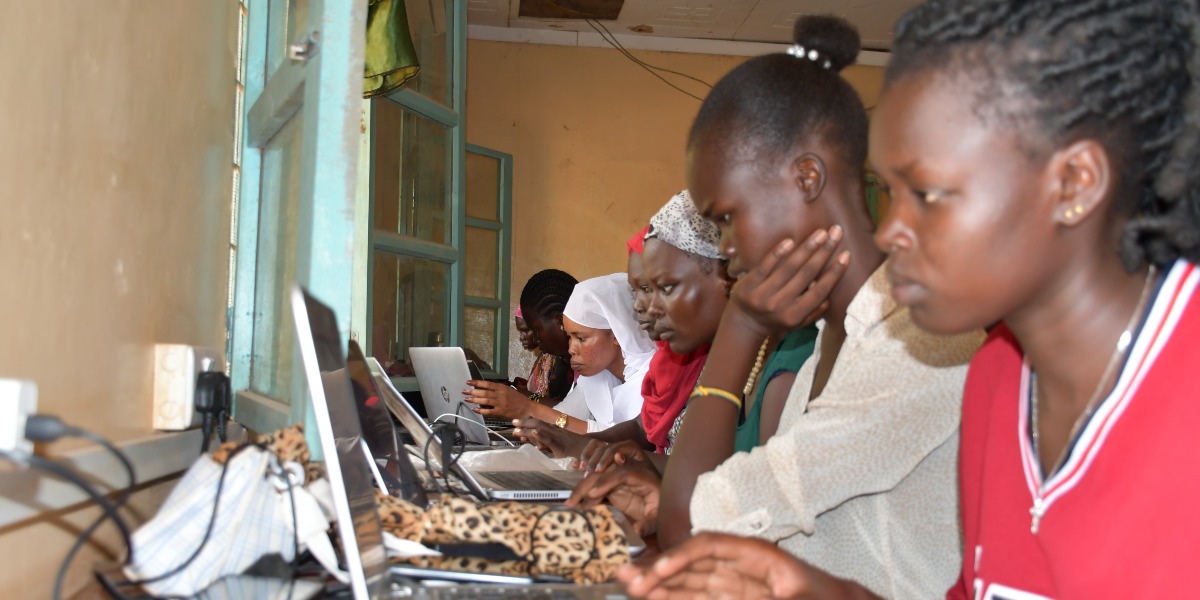
For years, remote digital work was sold as a way for people in refugee camps to earn an income without leaving home. A computer, an internet connection and training could open doors that local labour markets kept closed. Fresh reporting from Kenya’s Kakuma camp suggests that the lowest rungs of that ladder are becoming harder to hold on to just as AI companies ask the world to believe technology will create more opportunity.
In an investigation published on Thursday, the Guardian spoke with more than two dozen refugees and examined how paid annotation, transcription and other online tasks have changed. Workers and training organisations described fewer entry-level opportunities, falling pay and jobs whose compensation is uncertain until after the work is judged. These are the Guardian’s interviews, not independent TechBooky interviews, and the detail matters because it complicates the usual story about AI jobs in Africa.
One case involved AOP Connect, a research platform owned by RWS, where contributors could receive discretionary rewards rather than guaranteed wages. The company told the Guardian that the reward structure is communicated upfront and that the particular copyright research project is not used to train AI models. It would be misleading to call every task in the investigation AI training. The wider issue is that precarious digital workers can face similar uncertainty whether they are labelling images for a model, researching material for a client or competing for a platform reward.
The employment shift is not only anecdotal. The International Trade Centre told the Guardian that it estimates jobs such as transcription, data entry, translation and web research have declined by about 50% since 2022. That is an estimate covering categories of work, not proof that AI alone eliminated half of Kakuma’s jobs. Platform closures, changing client demand and automation can all play a part. Still, when software makes a task quicker or removes it entirely, the person paid by the task may see the benefit arrive somewhere else.
This is where the familiar advice to ‘upskill’ starts to feel thin. Some experienced workers can move into software engineering, quality assurance or direct client relationships. But the route into those roles often begins with basic paid work, practice and a visible record of what someone can do. If entry-level contracts vanish, asking everyone to become an AI specialist does not solve the immediate problem of earning enough to live while learning.
There is also a question of power. A platform can set a price, change an assessment rule or conceal the end client. A refugee worker with few alternatives has little room to negotiate. Better practice would mean a guaranteed minimum for accepted work, a clear explanation of quality decisions, a way to contest non-payment and disclosure of whether submissions will help build an AI product. Those are practical contract terms, not abstract promises about ethical AI.
The concern is broader than one camp. Africa’s AI talent challenge includes the risk of supplying labour while the most valuable products are built elsewhere. Kakuma makes that imbalance visible in human terms. If African workers are invited into the AI economy only when a task is cheap, temporary and easy to replace, then more connectivity alone will not make that economy inclusive. The measure of progress is whether the people doing the work gain dependable pay, skills they can carry forward and a real stake in what their labour helps create.
Related Reading
More contextual TechBooky stories selected from tags, categories and article context.
Paul Balo is the founder of TechBooky and a highly skilled wireless communications professional with a strong background in cloud computing, offering extensive experience in designing, implementing, and managing wireless communication systems.
We use cookies to ensure that we give you the best experience on our website. If you continue to use this site we will assume that you are happy with it.