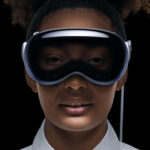
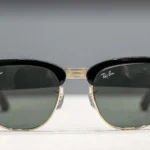
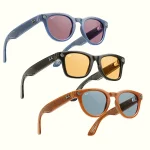
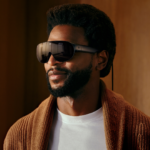
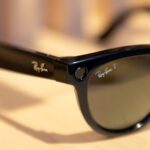
Apple is reportedly preparing its own entry into the smart glasses market, aiming for a launch in late 2027 and positioning itself directly against Meta’s camera-equipped Ray-Ban wearables.
According to reporting cited from Bloomberg’s Mark Gurman, Apple has been developing first-generation smart glasses internally code-named “N50.” Earlier expectations suggested the glasses could be revealed by the end of 2026 and go on sale in early 2027, but development delays have pushed the planned release further out, now targeting late 2027. The timing would likely place the product in the crucial holiday shopping window.
Smart glasses have drawn growing scrutiny for privacy concerns, but sales momentum appears to be moving in the opposite direction. Ray-Ban’s parent company, EssilorLuxottica, reported that sales of its Meta-branded smart glasses tripled in 2025 compared to the previous year. That growth is one key backdrop to Apple’s push into the category, as the company looks for its next major hardware line in wearables.
Apple has already turned its smartwatch business into a major revenue contributor, with estimates cited in the reporting putting Apple Watch at around $17 billion in annual revenue. The company is now hoping to replicate some of that success with eyewear.
Current CEO Tim Cook is said to be treating the smart glasses project as a top priority before he hands over leadership of the company to John Ternus on September 1st. Ternus has been leading Apple’s Vision Products Group (VPG) for the past two years, the same internal group working on these glasses as well as other vision-focused hardware.
The upcoming glasses are described as a direct competitor to Meta’s devices and are being designed to fit into the mainstream eyewear market rather than a niche tech look. Based on details from the reporting:
Price range: Apple is targeting a price between $200 and $500, positioning the glasses in a consumer-friendly band compared to more experimental or premium headsets.
Design and styles: The glasses are expected to come in a number of popular styles, suggesting Apple will lean on fashion appeal as much as technology.
Cameras, speakers, and microphones: Built-in cameras, speakers, and microphones are planned. These components are intended for taking photos and videos, handling calls, and listening to music, podcasts, or Siri announcements.
Camera design: One visible difference from Meta’s current Ray-Ban models is the camera shape. Apple’s glasses are expected to feature ovular camera modules, rather than the circular lenses seen on Meta’s devices.
No immediate AR display: Gurman’s reporting suggests Apple’s first-generation glasses will not include in-lens augmented reality displays, at least for the first few years. That distinguishes them from some of the more advanced Ray-Ban models that are moving toward display capabilities.
The Vision Products Group working on the glasses is also responsible for forthcoming AirPods Pro that reportedly incorporate built-in infrared cameras. That AirPods project has already triggered concern in some corners of the internet over why such camera functionality is needed, even if it does not enable the same kind of behaviour that has drawn criticism around smart glasses.
Apple’s smart glasses will arrive as part of a broader industry shift toward more intimate, body-adjacent computing hardware from earbuds and watches to cameras worn on the face. Yet it is the face-worn devices that have become a particular flashpoint for privacy and social norms.
The growth of Meta’s Ray-Ban smart glasses has coincided with mounting stories of misuse and discomfort, especially in public and sensitive spaces. There have been complaints from women who discovered they were recorded without their knowledge or consent by people wearing such glasses, with some later being extorted for money when they requested that published videos be taken down. These incidents highlight the potential for abuse when cameras are made more discreet and more socially acceptable as everyday accessories.
Despite those concerns, wearing smart glasses in public is not currently treated as a clear violation of social norms or, in many cases, of policy even in environments where privacy expectations are high, such as medical settings. The devices often resemble ordinary eyewear, and unless recording indicators are conspicuous, bystanders may not realize they are being filmed or listened in on.
At the same time, sales figures indicate that consumer acceptance or at least tolerance of camera-equipped eyewear is increasing. The reported tripling of Meta smart glasses sales in 2025 suggests that, for a growing share of buyers, persistent cameras, microphones, and networked services at eye level are an acceptable trade-off for convenience, entertainment, or novel features.
Apple’s entry into this space will likely amplify the debate. The company’s scale, design influence, and existing ecosystem of services and devices could rapidly normalize smart glasses in ways the current market has not yet achieved. The fact that the glasses will be priced in a relatively accessible range, and offered in familiar styles, points to an attempt to reach mainstream users rather than early adopters alone.
Whether the product becomes another ubiquitous hit on the level of AirPods, or ends up closer to the more niche and expensive Vision Pro headset, remains unclear. But the combination of Apple’s brand, an expanding wearables market, and a society already negotiating the boundaries of constant surveillance suggests that late 2027 could be a critical moment for how smart glasses are perceived—and how visible recording devices on faces become in everyday life.
Related Reading
More contextual TechBooky stories selected from tags, categories and article context.
Paul Femi Balo is the founder and publisher of TechBooky. He covers artificial intelligence, African technology, digital infrastructure, enterprise technology and the global digital economy.
We use cookies to ensure that we give you the best experience on our website. If you continue to use this site we will assume that you are happy with it.