Chinese AI models are reportedly becoming a default part of the U.S. enterprise AI stack, even as Washington debates whether some of those same models should face restrictions.
According to Bloomberg reporting, Chinese AI models account for roughly 60% of token usage by U.S. companies on OpenRouter, the model-routing marketplace that lets developers choose between many AI systems. The figure matters because it shows that Chinese models are not only being discussed by researchers; they are already being used heavily by American developers and businesses.
That creates an awkward policy problem. U.S. officials can threaten restrictions on Chinese models over national-security or intellectual-property concerns, but those models may already be embedded in products, prototypes, internal tools and workflows used by American companies.
OpenRouter is not the whole AI market, but it is a useful signal because developers use it to route prompts across competing models. If Chinese models are taking a large share there, it suggests users are making practical choices based on price, availability and performance rather than national origin.
That is exactly why the number is politically sensitive. A company may not care whether a model is American, Chinese or European if it solves a task well and costs less. Policymakers care very much, especially when the model can touch code, customer data, strategy documents or security workflows.
This is the tension we covered in the Chinese AI sanctions and distillation story. Washington wants to stop IP theft and reduce strategic dependence, but the market keeps rewarding cheaper, capable models.
The most obvious reason Chinese models are gaining usage is cost. If a model can perform close to the leading U.S. systems at a much lower price, developers will try it. If it works, they will keep using it. That is especially true for high-volume tasks such as coding assistance, data extraction, summarisation, customer support, testing and agentic workflows.
The same pattern explains why Google is now pushing faster and cheaper Gemini Flash models. The AI race has entered a cost-per-task phase. For many businesses, the question is no longer only which model wins the hardest benchmark. It is which model can run every day without destroying margins.
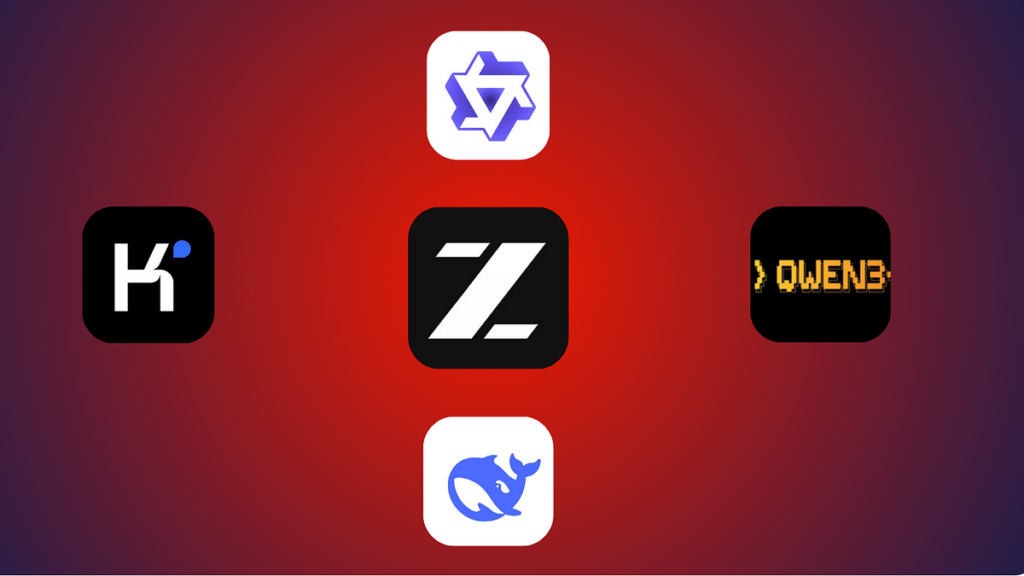
Chinese labs have understood this well. Kimi K3, Qwen and DeepSeek-style releases have made low-cost competitiveness a central part of their appeal.
If the U.S. tries to restrict access to Chinese open-weight or API models, implementation will be difficult. Developers can access models through routing platforms, cloud providers, self-hosted weights, foreign APIs or local deployments. Some uses may be easy to police. Others will be much harder.
There is also a business backlash risk. If American companies are already using these models for legitimate work, sudden restrictions could raise costs, break workflows and push some developers toward less transparent channels.
That does not mean security concerns are imaginary. A model can create risks around data handling, hidden dependencies, supply chains and strategic influence. But a restriction-first policy would have to explain what replaces the cheaper capacity companies are already using.
The clearest lesson is competitive: U.S. labs cannot rely forever on brand, early lead and political protection. If Chinese models are cheaper and good enough, customers will use them. That is how software markets work.
The answer is not only lobbying for restrictions. It is making models cheaper, faster, easier to deploy and more transparent on data handling. OpenAI, Anthropic, Google and xAI all now face pressure to prove they can deliver value at scale, not just spectacular demos.
The AI market may be heading toward a split world politically, but developers still live in a practical world. They will keep asking the same questions: Does it work? Is it fast? Is it affordable? Can I trust it? The companies and governments that answer all four will shape the next phase of AI.
Related Reading
More contextual TechBooky stories selected from tags, categories and article context.
Paul Femi Balo is the founder and publisher of TechBooky. He covers artificial intelligence, African technology, digital infrastructure, enterprise technology and the global digital economy.
We use cookies to ensure that we give you the best experience on our website. If you continue to use this site we will assume that you are happy with it.