OpenAI’s appetite for AI infrastructure is getting even bigger. A new report says the company now expects to spend about $750 billion on cloud and compute infrastructure through 2030, up from an earlier estimate of about $600 billion. That is not just a funding headline. It is a reminder that the AI race is increasingly being fought through electricity contracts, land, cooling, chips and data-centre execution.
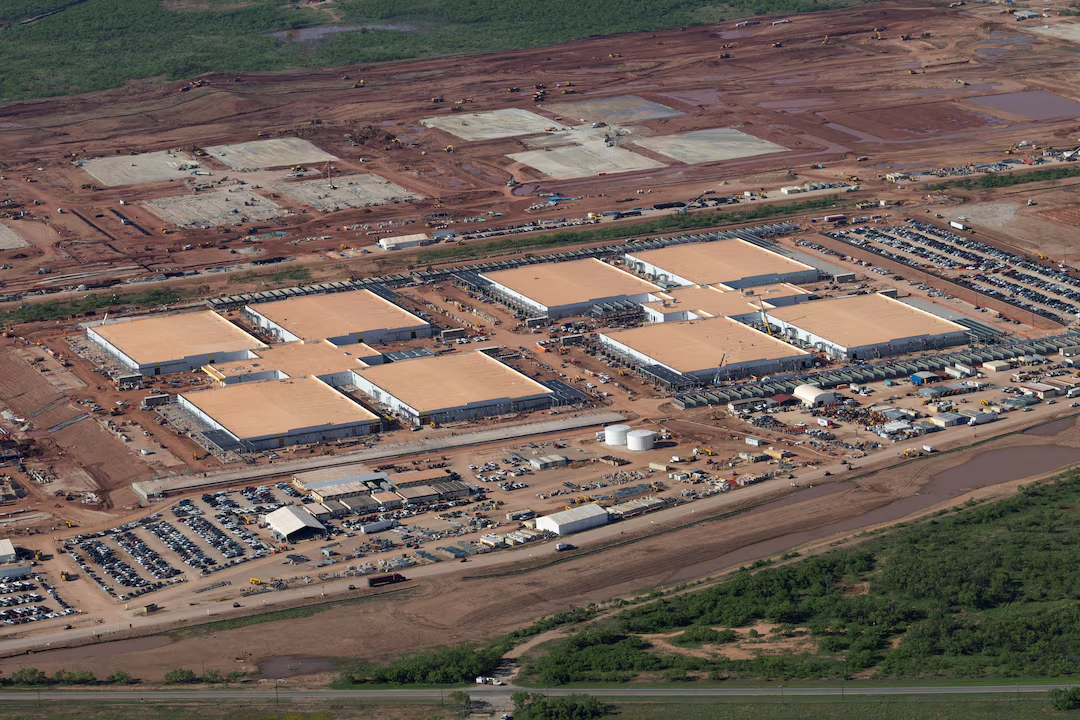
The first major piece of this expanded buildout is Project Camellia, a proposed $20 billion data-centre campus in Effingham County, Georgia, northwest of Savannah. The site is expected to draw at least 3.2 gigawatts of power from Georgia Power, with capacity becoming available in phases between 2028 and 2032.
To put that into plain language, this is the kind of energy demand normally discussed at the level of utilities and heavy industry, not consumer software. OpenAI is no longer only buying GPUs from cloud providers. It is increasingly shaping the physical infrastructure required to train and serve the next generation of models.
Project Camellia is important because OpenAI is reportedly taking a more direct role in the design and development of the Georgia campus. That marks a shift from relying mainly on partners such as Microsoft, Oracle and the broader Stargate alliance to securing more control over the infrastructure pipeline.
The timing also shows why data centres are becoming politically sensitive. AI companies need power years before the models that will use it are fully known. Utilities have to plan generation and transmission capacity, communities have to deal with land and water concerns, and regulators have to decide who pays when forecasts change.
Axios reports that OpenAI says the Georgia project will not raise residential electricity prices and that the company would reduce its own power draw during peak demand periods before power is cut to others. Those promises will matter because Georgia has already become a flashpoint in the wider data-centre boom.
This is part of a broader recalibration. OpenAI originally framed Stargate as a giant partnership-led infrastructure push, with an announced plan to invest $500 billion over four years in U.S. AI infrastructure. Since then, the company has expanded regional compute plans, signed massive cloud deals and faced the same constraint every AI lab is facing: demand for compute is growing faster than energy and construction timelines.
That context also connects with OpenAI’s earlier infrastructure moves in Europe. TechBooky has followed how the company paused its Stargate UK data-centre plan over energy costs and regulatory pressure, while also pursuing regional projects such as Stargate Norway. The pattern is clear: AI compute goes where power, regulation, land and political support line up.
The big question now is sustainability. OpenAI may be able to raise huge sums and sign huge contracts, but the bottleneck is no longer only money. It is the slow physical world: substations, turbines, gas plants, solar farms, battery storage, transmission lines, water permits, local opposition and construction labour.
For users, this infrastructure race will be mostly invisible until it is not. It will show up in faster models, cheaper inference, more reliable products and possibly more specialised AI services. But for communities hosting these campuses, it will show up as power demand, tax incentives, construction activity and environmental debate.
OpenAI’s $750 billion compute plan therefore says something bigger about the AI industry. The next leap in AI will not come only from smarter algorithms. It will come from whoever can build, power and operate the industrial base behind intelligence at a scale the internet industry has never attempted before.
Related Reading
More contextual TechBooky stories selected from tags, categories and article context.
Paul Femi Balo is the founder and publisher of TechBooky. He covers artificial intelligence, African technology, digital infrastructure, enterprise technology and the global digital economy.
We use cookies to ensure that we give you the best experience on our website. If you continue to use this site we will assume that you are happy with it.