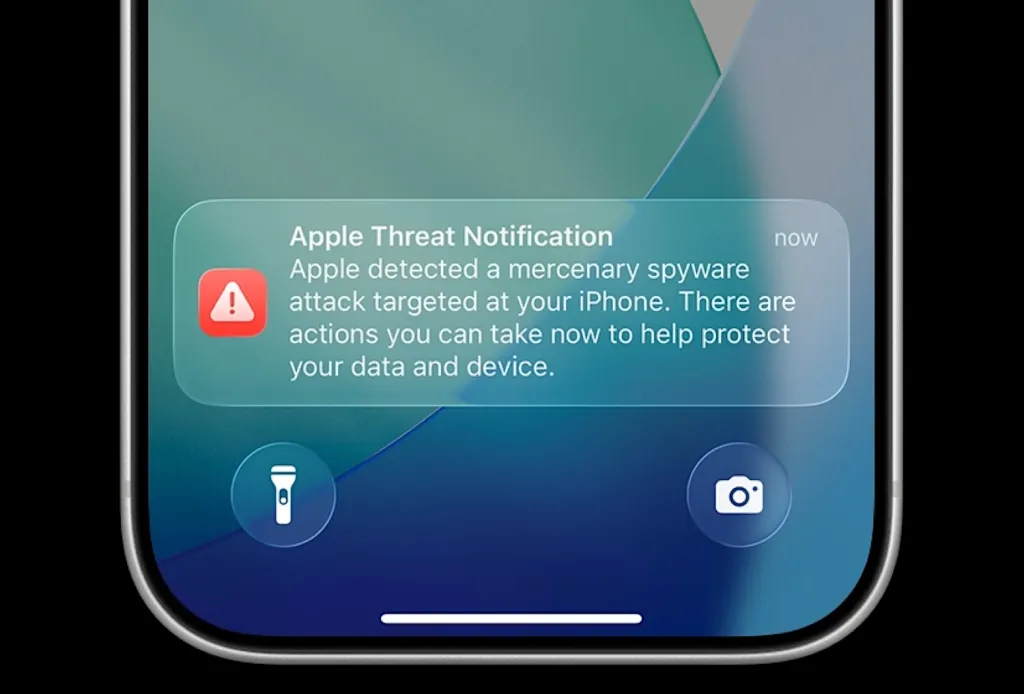
Apple’s spyware alerts used to feel like something meant for a small group of journalists, activists, diplomats and political figures. That is no longer a safe assumption.
Investigators say Apple’s latest round of threat notifications has produced an unusually high number of responses from users who believe they were targeted by mercenary spyware, according to TechCrunch. Apple has not publicly listed every country or customer involved, but the scale of the response has raised concern among security researchers.
Apple’s own support guidance says its threat notifications are designed to inform and assist users who may have been individually targeted by mercenary spyware attacks. These are not ordinary scam messages or generic malware warnings. They are meant for people who may have been selected because of who they are or what they do.
That distinction matters. Mercenary spyware is expensive and usually used against high-value targets. It can compromise a phone, read messages, access microphones or cameras, track location and gather sensitive personal or professional information. In some cases, the user may not need to click a link for the attack to work.
This is why Apple’s advice is so direct: if you receive a real threat notification from Apple, take it seriously. The company recommends enabling Lockdown Mode, updating devices, changing passwords, reviewing accounts and seeking expert help from groups such as Access Now’s Digital Security Helpline where appropriate.
The wider concern is that spyware abuse has become more industrial. Commercial spyware vendors sell powerful surveillance tools to governments or intermediaries, and those tools have repeatedly been found on the phones of journalists, activists, lawyers and opposition figures. Even when companies claim they sell only for lawful use, abuse has been documented across several countries.
We have been following this broader security shift, including AI-assisted cyberattacks and the way ordinary data incidents can become more dangerous in the AI era. Spyware sits at the severe end of that spectrum because it turns a personal device into an intelligence source.
For users, the practical advice is simple but important. Do not ignore an Apple threat notification. Do not assume it is a normal phishing alert. Verify it through Apple’s official channels, update your devices immediately, enable Lockdown Mode if you are at risk and contact a trusted digital security organisation if your work could make you a target.
For governments, the issue is accountability. Spyware has legitimate law-enforcement arguments in narrow cases, but the global market has repeatedly outgrown those narrow claims. Without stronger rules, export controls, procurement transparency and penalties for misuse, the technology will keep moving faster than oversight.
For Apple, these alerts are becoming part of its security identity. The company cannot stop every sophisticated exploit, but it can warn users, harden devices and make attacks more expensive. The growing number of alert responses suggests the problem is not fading. It is becoming a normal part of the digital security landscape, and that should worry everyone.
Related Reading
More contextual TechBooky stories selected from tags, categories and article context.
Paul Balo is the founder of TechBooky and a highly skilled wireless communications professional with a strong background in cloud computing, offering extensive experience in designing, implementing, and managing wireless communication systems.
We use cookies to ensure that we give you the best experience on our website. If you continue to use this site we will assume that you are happy with it.