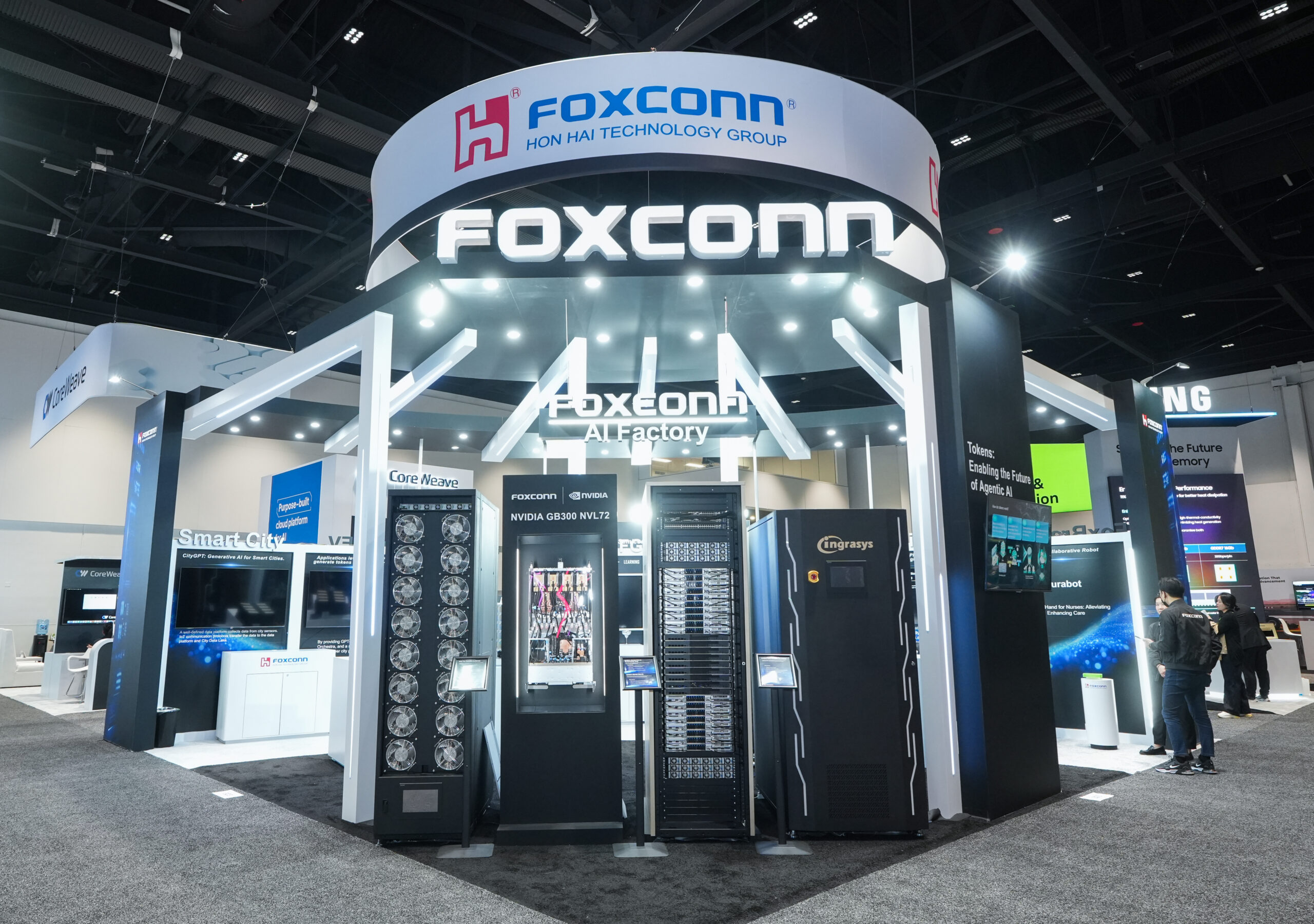
Foxconn has spent years being known mainly as Apple’s manufacturing muscle. Its latest results show that the AI server boom is now becoming the more important growth story.
Hon Hai Precision Industry, known globally as Foxconn, reported its highest-ever second-quarter net profit on August 12. According to the company’s Q2 2026 results presentation and Focus Taiwan’s coverage, net profit rose 35 percent year-on-year to NT$59.97 billion, about $1.86 billion. Consolidated sales rose 41 percent to NT$2.53 trillion.
The real headline is the revenue mix. Foxconn’s cloud and networking products segment, which includes AI servers, accounted for 51 percent of second-quarter revenue. Smart consumer electronics, the segment that includes iPhone assembly, made up 29 percent. That is a symbolic shift for a company still closely associated with Apple hardware.
It does not mean Apple is suddenly unimportant to Foxconn. The iPhone remains a massive business. But AI infrastructure is now where the growth is. Cloud providers, neocloud companies, enterprises and governments are all building out AI capacity, and Foxconn is positioning itself as one of the manufacturers that can turn that demand into racks, servers and systems at scale.
The company says strong AI demand is driving growth through the year, with AI rack shipments expected to rise sharply in the third quarter. It also points to a global manufacturing footprint and vertical integration as advantages at a time when customers want supply-chain resilience, not only low-cost assembly.
This is the physical side of the AI boom. Nvidia gets the market attention because it sells the chips that power frontier AI. But those chips need servers, racks, networking gear, cooling, power systems and manufacturers that can deliver at enormous scale. Foxconn is becoming one of the companies that turns AI demand into hardware reality.
The shift also fits the broader financing story we wrote about when Nvidia moved to turn AI compute into a Wall Street asset class. If AI factories are going to be financed like infrastructure, companies such as Foxconn become central to delivery. Someone has to build the machines.
There are risks. AI server demand is cyclical, capital-intensive and tied to a small group of very powerful customers. If hyperscalers slow spending, suppliers can feel the pain quickly. Competition is also rising as customers try to diversify supply chains across countries and vendors.
Still, Foxconn’s Q2 result is a clear signal. The company once rode the smartphone era by building devices for Apple. It is now trying to ride the AI era by building the machines behind cloud intelligence. That may be the most important reinvention in its business since the iPhone changed consumer electronics.
Related Reading
More contextual TechBooky stories selected from tags, categories and article context.
Paul Balo is the founder of TechBooky and a highly skilled wireless communications professional with a strong background in cloud computing, offering extensive experience in designing, implementing, and managing wireless communication systems.
We use cookies to ensure that we give you the best experience on our website. If you continue to use this site we will assume that you are happy with it.