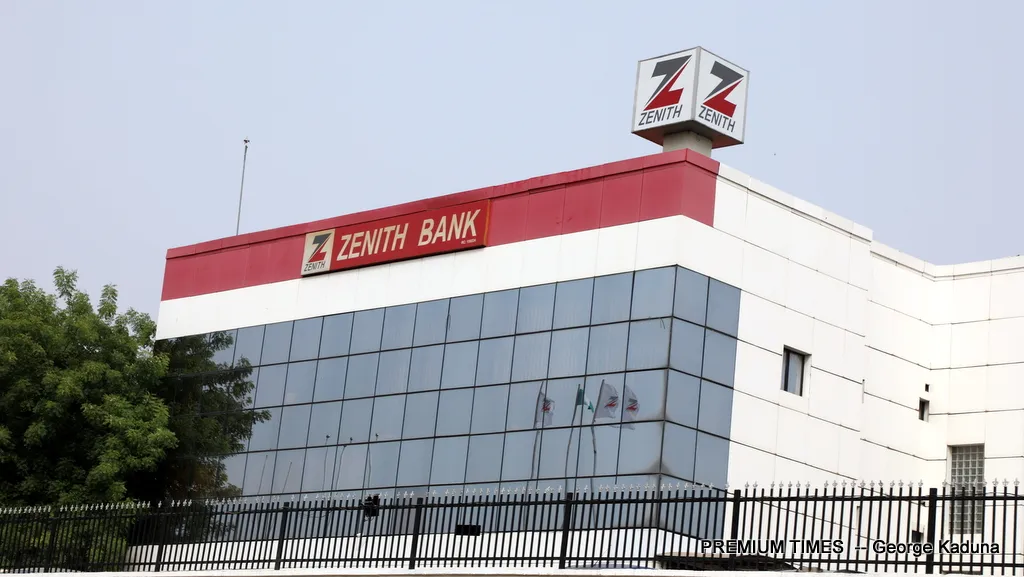
When Zenith Bank told customers it was investigating unauthorized access to limited customer information, the bank was careful with its wording. It said the exposed information included email addresses and phone numbers, that banking services and digital channels remained secure, and that customers should stay alert for phishing emails, text messages or phone calls.
That statement did not say the incident was caused by artificial intelligence. It did not say money was taken. It did not say passwords, PINs or OTPs were exposed. Those distinctions matter. But the more we learn about the way cyberattacks are changing in 2026, the more the Zenith incident looks like the kind of breach that belongs to the AI era.
Our earlier report on the bank’s customer notice focused on what Zenith had confirmed and what customers should do next. The follow-up question now is different: why would attackers want names, phone numbers and email addresses if the bank’s core systems and digital channels remained secure? The simplest answer is phishing. The more modern answer is AI-assisted phishing at scale.
Email addresses and phone numbers are not harmless just because they are not passwords. They are the raw material for impersonation. With that data, attackers can send more convincing emails, SMS messages and WhatsApp messages, call customers with more confidence, imitate bank language and create urgency around account verification, card limits, suspicious transactions or fake security upgrades.
This is where AI changes the threat. A few years ago, phishing messages were often easy to spot because of poor grammar, generic wording and obvious mistakes. Generative AI makes that much harder. Attackers can now produce polished messages in local tones, rewrite scams quickly, personalize them, translate them, test different versions and automate replies. The scam becomes less like a mass email and more like a live customer-service conversation from the wrong side.
That is why Zenith’s advice to customers was so pointed. The bank specifically warned people not to disclose passwords, PINs, OTPs or other security credentials. That warning makes sense if the exposed contact information could be used to trick customers into handing over what the attackers did not get directly.
The wider cyber news makes this concern more serious. Taiwan’s cyber authorities confirmed today that overseas hackers used AI agents such as Open Claw in attacks on government agencies. In its official statement, Taiwan said AI agents can quickly connect multiple attack methods and use secondary systems as stepping stones, making attacks faster, cheaper and larger in scale. We also wrote today that AI agents are now part of real cyberattacks.
That does not mean the Zenith incident used the same tools or came from the same kind of actor. It means the direction of cybercrime has changed. Attackers are using AI to automate reconnaissance, personalize social engineering and move faster across targets. A bank breach that exposes contact data is therefore no longer just a data incident. It can become a launchpad for AI-assisted fraud against customers.
Interpol made a similar point in a recent Africa-focused warning. Its 2026 Africa cybercrime report said AI was linked to more than half of cybercrime in Africa, with losses more than doubling since 2024 and attacks driven by AI-facilitated scams, credential harvesting and automated social engineering campaigns. That is exactly the environment Nigerian banks now operate in.
Europol’s 2026 Internet Organised Crime Threat Assessment also warns that generative AI is being used to tailor social engineering and conceal online fraud schemes. The old phishing playbook was volume. The new one is volume plus personalization. That is a dangerous combination for banking customers because financial trust is built on familiarity and urgency.
So what signs make the Zenith case look AI-era even without a formal AI attribution? First, the data type. Email addresses and phone numbers are ideal for social engineering. Second, the customer warning. Zenith’s emphasis on phishing, calls, SMS and OTP protection suggests the customer-facing risk is impersonation rather than direct compromise of digital channels. Third, the bank described the incident as part of a broader global cyberattack affecting multiple organizations. That sounds more like a campaign than a one-off local mistake.
The phrase broader global cyberattack is important. It could point to a vendor, platform, cloud, CRM, email, customer-support or third-party data exposure rather than a direct breach of Zenith’s core banking systems. Modern attackers often do not need to break the bank vault if they can compromise the systems around the bank and then use customer data to attack people directly.
That is another AI-era pattern. The most valuable target is not always the database with money in it. Sometimes it is the trust relationship. If a customer believes a message came from Zenith, the attacker can try to get OTPs, card details, mobile-app credentials or authorization codes. AI makes that trust attack more convincing and cheaper to run.
Nigerian banks should treat this as more than a public-relations incident. They need rapid customer education in plain language, not just formal notices. They need fraud teams watching for spikes in Zenith-themed phishing. They need telcos, email providers and regulators to coordinate on takedowns. And they need to assume that exposed contact data will be used creatively, repeatedly and across channels.
Customers should also adjust. Any message claiming to be from Zenith should be treated with caution if it asks for passwords, PINs, OTPs, card numbers, app reset codes or urgent transfers. The safest move is to open the bank’s official app, visit an official branch, or call Zenith Direct using numbers from the bank’s official website or card materials, not numbers inside a suspicious message.
The uncomfortable truth is that the first visible damage from a data incident may not happen inside the bank at all. It may happen days or weeks later when customers receive messages that sound real enough to obey. That is where AI-assisted fraud becomes dangerous. It turns ordinary contact data into a weapon of persuasion.
Zenith has not said this was an AI attack, and we should not pretend it has. But in 2026, any bank incident involving customer contact data, phishing warnings and a wider global cyber campaign has to be viewed through the AI lens. The question is no longer only what data was accessed. It is what AI-enabled attackers can now do with it.
Related Reading
More contextual TechBooky stories selected from tags, categories and article context.
Paul Balo is the founder of TechBooky and a highly skilled wireless communications professional with a strong background in cloud computing, offering extensive experience in designing, implementing, and managing wireless communication systems.
We use cookies to ensure that we give you the best experience on our website. If you continue to use this site we will assume that you are happy with it.