Microsoft and the International Labour Organization are backing a digital skills programme in Kenya that tries to answer a hard question for Africa’s digital economy: who gets included when technology jobs start moving faster?
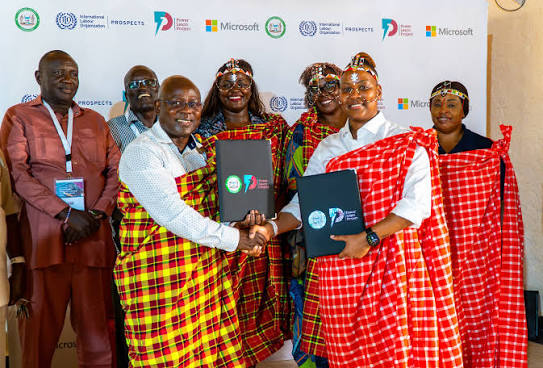
The initiative, detailed by Power Learn Project Africa, is a 25-week programme for refugee and host community youth in Turkana and Garissa. It brings together ILO, Microsoft, Power Learn Project Africa, the Government of the Netherlands and local government partners to provide digital skills, employability training and pathways into work or enterprise.
IT News Africa has also highlighted the programme as a refugee-youth digital skills effort in Kenya. The numbers are meaningful: the programme targets more than 1,000 young people, includes Microsoft certification opportunities and is built around communities that are often left outside mainstream digital training programmes.
The curriculum is expected to cover practical digital skills, employability training and specialisations such as artificial intelligence, cloud computing and data analytics. That matters because basic digital literacy is no longer enough. If young people are going to compete for modern work, they need skills that connect to real demand in software, data, automation and online services.
The refugee angle is what makes this more than another skills announcement. Refugee and host communities often face layered barriers: limited access to devices, weak connectivity, interrupted education, legal uncertainty and fewer links to employers. A training programme only works if it understands those realities and builds around them.
That is why the local delivery model is important. Power Learn Project says the programme will use local digital hubs, community-based organisations and refugee-led groups. This is more sensible than assuming all learners can simply move to Nairobi or access online training from anywhere. In inclusion work, proximity matters.
Microsoft’s role is also worth watching. The company has been investing heavily in AI skills and digital training across Africa, partly because the future market for its cloud and AI tools depends on people who can use them. There is a business logic here, but also a development logic: Africa cannot participate meaningfully in AI if the skills pipeline remains concentrated in a few urban centres.
We have written about Africa’s need for local AI capacity and digital sovereignty, including Nigeria’s local cloud push and the broader debate around foreign AI models shaping African choices. Skills are part of that sovereignty conversation. Without trained people, infrastructure and policy do not go far.
The challenge, as always, is what happens after training. Certifications can help, but young people need internships, freelance pathways, remote work opportunities, apprenticeships, startup support and employers willing to hire from non-traditional backgrounds. Otherwise, training becomes another certificate with no income attached.
Still, the programme is a useful model because it links digital skills to employment and livelihood pathways rather than treating education as the final outcome. For refugee youth, that distinction is crucial. A laptop class is good. A pathway to dignified work is better.
Kenya’s technology story is often told through startups, mobile money, software developers and Nairobi’s innovation scene. This programme reminds us that the country’s digital future also depends on whether Turkana, Garissa and refugee-hosting communities are part of the opportunity. If Africa’s AI and digital economy is going to be inclusive, it has to reach people who are usually last in line.
Related Reading
More contextual TechBooky stories selected from tags, categories and article context.
Paul Balo is the founder of TechBooky and a highly skilled wireless communications professional with a strong background in cloud computing, offering extensive experience in designing, implementing, and managing wireless communication systems.
We use cookies to ensure that we give you the best experience on our website. If you continue to use this site we will assume that you are happy with it.



 IT News Africa has also highlighted the programme as a refugee-youth digital skills effort in Kenya. The numbers are meaningful: the programme targets more than 1,000 young people, includes Microsoft certification opportunities and is built around communities that are often left outside mainstream digital training programmes.