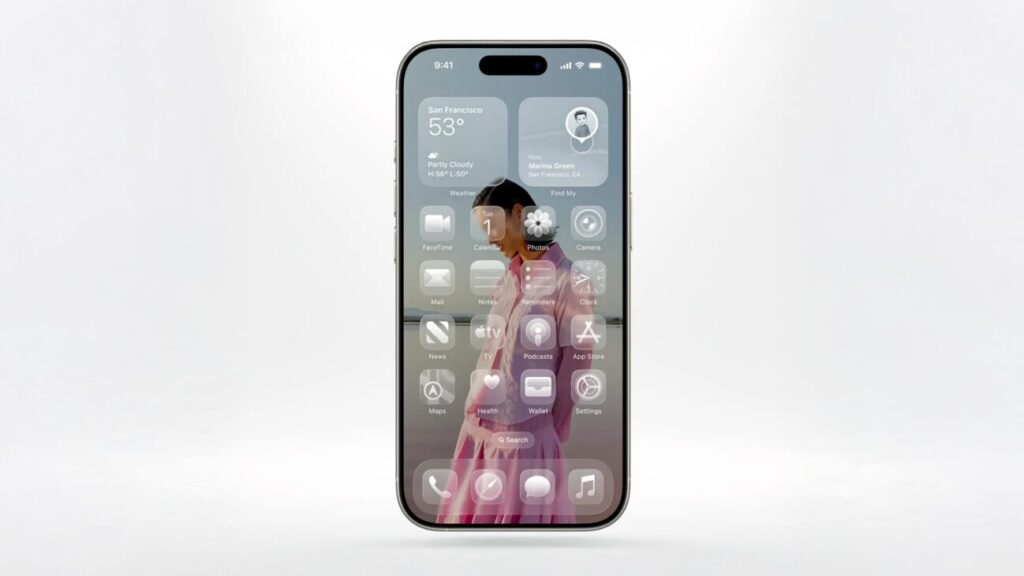
Apple’s next big iPhone design shift may not be dead after all. A new round of reporting says the company is still planning a glass-centric iPhone redesign for 2027, the year that marks 20 years since Steve Jobs introduced the original iPhone.
The clarification matters because Jefferies recently cut Apple to Underperform and argued that the company’s all-glass iPhone plan had been cancelled because of production-yield problems. That downgrade quickly became a market story because Apple is under pressure to show that it can still create a premium iPhone moment at a time when rivals are pushing foldables, AI phones and thinner designs.
But MacRumors, citing Bloomberg’s Mark Gurman, says Apple is still on track with a glass-heavy redesign for 2027. The distinction is important. The reported plan does not necessarily mean a completely all-glass separate iPhone model. Recent supply-chain and Apple-watcher chatter has pointed more toward a glass-centric redesign for Pro models in the 2027 line-up.
9to5Mac also notes that the 20th anniversary iPhone redesign is still expected to be a major visual change rather than a routine industrial-design update. The broad idea is a more seamless, curved and glass-forward device, though Apple has not announced anything and the final product could still change before launch.
That caution is necessary because Apple rumours tend to harden into certainty long before Apple is ready to ship. A 2027 device is still far enough away for manufacturing, yield, cost and design trade-offs to change. Even so, the fact that this story is being debated now shows how much investors and users are watching Apple’s hardware roadmap.
The iPhone remains Apple’s most important business, and the company has been criticized for moving carefully on generative AI while competitors market AI features more aggressively. Apple has also been dragged into the wider AI hardware story, including the legal and strategic fight around OpenAI’s device ambitions that we wrote about as Apple and OpenAI’s hardware dispute widened and the earlier OpenAI device leak that raised fresh questions about smart hardware.
That is why a 20th anniversary iPhone matters beyond looks. Apple needs a device story that reminds the market it can still shape the premium end of consumer hardware. A glass-centric redesign could help if it feels genuinely new in the hand. A foldable iPhone could also help, but foldables remain expensive and niche even as Samsung, Google and others have improved the category.
There is also a pricing angle. Jefferies reportedly expected a very expensive anniversary iPhone to help Apple lift average selling prices. If Apple cannot ship a sufficiently premium device, the company may have less room to offset rising component costs, especially memory. That is why analysts are treating design rumours as a financial story, not just a gadget story.
For users, the more realistic takeaway is that Apple appears to be preparing a two-step premium cycle. First, the iPhone 18 generation is expected to keep attention on performance, AI readiness and possibly foldable hardware. Then 2027 could bring the larger design statement tied to the iPhone’s anniversary.
Apple has survived many claims that the iPhone is out of surprises. But the challenge is getting harder. A glass-heavy iPhone cannot simply look elegant in a launch video. It must be durable, manufacturable, repairable enough for real life and different enough to justify premium pricing. That is the real test for 2027.
Related Reading
More contextual TechBooky stories selected from tags, categories and article context.
Paul Balo is the founder of TechBooky and a highly skilled wireless communications professional with a strong background in cloud computing, offering extensive experience in designing, implementing, and managing wireless communication systems.
We use cookies to ensure that we give you the best experience on our website. If you continue to use this site we will assume that you are happy with it.