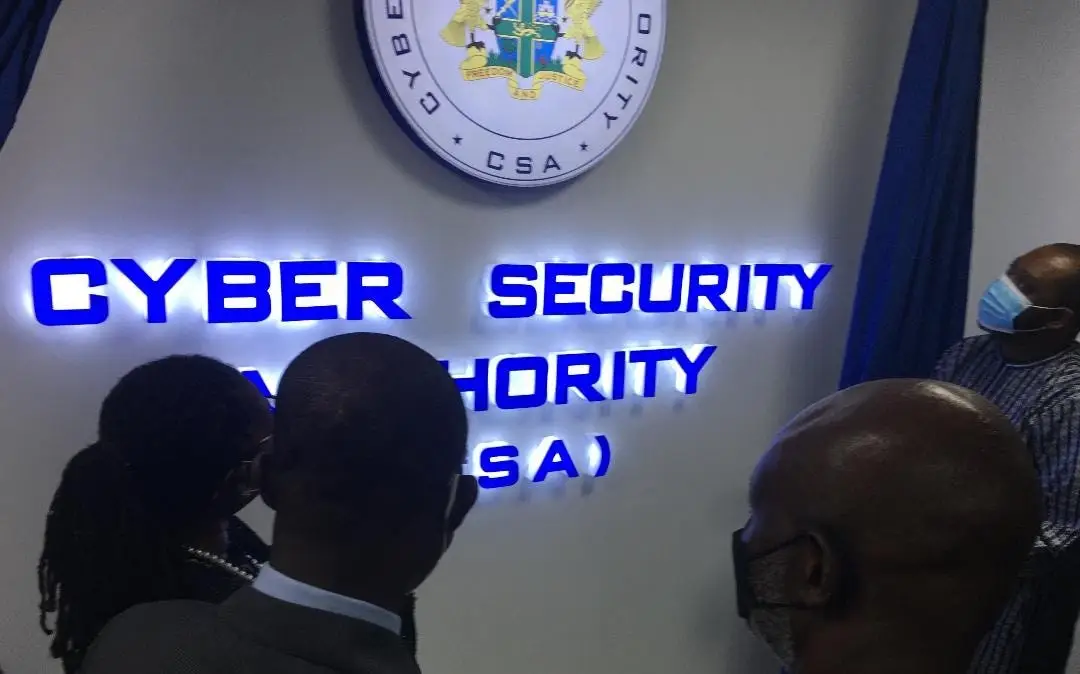
Ghana’s Cyber Security Authority has fined EY Ghana GHc360,000, and the case should be read as more than a penalty against one professional-services firm. It is a clear warning that cybersecurity compliance in Ghana is now a boardroom issue.
In an August 18 press release, the CSA said it imposed an administrative penalty on Ernst & Young Ghana for providing regulated cybersecurity services without a valid Cybersecurity Service Provider licence. The Authority said the services included work for owners of Critical Information Infrastructure.
The regulator said EY Ghana had been directed in March 2026 to apply for a Cybersecurity Service Provider licence within 15 days, but later failed to comply with three separate directives. The CSA imposed 10,000 penalty units, equivalent to GHc120,000, for each breach, bringing the total to GHc360,000.
The CSA also ordered EY Ghana to stop providing regulated cybersecurity services without the required licence, including Governance, Risk and Compliance services. The company has been directed to confirm in writing that the affected services have stopped and to complete the licensing process.
The point the regulator is making is straightforward: reputation does not replace licensing. A large international firm may have global cybersecurity expertise, but Ghana’s law still requires authorization before regulated cybersecurity services can be provided in the country.
This matters because cybersecurity service providers often handle sensitive systems, audits, risk assessments, compliance work and advice for organisations that operate critical infrastructure. If the regulator cannot see, license and supervise those providers, the national cybersecurity framework becomes weaker.
The case also follows other Ghanaian enforcement activity. The CSA has recently fined organisations over cybersecurity licensing breaches, signalling that it is moving from policy publication to active enforcement. That is an important transition for African cyber regulation.
We have been tracking this shift across Africa, including Orange Sierra Leone’s mobile fraud alert tool and the broader question of how African institutions handle data and cyber incidents in the AI era. Ghana’s EY enforcement action adds another layer: professional services and compliance providers are now under direct scrutiny too.
For companies operating in Ghana, the lesson is practical. If a service touches cybersecurity, governance, risk, compliance, incident response, vulnerability work or critical information infrastructure, management needs to confirm whether the provider is licensed. Assuming that a well-known name is automatically compliant is no longer defensible.
For the wider African market, Ghana’s move is significant. As countries build cybersecurity laws, enforcement will define whether those laws matter. The EY Ghana fine tells service providers that regulators are prepared to act, and it tells clients that cyber compliance cannot be outsourced blindly.
Related Reading
More contextual TechBooky stories selected from tags, categories and article context.
Paul Balo is the founder of TechBooky and a highly skilled wireless communications professional with a strong background in cloud computing, offering extensive experience in designing, implementing, and managing wireless communication systems.
We use cookies to ensure that we give you the best experience on our website. If you continue to use this site we will assume that you are happy with it.