OpenAI has launched ChatGPT for Teens, and the timing tells us something important about where the AI industry is heading. The chatbot is no longer only a productivity tool for adults or a classroom shortcut students quietly use. It is now being formally redesigned for teenagers who are already using it anyway.
The new experience is meant for users aged 13 to 17 and is being rolled out globally from August 18, according to reporting from AP and other outlets. OpenAI says teen users will be placed into the safer version automatically when they provide their age, and the company also uses age-prediction systems to identify accounts that likely belong to users under 18.
That automatic routing is important because most teenagers do not wait for parents, schools or regulators before trying new technology. ChatGPT is already being used for homework, writing, coding, explanations, emotional questions and sometimes companionship. OpenAI is now acknowledging that the safer answer is not pretending teens are not there. It is building a version that treats them differently.
ChatGPT for Teens includes stronger default restrictions around self-harm, suicide, sexual or romantic interactions, graphic violence and other content OpenAI considers inappropriate for younger users. TechCrunch reports that the teen version also tries to steer users away from harmful or developmentally inappropriate material while encouraging safer learning behaviour.
The educational side may be just as important as the safety side. OpenAI is adding study-focused tools that are meant to guide students through problems instead of simply handing them finished answers. That is the right direction. If AI becomes an answer machine for teenagers, schools will fight it. If it becomes a tutor that asks better questions and helps students think, it has a stronger case.
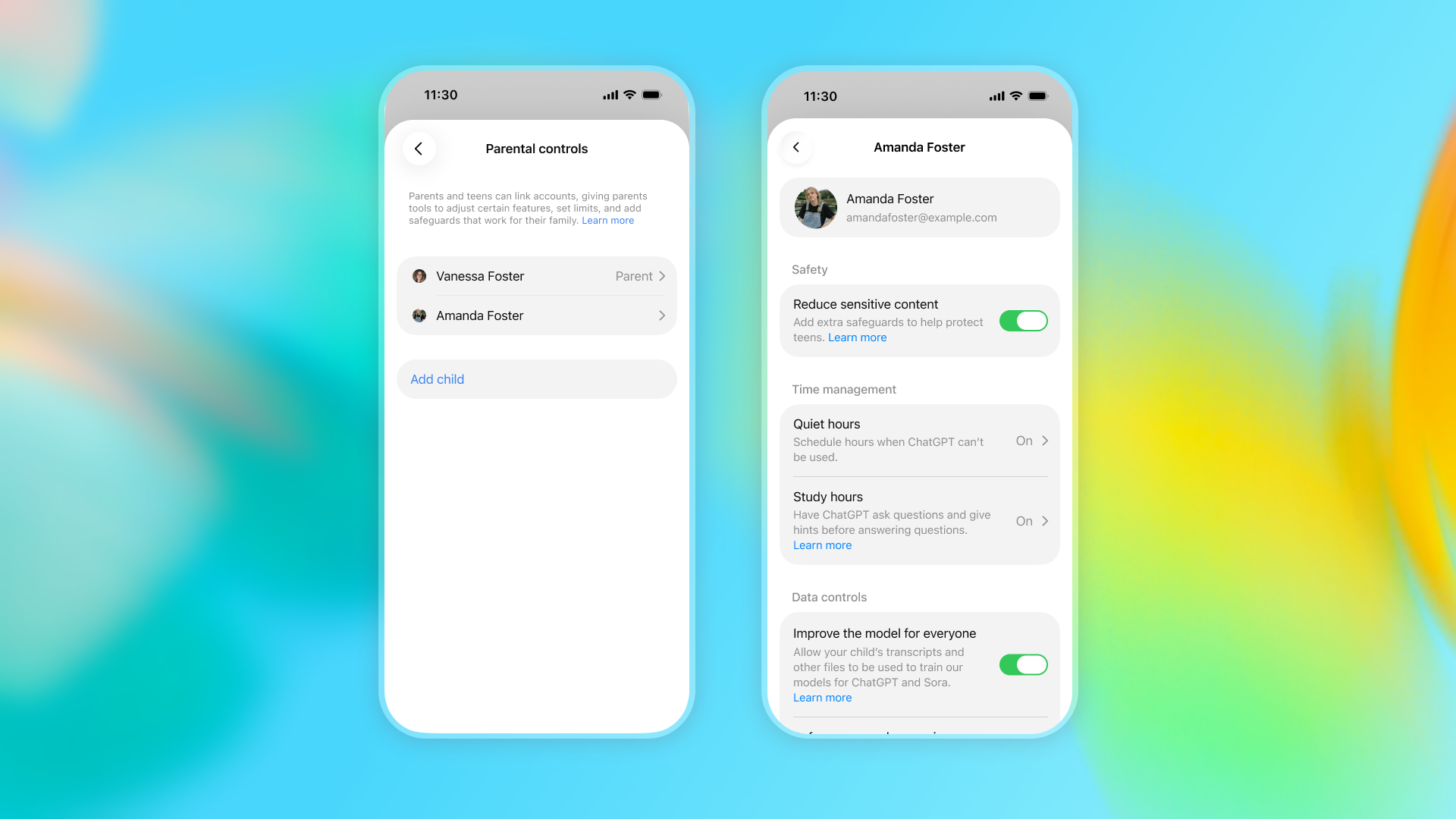
Parents also get more tools, though not unlimited surveillance. OpenAI’s parental-control guide says parents and guardians can link their accounts to a teen account, manage selected settings, set schedules and receive limited safety notifications in serious situations. It also says parents cannot read a teen’s conversations, chat history or real-time activity.
That privacy balance matters. Parents want visibility when there is real risk, but teenagers also need some room for private learning and exploration. OpenAI is trying to walk that line by giving parents controls such as quiet hours and safety alerts while not turning ChatGPT into a full parental surveillance dashboard.
The company is also trying to reduce emotional dependency. Several reports say the teen experience includes limits that stop ChatGPT from presenting itself as sentient or encouraging unhealthy romantic or emotional relationships. That may sound strange, but it is now one of the central concerns around youth AI use. A chatbot that is always available, always patient and always flattering can become more than a tool in the mind of a vulnerable user.
OpenAI is making this move under pressure. Parents, child-safety advocates, schools and regulators have all raised concerns about teen AI use, from academic dishonesty to mental-health risks. The company has also faced legal and political scrutiny over claims that ChatGPT gave harmful responses in sensitive situations involving young users.
We have been following OpenAI’s broader safety debate closely, including the reported shake-up of its preparedness team. ChatGPT for Teens sits in that same trust conversation. OpenAI wants people to see it as the company that can safely put AI into everyday life, but that promise becomes harder when children and teenagers are involved.
The harder question is enforcement. Teens are good at working around restrictions. Some may lie about their age, use another account, turn to competing chatbots or find ways to phrase prompts that slip through guardrails. Age prediction helps, but it will not be perfect. Parental controls help, but only if parents know they exist and take time to set them up.
Schools will also have to decide what this means for classrooms. A teen-safe ChatGPT does not solve every academic-integrity problem. It does, however, give schools a better starting point than banning all AI or pretending students are not already using it. If study mode genuinely encourages explanation and reasoning, teachers may eventually treat it more like a calculator or tutor than a cheating machine.
For Africa and other emerging markets, the issue is even wider. Many students do not have access to private tutors, strong libraries or well-resourced schools. A safer AI tutor could be genuinely useful if it is affordable, multilingual and aligned with local curricula. But that promise only works if safety and learning are built in from the start, not added after harm has happened.
ChatGPT for Teens is therefore a necessary product, but it is not a final answer. It is a recognition that young people are already inside the AI economy and that the industry cannot rely on adult settings for teenage users. The real test will be whether the safeguards hold up in everyday use, whether parents actually use the controls and whether ChatGPT becomes a better learning companion rather than just a more polished answer dispenser.
Related Reading
More contextual TechBooky stories selected from tags, categories and article context.
Paul Balo is the founder of TechBooky and a highly skilled wireless communications professional with a strong background in cloud computing, offering extensive experience in designing, implementing, and managing wireless communication systems.
We use cookies to ensure that we give you the best experience on our website. If you continue to use this site we will assume that you are happy with it.