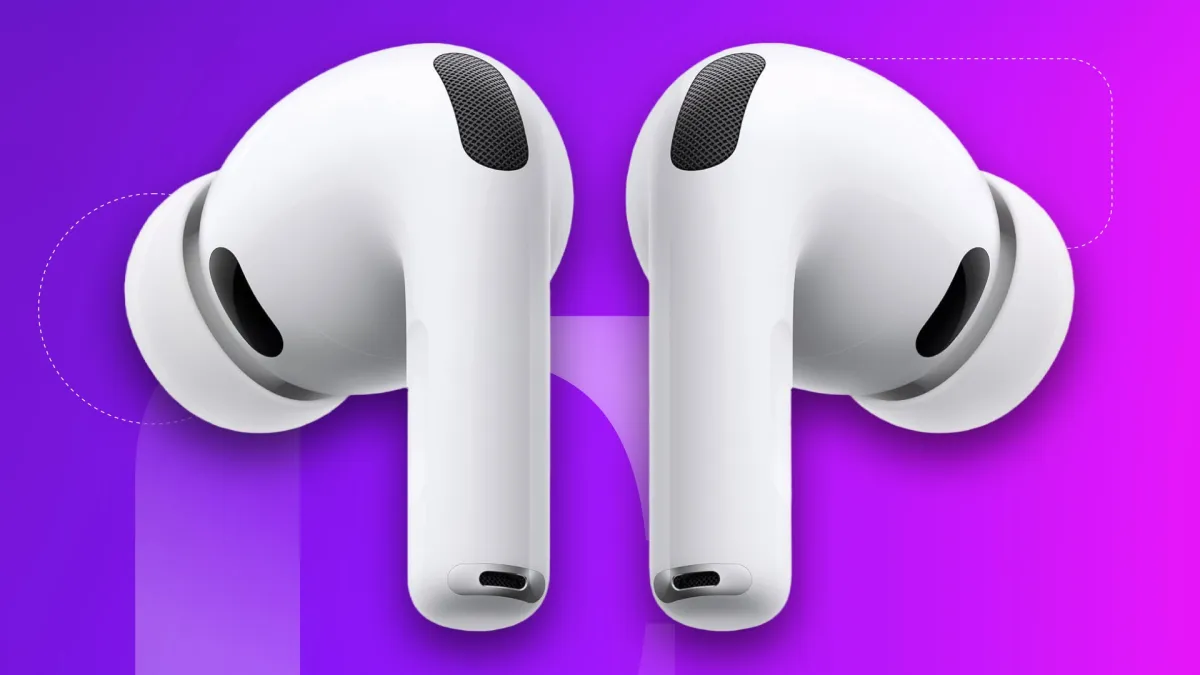
Apple may have just given the clearest hint yet that AirPods are about to become more than earbuds. A video discovered inside macOS Tahoe 26.7 appears to show camera-equipped AirPods using Siri and Visual Intelligence to understand what the wearer is looking at.
The clip was first surfaced from the macOS Tahoe 26.7 release candidate and detailed by MacRumors. It shows a person looking at a book while Siri explains that Visual Intelligence can save things the user sees for later. 9to5Mac also reported that the demo appears to be a built-in Apple video rather than an outside mock-up.
That is why this leak matters. Apple has been rumoured for months to be working on AirPods with cameras, but a video inside a release candidate is a different kind of signal. It suggests Apple is preparing product material, or at least testing a feature close enough to the public software track that it slipped into a near-final macOS build.
The cameras are not expected to turn AirPods into tiny photography devices. The more likely purpose is visual context. In plain English, Apple wants Siri to be able to understand more of the world around the user without forcing them to pull out an iPhone and point the camera manually.
That would make AirPods part of Apple’s wearable AI strategy. Today, Siri mostly hears what you say. With visual input, Siri could potentially recognise an object, remember a sign, identify a book, help with directions or add context to a request. The product would sit somewhere between earbuds, smart glasses and an AI assistant.
The Verge notes that earlier Bloomberg reporting described camera-equipped AirPods as a way to capture low-resolution visual data for Siri, not as a photo or video-recording product. That distinction will be important for Apple because the privacy conversation around wearable cameras is always sensitive.
People remember the backlash to Google Glass, and Meta’s Ray-Ban smart glasses have revived many of the same questions. If a device has outward-facing sensors near someone’s face, people nearby will want to know whether they are being recorded, analysed or uploaded to the cloud. Apple will need to explain that clearly if this product launches.
Apple’s advantage is trust and ecosystem control. It can argue that visual data is processed privately, tied into on-device intelligence where possible and used to make Siri more useful rather than to create another always-recording camera. But trust will depend on design choices, not slogans. A visible indicator, clear permissions and local processing will matter.
This is also about Apple’s AI catch-up. Google has Gemini across Android and Pixel. Meta has smart glasses and AI assistants. OpenAI is moving into consumer hardware. Apple has Apple Intelligence, but it still needs a convincing everyday AI device that feels natural. AirPods may be a better first step than glasses because people already wear them in public without thinking about it.
We recently wrote about Google pushing Gemini deeper into Pixel hardware, and Apple’s possible camera AirPods belong to that same shift. AI is moving out of chat windows and into the devices people already carry or wear. The phone is no longer the only front door to AI.
There is a practical question too. Cameras need power, processing and careful thermal management. AirPods are tiny, and battery life is already a daily concern for many users. Apple will have to make visual intelligence useful without making the earbuds heavier, hotter or less reliable.
If the product launches soon, it could become one of Apple’s most important AI hardware moves in years. Not because everyone needs a camera in their earbuds, but because it would give Siri eyes. For Apple, that may be the missing piece between voice assistants, smart glasses and a future where AI understands more of the user’s physical world.
Related Reading
More contextual TechBooky stories selected from tags, categories and article context.
Paul Balo is the founder of TechBooky and a highly skilled wireless communications professional with a strong background in cloud computing, offering extensive experience in designing, implementing, and managing wireless communication systems.
We use cookies to ensure that we give you the best experience on our website. If you continue to use this site we will assume that you are happy with it.