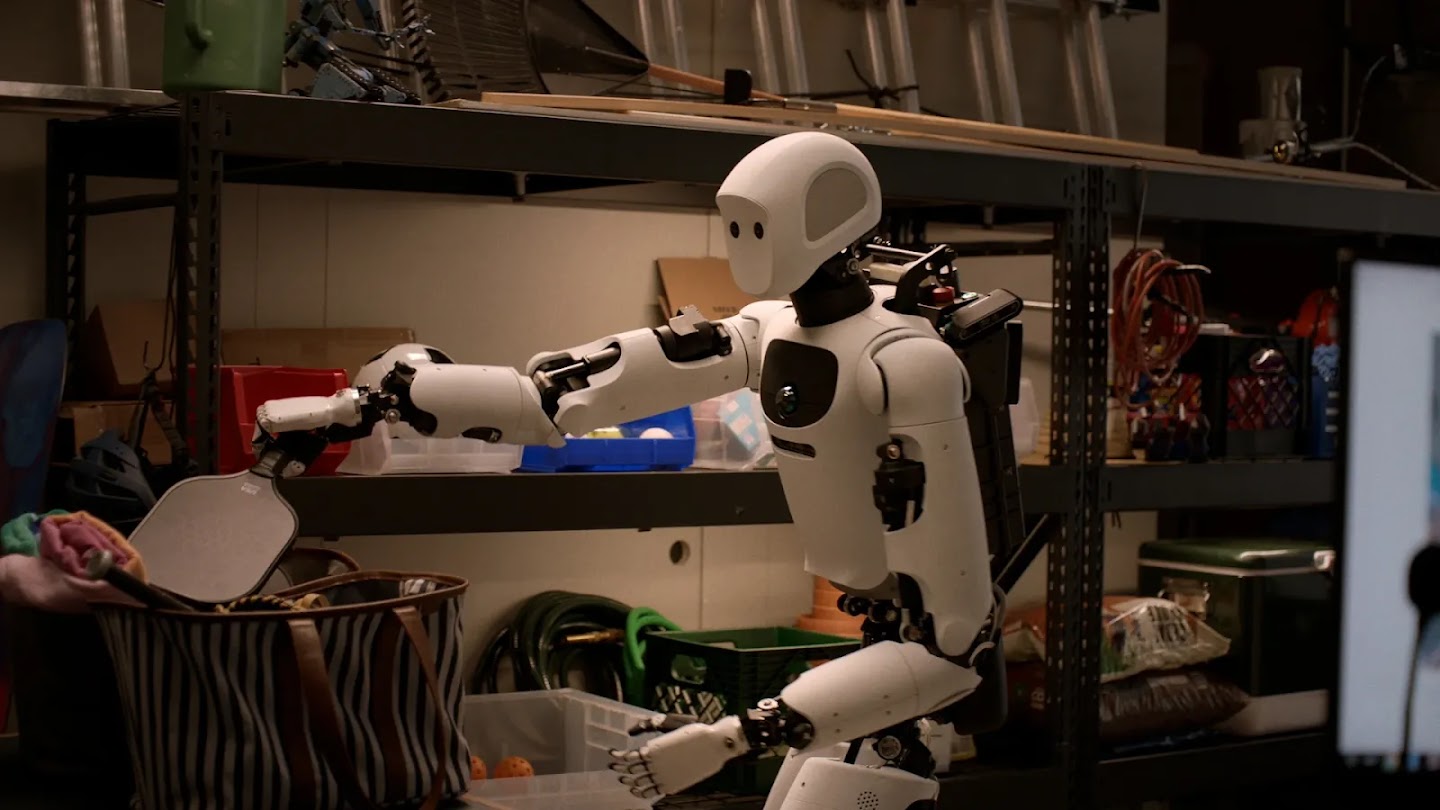
Google DeepMind is trying to move the AI conversation beyond chatbots, search boxes and workplace assistants. Its latest robotics push is about giving machines a better way to understand the physical world and act inside it.
The company has updated its Gemini Robotics work, a family of models built to connect vision, language and physical action. In simple terms, DeepMind wants robots to understand instructions, reason about objects in front of them and then carry out tasks with more flexibility than older robotic systems that had to be trained narrowly for one environment.
That is a big shift because most industrial robots are still very good at repetitive jobs and much weaker at messy, changing tasks. A factory arm can repeat the same movement thousands of times, but it usually struggles when the object moves, the lighting changes or the instruction becomes more open-ended. DeepMind is trying to solve that gap by giving robots a broader AI layer that can generalize across tasks.
This is why robotics is becoming one of the most important frontiers in AI. Large language models have already made software feel more conversational. The next test is whether AI can help machines operate in homes, warehouses, hospitals, factories and public spaces without needing every single movement manually programmed. If that works, AI becomes less of a screen product and more of a physical operating system.
The timing also matters. Nvidia, Google, OpenAI-backed startups and several robotics labs are now treating physical AI as the next major market after text, image and coding models. Nvidia has been pushing its own robot reasoning stack, including Cosmos 3 Edge for real-time robot AI, while companies like Physical Intelligence have attracted large investor interest because general-purpose robot software could become a major platform layer.
DeepMind has a clear advantage here because it sits inside Google, which has enormous AI research capacity, cloud infrastructure and access to years of work in vision, language and reinforcement learning. It also has a brand that still carries weight in scientific AI because of projects like AlphaFold. That makes its robotics work important even when the company is not announcing a consumer robot that people can buy tomorrow.
There is also a strategic reason to watch this closely. Google has been under pressure to show that Gemini is not only a chatbot competitor. The company has already pushed Gemini into search, Android, Workspace, cybersecurity and devices. A stronger robotics model gives Google a more ambitious answer: Gemini can become the intelligence layer for machines, not only for apps. That fits the wider shift we have seen as Google expands the Gemini model family across more specialised use cases.
The hard part is safety and reliability. A chatbot mistake can be embarrassing or costly, but a robot mistake can damage property or injure people. That means robotics models need a much higher standard for grounding, testing and control. They must know when they are uncertain, refuse unsafe commands and recover from errors without turning small mistakes into bigger ones.
This is also why deployment may be slower than the demos suggest. Warehouses, labs and controlled factory spaces are easier starting points than homes or streets. The first real business use cases will probably be in structured environments where companies can measure productivity gains and keep humans nearby. Consumer robots will need much more trust before they become normal household products.
For now, the important point is direction. DeepMind is making it clear that the next stage of AI will not be judged only by how well a model writes, searches or codes. It will also be judged by whether AI can understand the real world well enough to help machines do useful work. That is a much harder problem, but it is also a much bigger prize.
Related Reading
More contextual TechBooky stories selected from tags, categories and article context.
Paul Balo is the founder of TechBooky and a highly skilled wireless communications professional with a strong background in cloud computing, offering extensive experience in designing, implementing, and managing wireless communication systems.
We use cookies to ensure that we give you the best experience on our website. If you continue to use this site we will assume that you are happy with it.