TechBooky AI Assistant
👋 Welcome to TechBooky AI Assistant

I can help with:
🔎 Tech News
🤖 AI Topics
💻 Gadgets
☁️ Cloud
✍️ Guest Posts
📢 Advertising
🔗 Backlinks
📩 Newsletter
  • AI Search
  • Cryptocurrency
  • Earnings
  • Enterprise
  • About TechBooky
  • Submit Article
  • Advertise With TechBooky
  • Contact Us
TechBooky
  • African
  • AI
  • Metaverse
  • Gadgets
Generic selectors
Exact matches only
Search in title
Search in content
Post Type Selectors
Search in posts
Search in pages
  • African
  • AI
  • Metaverse
  • Gadgets
Generic selectors
Exact matches only
Search in title
Search in content
Post Type Selectors
Search in posts
Search in pages
TechBooky
Generic selectors
Exact matches only
Search in title
Search in content
Post Type Selectors
Search in posts
Search in pages
Home Cloud

Google Plans Texas Data Center That Relies Mostly on Air Cooling, Not Water

Paul Balo by Paul Balo
February 24, 2026
in Cloud, Energy
Share on FacebookShare on Twitter
Share this story

Send it to someone who should read it.

f Facebook X X in LinkedIn wa WhatsApp tg Telegram @ Email

In Brief
  • Google is building another data centre in Texas and says it will sharply curb the facility’s water use by relying on “advanced air-cooling technology” instead of...
  • According to the company, water consumption at the new site is expected to be limited to “critical campus operations” such as kitchens.
  • The project is part of Google’s previously announced two-year, $40 billion investment in Texas, which spans data centres and related infrastructure.

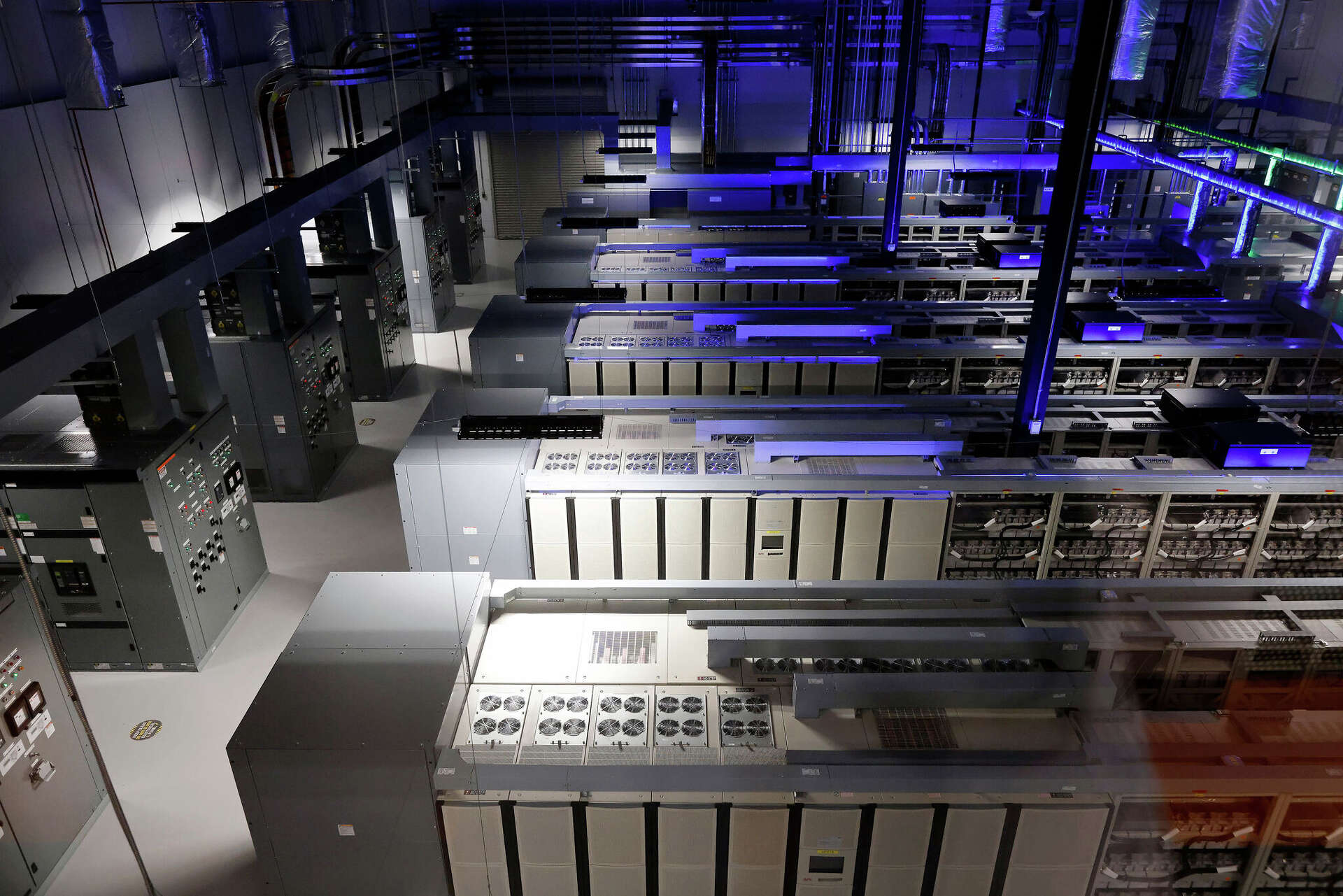
Google is building another data centre in Texas and says it will sharply curb the facility’s water use by relying on “advanced air-cooling technology” instead of traditional water-heavy systems. According to the company, water consumption at the new site is expected to be limited to “critical campus operations” such as kitchens.

The project is part of Google’s previously announced two-year, $40 billion investment in Texas, which spans data centres and related infrastructure. Alongside the new build, Google says it has contracted with utility providers for around 7,800 megawatts of net energy generation and capacity to be added to the Texas power grid.

Google’s emphasis on air cooling and reduced water reliance comes at a time when large-scale data centres are drawing growing scrutiny across the United States. Communities in multiple states are pushing back on new data centre projects over concerns that they strain local power networks, contribute to higher electricity bills and add to global greenhouse gas emissions.

Critics have also focused on the amount of fresh water many data centres use for cooling. Against that backdrop, Google is positioning the Texas facility as a more resource-conscious model, at least on water consumption, by shifting most of the cooling load to air-based systems and limiting water usage to essential non-cooling functions on the campus.

Also worth reading
Google’s Fervo Deal Shows AI Data Centres Need New Power Google’s AI Power Plan Gets A Nuclear Boost Opinion: Data Centre Backlash Is A Trust Problem Big Tech Turns Data Centre Backlash Into Politics Google Brings Gemini Voice Into Gmail And Docs Google Escapes Ad Breakup But Must Change

The wider debate over the environmental impact of AI and cloud infrastructure has also put tech leaders’ views in the spotlight. OpenAI CEO Sam Altman has publicly dismissed data centre water worries as “fake,” arguing, in his words, that “it also takes a lot of energy to train a human.” His comments sit in contrast to the kinds of water-saving commitments Google is highlighting with its Texas plans.

As pressure mounts to manage the footprint of fast-expanding AI and cloud computing, some in the tech industry have floated ambitious alternatives. A growing number of voices, including Tesla CEO Elon Musk, have suggested that building data centres in space could sidestep several of the land, water and power constraints facing facilities on Earth.

However, experts have warned that such off-planet infrastructure could carry its own serious environmental downsides. While details of those risks were not elaborated in the source material, concerns have been raised broadly about the potential environmental impact of moving large-scale infrastructure into space.

For now, Google’s Texas project underlines a more incremental path: retooling terrestrial data centres to use less water and securing new power capacity on existing grids, while public and regulatory debates over AI-era infrastructure continue to intensify.

Related Reading

More contextual TechBooky stories selected from tags, categories and article context.

  • HDL1A_FINAL_RENDER_VIEW_FOR_PUBL.width-1000.format-webp
    Google Breaks Ground On Its First Data Center In Sweden
  • new york dc
    New York's Data Centre Pause Shows AI Infrastructure…
  • microsoft data centre
    Oracle and OpenAI Reject Microsoft Data Centre Offer
  • OregonianDataCenter
    UK Plans Data Centre Expansion Amid Rising Concerns
  • 3698
    Data-Centre Bans Turn AI Compute Into Local Politics…
  • AA1qpww9
    Google and Kairos Partner on Nuclear Micro-reactors…
  • Modern Data Technology Center Server Racks in Dark Room with VFX. Visualization Concept of Internet of Things, Data Flow, Digitalization of Internet Traffic. Electric Equipment Warehouse.
    New York Puts AI Data Centres On Pause As Power Grid…
  • 779836-7458
    Influx of Data Center Investors Near Lagos' Shoreline
Keep Reading Smarter

Search TechBooky with AI

Use TechBooky's AI Search to explore the context behind this story and related coverage across the site.

Try AI Search
More On This Topic
Cloud Energy
Follow TechBooky

Follow TechBooky for more technology stories and newsroom updates.

f Facebook X X in LinkedIn ig Instagram wa WhatsApp

Tags: data centredata centre coolingenergygoogle
Paul Balo

Paul Balo

Paul Balo is the founder of TechBooky and a highly skilled wireless communications professional with a strong background in cloud computing, offering extensive experience in designing, implementing, and managing wireless communication systems.

Search TechBooky
Open TechBooky AI Search Try the AI Assistant

BROWSE BY CATEGORIES

Receive top tech news directly in your inbox

subscription from
Loading

Freshly Squeezed

  • OpenAI Says AI Solved Math Prize Problem, But Mathematicians Want Answers September 8, 2026
  • Shuttlers Pod Wants To Own Lagos’ Post-Uber Commute September 8, 2026
  • Huawei’s Chip Push Shows China Is Building Around US Curbs September 8, 2026
  • Google’s AI Power Plan Gets A Nuclear Boost September 8, 2026
  • Microsoft’s Patch Tuesday Shows AI Is Finding Bugs Fast September 8, 2026
  • Meta’s AI Ad Failure Puts Child Safety Back In Focus September 8, 2026
  • Mistral Raises EUR3B As Europe Bets On Sovereign AI September 8, 2026
  • Digital Realty Opens Nairobi AI Data Centre September 8, 2026
  • France Eyes Nigeria’s Space Ambitions September 8, 2026
  • Opinion: AI Labs Want Cheap Debt Before Real Profits September 8, 2026
  • EU Merger Reset Could Help Build Tech Champions September 8, 2026
  • Huawei Trial Could Reopen The US-China Tech War September 8, 2026

Browse Archives

September 2026
M T W T F S S
 123456
78910111213
14151617181920
21222324252627
282930  
« Aug    

Quick Links

  • About TechBooky
  • Advertise With TechBooky
  • Contact us
  • Submit Article
  • Privacy Policy
Generic selectors
Exact matches only
Search in title
Search in content
Post Type Selectors
Search in posts
Search in pages
  • African
  • Artificial Intelligence
  • Gadgets
  • Metaverse
  • Tips
  • AI Search
  • About TechBooky
  • Advertise With TechBooky
  • Submit Article
  • Contact us

© 2025 Designed By TechBooky Elite

Discover more from TechBooky

Subscribe now to keep reading and get access to the full archive.

Continue reading

We use cookies to ensure that we give you the best experience on our website. If you continue to use this site we will assume that you are happy with it.