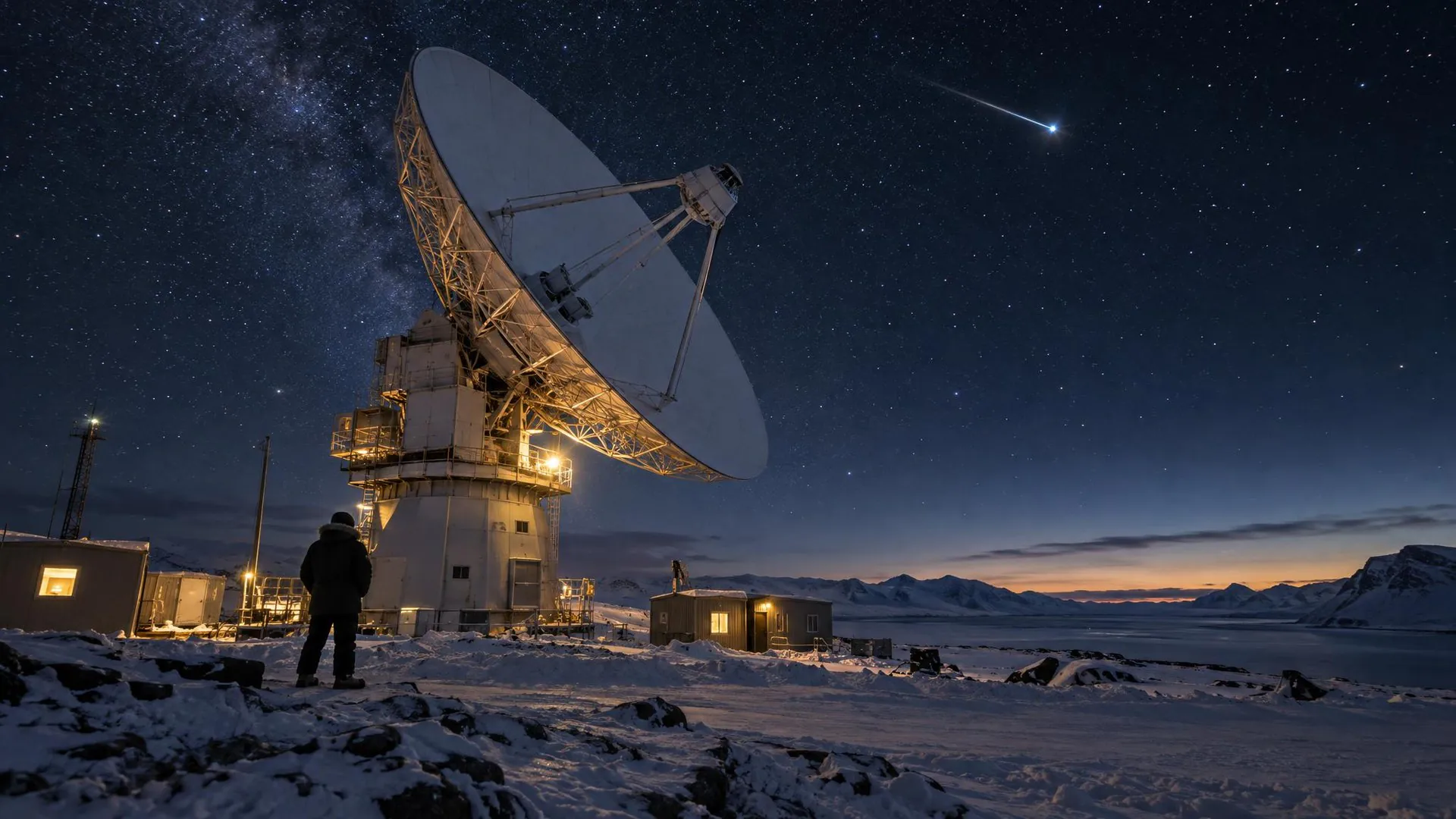
Google has received the first AI-generated response from its Project Suncatcher prototype satellite, a modest but significant test of whether data-centre-class computing can work in orbit. The company said on 30 October that an onboard TPU ran its Gemma 4 model and returned a short poem after a prompt was sent from the ground. It is a proof of execution, not the launch of a commercial space data centre.
The milestone comes less than a month after the satellite launched on 1 October. According to Google’s account of the test, engineers first completed commissioning work, powered the host and TPU trays and ran early machine-learning checks. During a pass over a ground station, they sent a prompt asking for a haiku about space. The response came back while the satellite was near Svalbard, Norway.
The key result is that a data-centre-class AI chip operated in orbit and produced an answer that could be transmitted back to Earth. That establishes a working chain from uplinked prompt to onboard model inference and downlinked output. Google also says it has tested other poetry prompts and telemetry requests that report the payload’s status.
A brief text response is far removed from the continuous, high-volume workloads handled by a terrestrial AI facility. Space hardware must withstand radiation, severe thermal changes and constrained power and communications. Google says its next tests will examine how the TPUs perform under thermal stress and radiation exposure. Reliability over time, rather than one successful answer, is the question that matters now.
The distinction is important as AI companies look beyond conventional data centres for capacity and energy. An orbital computer could, in theory, use abundant solar power, but launches, maintenance, cooling, networking and the cost of returning results to users all complicate the economics. None of those issues is settled by this demonstration. Readers following the wider infrastructure race can also see TechBooky’s analysis of AI spending by major cloud companies.
Google’s stated next step is a pair of interconnected satellites in 2027. That would test a more demanding element of the concept: moving data and coordinating computing between spacecraft, rather than running a model on a single payload. The timetable is a research target, not a commitment to offer cloud services from space next year.
For now, Project Suncatcher has moved from a proposal to a functioning experiment. The first answer from orbit makes the idea more tangible, while the remaining engineering and commercial hurdles show why it is still an experiment. Google will need sustained performance data before an orbital AI network can be judged against the data centres it hopes eventually to complement.
Related Reading
More contextual TechBooky stories selected from tags, categories and article context.
Paul Femi Balo is the founder and publisher of TechBooky. He covers artificial intelligence, African technology, digital infrastructure, enterprise technology and the global digital economy.
We use cookies to ensure that we give you the best experience on our website. If you continue to use this site we will assume that you are happy with it.