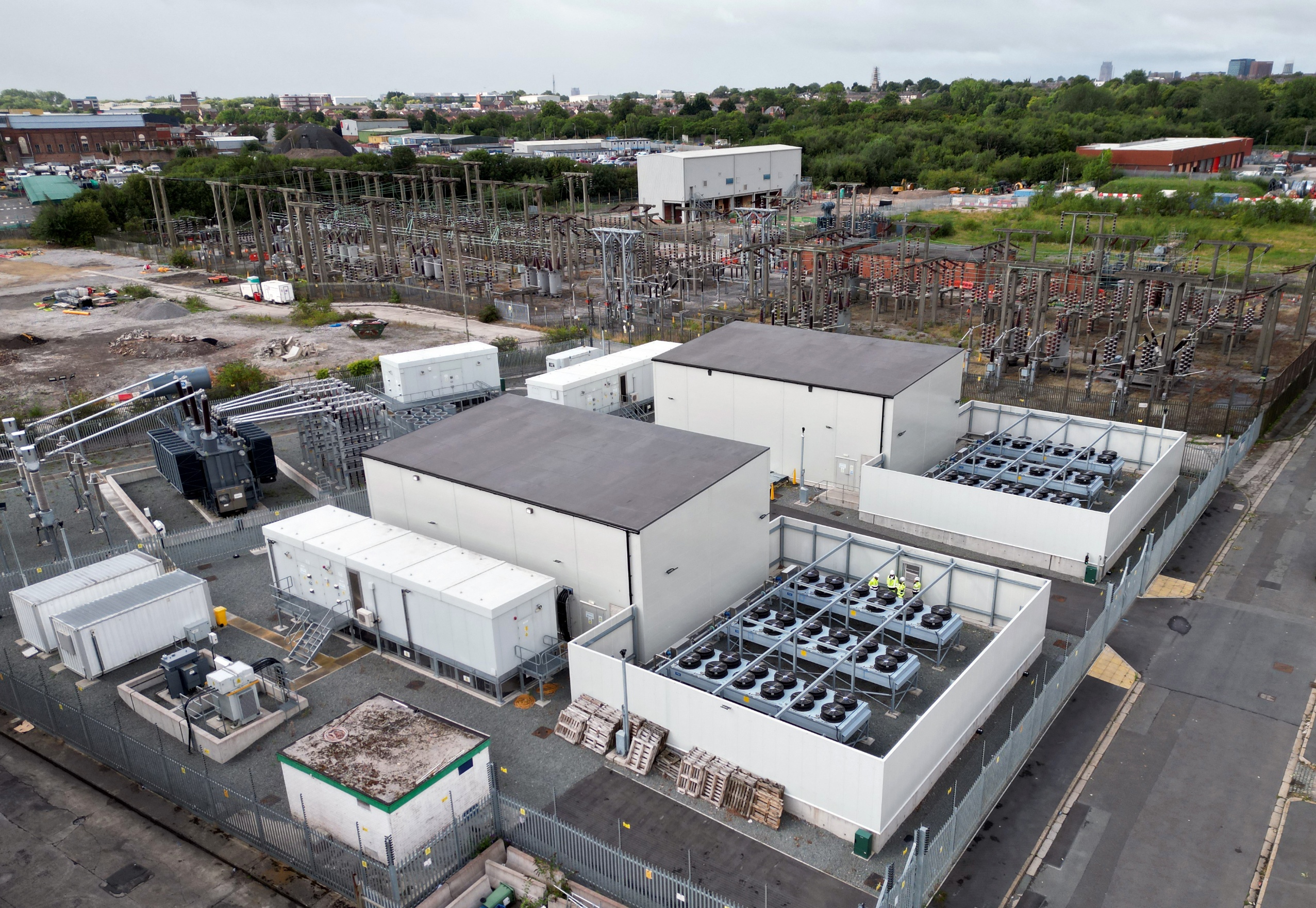
OpenAI plans to reduce electricity use at US data centre campuses it develops when extreme weather or other emergencies put the power grid under strain, according to Axios. The reported Grid Protectors Program would extend a flexibility commitment associated with the company’s planned Georgia campus to future projects. It is a notable concession to a question increasingly asked of AI developers: who gets priority when computing demand and household electricity needs collide?
The distinction between a pledge and an operating result matters. Cutting a data centre’s demand during a grid emergency could help a utility manage a short-lived peak, but the value depends on how much power can be reduced, how quickly the reduction happens and how long it lasts. Those details may vary by campus and utility contract. Axios reported the broader plan on 2 November, citing an OpenAI statement expected later in the day.
OpenAI has already described Project Camellia in Effingham County, Georgia. It says the long-term development is contracting for 3.2 gigawatts of power from Georgia Power, to be delivered in stages between 2028 and 2032. The company has also said it will pay the infrastructure and electric-service costs required to serve the site, rather than passing them to existing customers. TechBooky previously covered the project and its financing scale.
Those statements address two different worries. A promise to pay for dedicated infrastructure is about the cost borne by ratepayers. A promise to lower demand at critical moments is about reliability when supply is tight. Neither removes the need for regulators to scrutinise a project of this scale, its generation sources and the conditions under which curtailment can be called.
Some computing workloads can be shifted or slowed more readily than others. A company might pause a training run or move less urgent processing to another time, while customer-facing services still need reliable capacity. The commercial and technical terms of a demand-response contract determine whether that flexibility can be delivered during the precise hours a local grid needs it. The wider programme reported by Axios concerns campuses OpenAI directly develops; it should not be assumed to cover every third-party cloud facility from which OpenAI buys computing power.
For communities, the measure of success will not be the programme name. It will be verifiable performance during peak demand, transparent accounting for infrastructure costs and evidence that large new customers do not make electricity less affordable or reliable for everyone else. For OpenAI, the pledge may also become part of obtaining local acceptance for an AI build-out whose power requirements are now too large to treat as a technical footnote.
The Georgia campus is still a future project. As contracts and operating rules become public, the key questions are how much demand can be curtailed, what triggers a reduction and whether the commitments survive the move from announcement to live operations.
Related Reading
More contextual TechBooky stories selected from tags, categories and article context.
Paul Femi Balo is the founder and publisher of TechBooky. He covers artificial intelligence, African technology, digital infrastructure, enterprise technology and the global digital economy.
We use cookies to ensure that we give you the best experience on our website. If you continue to use this site we will assume that you are happy with it.