Google’s Scam Detection feature may be heading to more Samsung phones, and that could matter more to ordinary users than another benchmark race. A new One UI 9 beta teardown suggests the feature is being prepared for the Galaxy S27 family and several existing Samsung devices.
The evidence comes from an Android Authority APK teardown, so it should be treated carefully. Teardowns can reveal work-in-progress code, but they do not guarantee a public rollout. Features can be delayed, changed or removed before launch.
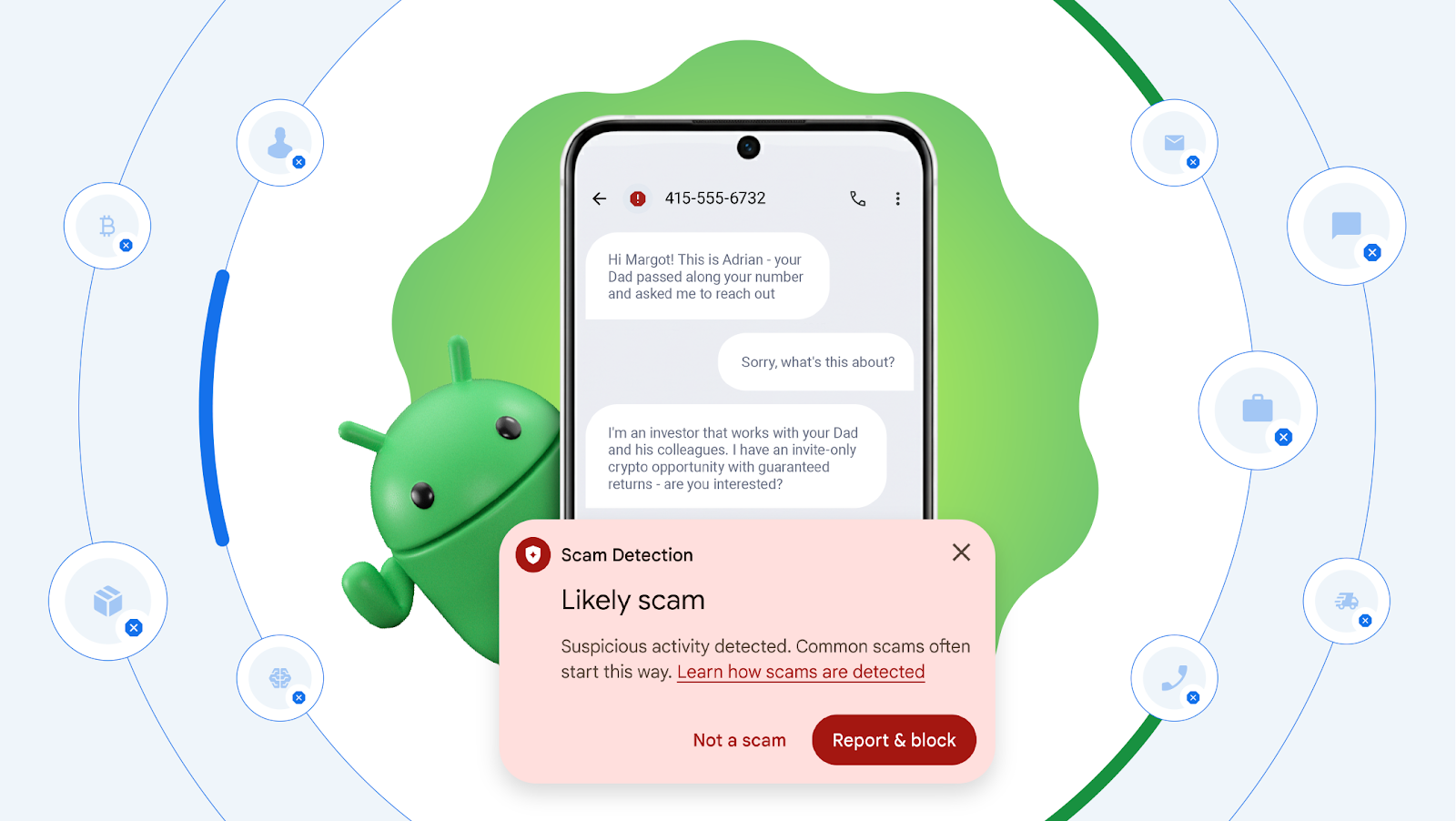
Even with that caution, the direction makes sense. Google first positioned Scam Detection as an AI-powered phone safety feature designed to warn users when a call appears to follow common scam patterns. If the system detects suspicious behaviour during a call, it can alert the user in real time.
Google has described the feature as part of its broader work to use AI against phone scams, with protections that are designed to run on-device for privacy. The official Google explanation focused on stopping fraud before a user is tricked into sending money, sharing account details or installing a malicious app.
That is why a wider Samsung rollout would be important. Samsung ships a huge number of Android phones globally, including in markets where scam calls, fake banking alerts, phishing links and impersonation fraud are everyday problems. AI features often sound distant until they stop someone from losing money.
The teardown reportedly points to support across the upcoming Galaxy S27 series, the Galaxy S25 line, Galaxy Z Fold 7, Galaxy Z Flip 7 and Galaxy Z TriFold. It also hints that Samsung may continue using both Qualcomm and Exynos chips in future flagships, though that part should also be treated as early code evidence rather than confirmed product information.
For Samsung, Scam Detection fits into the wider Galaxy AI story. The company has been adding more AI features across calls, translation, photos and productivity, and the recent Galaxy S26 FE launch showed how AI is no longer only for ultra-premium phones.
The security angle is the bigger story. Smartphone AI should not only help users edit photos, summarise notes or write messages. It should also help defend them from real-world digital threats. Scam calls are a perfect example because the attack happens in a moment of pressure, when a person may not have time to verify what is happening.
This also connects to a broader warning around AI-era cybercrime. As phishing and fraud become more convincing, devices will need built-in defences that work quietly in the background. That is the same reason recent conversations about AI-powered cyberattacks should matter to consumers, not only to companies.
The safest way to write this for now is simple: Google Scam Detection appears to be moving beyond its early Pixel and select Samsung base, but the exact device list and rollout timing are not official yet. If Samsung and Google do ship it widely, it could become one of the most practical AI features on Android.
Related Reading
More contextual TechBooky stories selected from tags, categories and article context.
Paul Balo is the founder of TechBooky and a highly skilled wireless communications professional with a strong background in cloud computing, offering extensive experience in designing, implementing, and managing wireless communication systems.
We use cookies to ensure that we give you the best experience on our website. If you continue to use this site we will assume that you are happy with it.