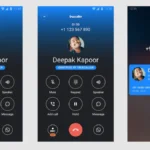
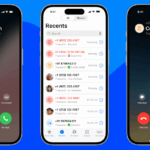
India has ordered caller-identification and call-management apps to share users’ spam reports with telecom operators, a regulatory change that could make networks better at stopping nuisance calls while weakening one of Truecaller’s most valuable competitive advantages.
The Telecom Regulatory Authority of India announced the changes on Friday as part of a wider effort to curb unsolicited commercial communication. Under the amended framework, apps that allow people to flag calls as spam or junk must send those reports to a blockchain-based platform maintained by telecom companies.
The regulator says a wider pool of complaints will help operators identify suspicious senders and act more quickly. Its official announcement also points to the growing use of artificial intelligence and machine learning by telecom companies to detect probable spam before customers report it.
Truecaller has called the arrangement anti-competitive because the flow of information largely moves in one direction. The company’s enormous database of community reports is central to its caller-identification business. Requiring it to send those reports into a system controlled by telecom operators could help the same operators improve their own network-level spam filters without providing comparable data in return.
That is more than a technical disagreement. Truecaller has hundreds of millions of users, with India representing its most important market. If mobile networks become good enough at identifying suspicious calls before they reach a device, some customers may feel less need to install or pay for a separate caller-ID application.
The new rules also retain restrictions preventing apps from automatically blocking or labelling calls from certain number ranges reserved for promotional, service and transactional communications. Users can still block individual numbers, but apps cannot apply a blanket spam label to those protected ranges. Truecaller argues that such exemptions can allow unwanted calls to pass through with less scrutiny.
For consumers, the immediate promise is straightforward. A complaint made inside a caller-ID app could become useful to the telecom operator that has the power to investigate or disconnect the offending line. Today, those two layers often operate separately. Connecting them could reduce the delay between a number being widely reported and meaningful action being taken.
The privacy and competition questions are less settled. Spam reports can reveal patterns about who is calling whom, when calls occur and how users classify businesses. Regulators will need clear limits on how that information is retained, combined and used beyond enforcement. India will also have to show that telecom operators cannot turn mandatory data sharing into an advantage for their own caller-identification products.
The dispute matters beyond India. Governments everywhere are trying to control fraud calls, AI-generated voice scams and aggressive telemarketing. TechBooky has followed how caller-ID and anti-spam services are becoming part of the security layer around mobile networks. India’s approach may become a model for other countries, but only if it can protect users without forcing independent apps to build databases that their largest competitors inherit.
Related Reading
More contextual TechBooky stories selected from tags, categories and article context.
Paul Balo is the founder of TechBooky and a highly skilled wireless communications professional with a strong background in cloud computing, offering extensive experience in designing, implementing, and managing wireless communication systems.
We use cookies to ensure that we give you the best experience on our website. If you continue to use this site we will assume that you are happy with it.