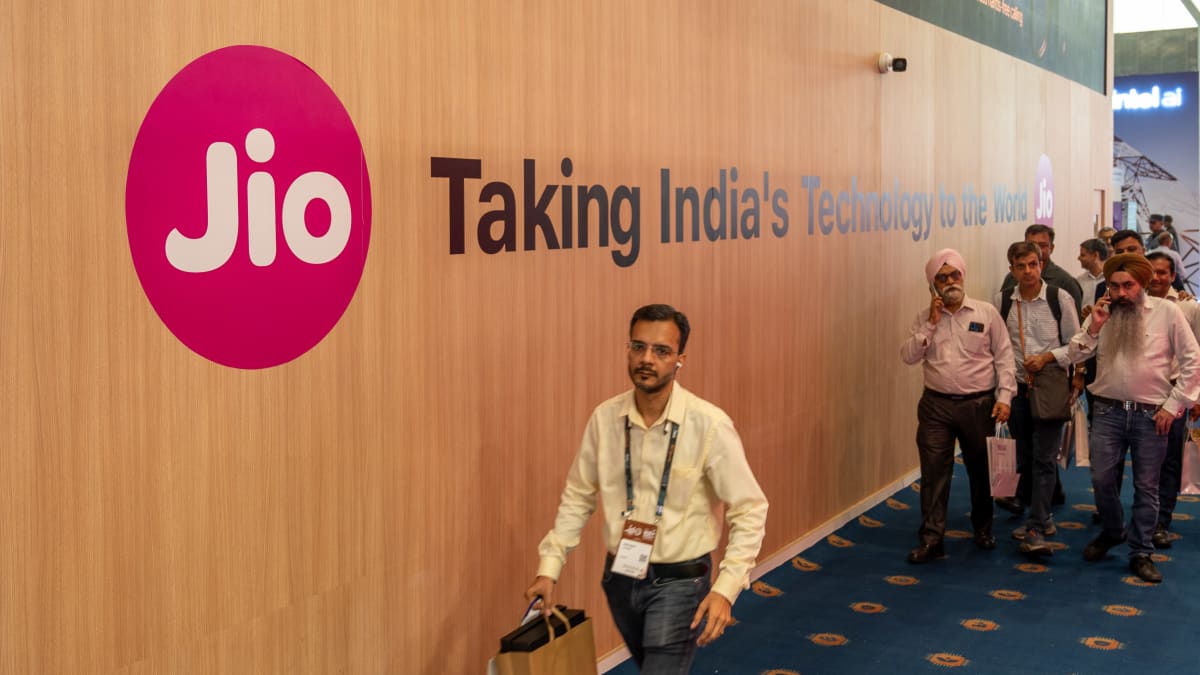
Jio Platforms is seeking to raise as much as $3.2 billion in an initial public offering that could become India’s largest. The digital business owned by Reliance Industries has set a price band of INR 1,065 to INR 1,119 a share for up to 270 million new shares, according to a stock exchange filing. Subscription is scheduled for October 21 to 23, with anchor investors due to bid on October 19.
At the top of that range, the proposed sale implies a valuation of about $108 billion. That figure is an indication based on the proposed share price, not a final market value. The amount raised will also depend on the eventual pricing and investor demand. The listing has not yet taken place.
The scale matters well beyond one share sale. Jio is one of India’s most important digital platforms, with more than 524 million mobile subscribers as of March 31. What began as a low-cost mobile network has expanded into broadband, cloud services and other digital businesses. Public investors will now have to decide how much of that wider ambition they are prepared to price in.
Jio plans to use up to INR 275 billion of the proceeds to repay debt at telecom subsidiary Reliance Jio Infocomm, with the rest available for general corporate purposes, according to its IPO prospectus. That makes debt reduction a central part of the offering rather than an incidental use of the cash.
The prospectus also gives investors a clearer view of the operating business. For the quarter ended in June, revenue rose nearly 12% from a year earlier to INR 391.7 billion, while net profit increased 9% to INR 77.6 billion. Those numbers show a profitable company with considerable reach, but they do not settle the harder question of how quickly newer digital businesses can grow alongside the mobile network.
Jio attracted major private investment from Meta and Google in 2020. An IPO would subject that story to daily public-market scrutiny. Investors will be watching subscriber spending, capital expenditure and the returns from broadband and cloud investment, as well as the final price paid for shares.
India has hosted large offerings before, but a Jio listing would put a rare combination of telecom scale and digital-platform expectations before public investors. A strong order book would indicate that appetite for major technology-linked listings remains deep. A cautious response would suggest that even a household name has to work hard to justify a premium valuation.
The distinction between an announced price band and a completed IPO is important. The company has set out the terms it wants; the market will decide where the deal lands when bidding opens. For now, Jio’s planned share sale is a closely watched test of how India values its largest digital businesses.
Related Reading
More contextual TechBooky stories selected from tags, categories and article context.
Paul Balo is the founder of TechBooky and a highly skilled wireless communications professional with a strong background in cloud computing, offering extensive experience in designing, implementing, and managing wireless communication systems.
We use cookies to ensure that we give you the best experience on our website. If you continue to use this site we will assume that you are happy with it.