OpenAI’s next big revenue experiment may not come from another expensive subscription tier. It may come from ads, and India now looks like one of the most important markets for that test.
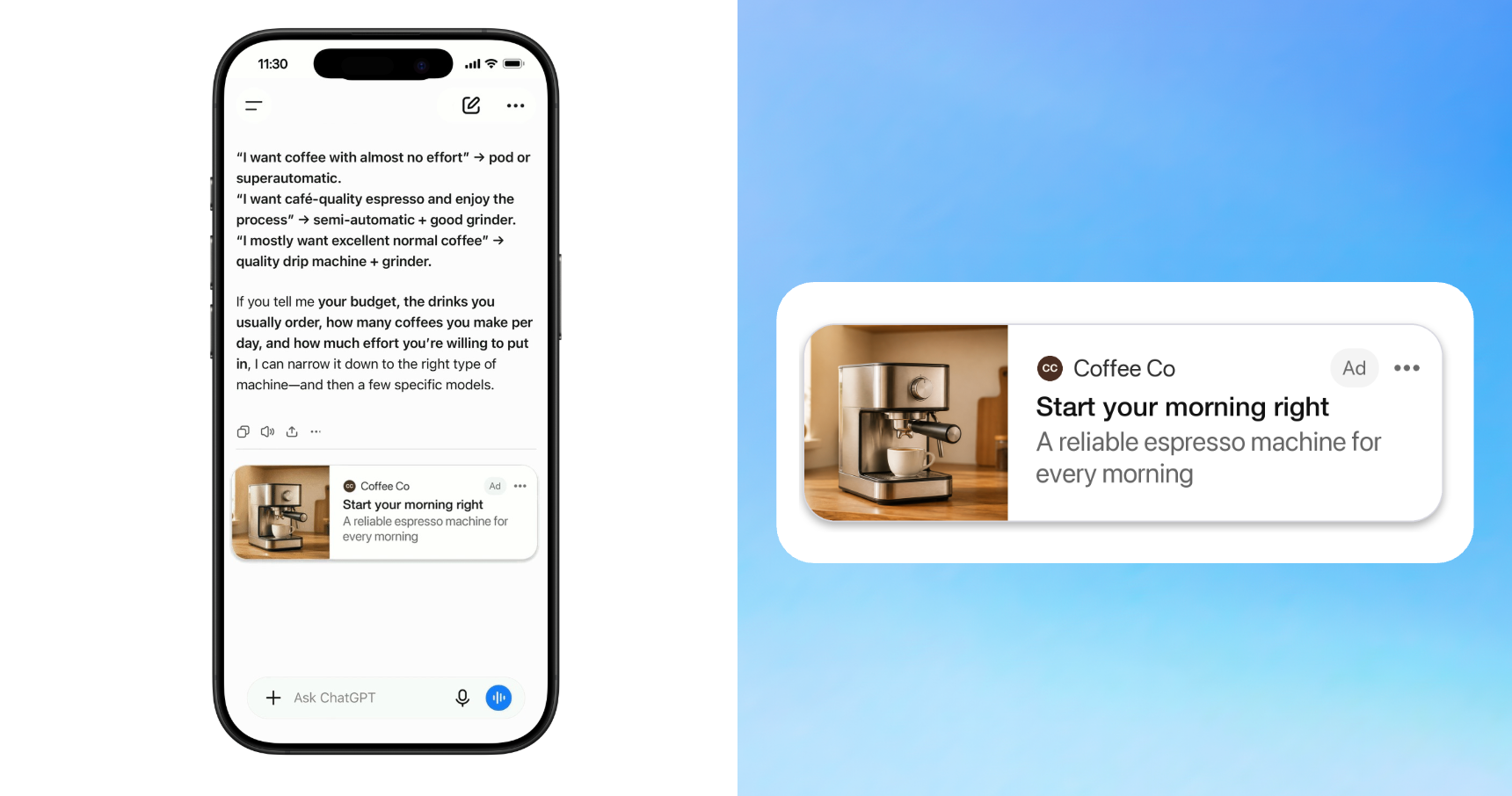
The company is reportedly bringing advertising to ChatGPT’s Free and Go tiers in India, starting with logged-in adult users and keeping Plus, Pro, Business, Enterprise and Education accounts outside the ad rollout. The reported India launch follows OpenAI’s earlier public explanation of how it wants advertising to work inside ChatGPT, where ads are expected to be clearly labelled and separated from the assistant’s main answers.
That distinction is important because ChatGPT is not a normal social app. People use it to ask personal, work, school, health-adjacent, financial and business questions. OpenAI’s official position is that ads should not influence answers and that conversations should not be sold to advertisers. The hard part is proving that over time, especially once brands begin paying for attention inside a tool that many users now treat almost like search.
India is a logical place to expand the model. It is one of OpenAI’s most active markets and also a price-sensitive one, which explains why the lower-cost ChatGPT Go tier has mattered there. Reports say the India rollout will begin with more than 50 brands and agency partners including WPP and Omnicom, while a self-serve ads manager is expected to follow for businesses that want to buy campaigns directly.
This is where the story becomes bigger than India. If advertising works inside ChatGPT without damaging trust, OpenAI gets a path to monetize hundreds of millions of users who may never pay $20 a month for Plus. If it fails, the company risks turning the cleanest consumer AI interface in the market into another ad-funded web product, with all the trust questions that come with that.
The search comparison is unavoidable. Google’s business was built on the idea that people reveal intent when they search. ChatGPT goes even deeper because users are often not just searching; they are asking for advice, comparisons, plans, recommendations and decisions. That makes ad placement potentially powerful, but it also makes the line between useful suggestion and paid influence much more sensitive.
OpenAI has already said ads should appear near relevant answers, not inside the organic response itself, and that users should be able to understand or dismiss them. That is a good starting position. But the real test will be whether users can still trust ChatGPT’s answers when a sponsored result appears underneath a response about a phone, bank account, course, insurance policy, travel plan or software tool.
For publishers and businesses, this also changes the AI traffic conversation. If ChatGPT becomes an ad platform, brands may begin shifting money from search and social into conversational AI. That could make OpenAI a direct competitor to Google and Meta in a way that goes beyond chatbots. It also raises the question of how publishers, including tech news sites, appear in AI answers when brands can pay to be visible around them.
The company needs the money. Training and serving frontier AI models is expensive, and the industry is already under pressure to show that the AI boom can generate revenue outside cloud contracts and enterprise subscriptions. We have seen the same economic pressure around AI infrastructure and compute, including Nvidia’s latest numbers and the data-centre buildout we have followed closely.
For users, the practical point is simple. Free AI may not stay truly free. It may become subsidized by advertising, just like search, social media and video did. The difference is that AI assistants sit much closer to decision-making. That makes OpenAI’s India test one of the more important consumer AI experiments of the year.
If OpenAI gets it right, ads could help fund wider access to powerful AI tools in emerging markets. If it gets it wrong, it could weaken the trust that made ChatGPT valuable in the first place. That is why this is not just an advertising story. It is a test of what kind of internet product ChatGPT is becoming.
Related Reading
More contextual TechBooky stories selected from tags, categories and article context.
Paul Balo is the founder of TechBooky and a highly skilled wireless communications professional with a strong background in cloud computing, offering extensive experience in designing, implementing, and managing wireless communication systems.
We use cookies to ensure that we give you the best experience on our website. If you continue to use this site we will assume that you are happy with it.