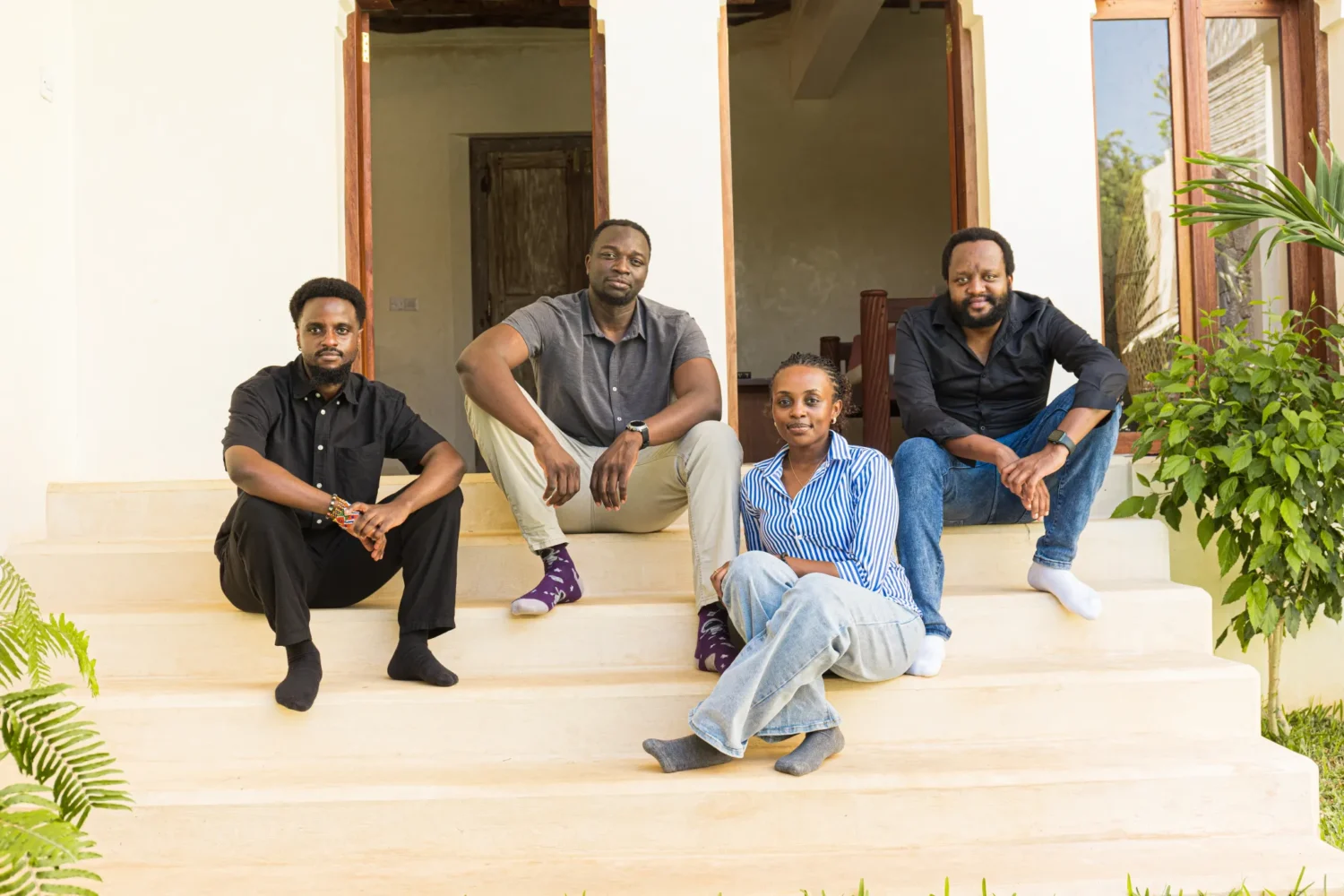
A satellite can collect an extraordinary amount of information, but getting that information back to Earth can be slow, expensive and limited by the available connection. Satlyt thinks more of the work should happen before the data is transmitted. The Kenyan-American startup has raised $8 million in seed funding to develop software that runs AI applications directly on spacecraft.
The round was led by non sibi ventures, with backing from TLCOM, Antler, Slauson & Co, Launch Africa Ventures, Enza Capital and other investors, according to the company’s funding announcement. Satlyt has a base in Sunnyvale, California, and an African headquarters in Nairobi. That makes the deal interesting beyond the size of the cheque: a Kenyan-led engineering team is trying to build part of the software layer for a fast-growing global space industry.
Most Earth-observation satellites capture images and send them to ground stations for processing. When bandwidth is scarce, that model can leave operators choosing which data to downlink and which to discard. Software that can identify a useful image or event in orbit could reduce that bottleneck. It could also make certain services, from environmental monitoring to disaster response, more timely. The practical value will depend on what satellite operators can run reliably on hardware already in space.
Satlyt says its platform is designed to deploy and manage applications on third-party spacecraft. It is not asking customers to buy a new satellite from Satlyt. The company has previously worked on an onboard deployment of Google’s Gemma AI model, a useful technical demonstration, but one that should not be mistaken for proof that its full commercial vision is already operating at scale.
The next planned test is more concrete. Satlyt says it intends to run two applications on one third-party spacecraft: a research effort connected to NASA Glenn Research Center and the University of Houston, and a commercial imagery application. The spacecraft is expected to fly on a future Transporter-18 mission. Launch, successful operation in orbit and a repeatable customer service are separate milestones; none should be treated as a completed result in advance.
Its longer-term ambition is to connect computing capacity across multiple satellites, effectively creating a distributed AI data centre in orbit. That is a striking pitch, though still an aspiration. Coordinating workloads across spacecraft, managing power and hardware limits, and proving the economics against conventional ground processing will all matter before it becomes a routine service.
For African technology, the noteworthy part is where some of this work is being built. Nairobi is not simply a sales office in Satlyt’s account; it is a home for engineering talent working on the underlying platform. That broadens the picture of the region’s space economy beyond connectivity and satellite imagery. Companies such as South Africa’s NewSpace Systems have already shown that African teams can supply specialised components to global constellations. Satlyt is betting that the software running on those systems can also come from the continent.
The new funding gives the startup room to test that proposition. Investors will eventually want more than an elegant demonstration: they will want evidence that onboard AI saves operators time or money, works across different spacecraft and can be sold repeatedly. If Satlyt delivers that, the $8 million round may prove to be an early sign that the next useful space infrastructure company can have a serious Nairobi footprint.
Related Reading
More contextual TechBooky stories selected from tags, categories and article context.
Paul Balo is the founder of TechBooky and a highly skilled wireless communications professional with a strong background in cloud computing, offering extensive experience in designing, implementing, and managing wireless communication systems.
We use cookies to ensure that we give you the best experience on our website. If you continue to use this site we will assume that you are happy with it.