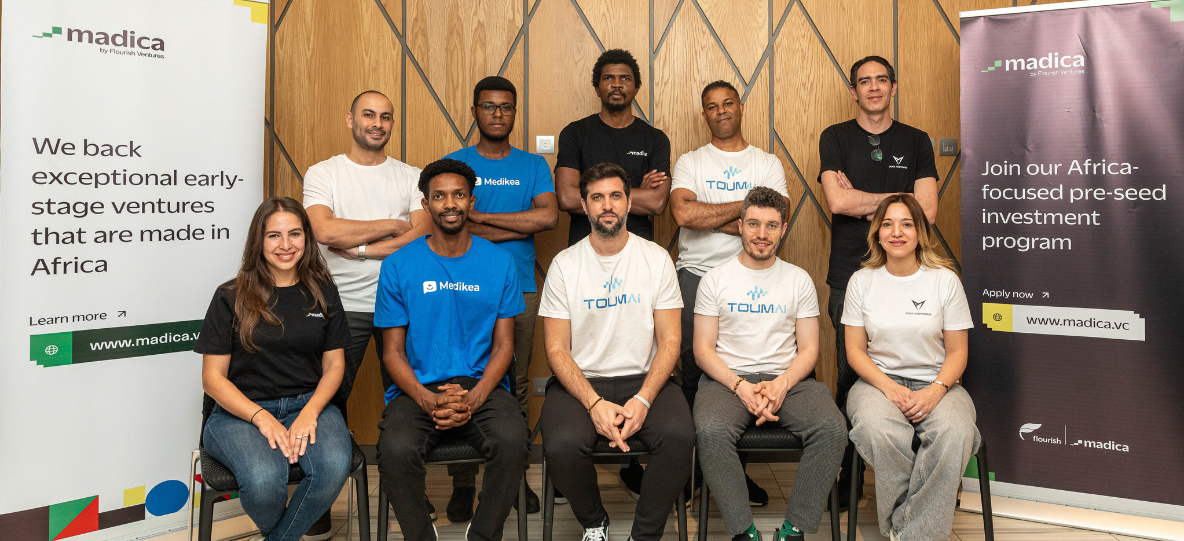
Madica, the Africa-focused pre-seed investment programme, has secured a further $6 million commitment from Flourish Ventures to extend its work for another three years. The money is intended to help it invest in and support 25 to 30 additional startups, particularly founders who often struggle to get in front of conventional venture investors.
The distinction in the announcement matters. This is not a $6 million funding round raised by one startup, nor is it a claim that the full amount has already been invested. It is an additional commitment to the Madica programme and its future portfolio. The news was announced on 27 October in a release distributed on behalf of Madica.
Madica’s proposition is that promising African companies are missed when venture capital keeps returning to the same cities, sectors and networks. A founder outside a familiar funding hub can face a harder search for early capital even with a working product. The programme combines investment with mentoring and other support, aiming to give those companies a better chance to reach customers and raise later rounds.
According to the announcement, Madica has backed 18 startups in 10 countries and across 12 sectors so far. More than half of its portfolio companies have at least one woman founder, while 39% have women chief executives. Those figures say something about the reach of the programme, although they do not by themselves establish how many of the companies will build lasting businesses or deliver returns.
The additional $6 million comes from Flourish Ventures, which helped establish Madica. It gives the programme room to continue writing early cheques rather than relying solely on the original allocation. The planned 25 to 30 new investments are a target over the extension, not a list of companies that have already been selected. Madica has not said that every company will receive the same amount.
At pre-seed stage, a relatively modest investment can pay for product work, customer testing and the time required to show evidence that a business has a market. It is also the riskiest point to invest. Founders may have a prototype and initial traction but little revenue history, while investors have fewer reliable signals to judge. That is why the support around the cheque can matter nearly as much as its size.
Madica’s published programme guidance describes an open application route for early-stage African ventures. It looks for founders working full time on a product with a minimum viable version and some evidence of customer demand, while giving particular attention to teams that have had limited access to institutional capital. The precise eligibility and terms should be checked on its site before applying.
Madica says companies in its portfolio have, on average, gone on to raise follow-on funding equal to twice its initial investment. That is an encouraging early indicator, but follow-on fundraising is not the same as profitability, durable growth or a successful exit. The harder measure will be how many businesses survive and expand after the next financing cycle, especially outside the continent’s most established startup markets.
TechBooky previously covered Madica’s investments in three startups and its pre-seed guide. This new commitment shifts the focus from individual additions to the programme’s capacity to keep backing founders over several years. For African entrepreneurs, the immediate opportunity is another potential source of early capital. For the wider market, the real test is whether a more geographically and demographically varied pipeline can turn that access into companies with staying power.
Related Reading
More contextual TechBooky stories selected from tags, categories and article context.
Paul Femi Balo is the founder and publisher of TechBooky. He covers artificial intelligence, African technology, digital infrastructure, enterprise technology and the global digital economy.
We use cookies to ensure that we give you the best experience on our website. If you continue to use this site we will assume that you are happy with it.