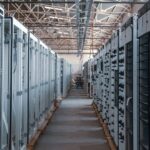
Vodacom wants partners to help build AI-focused data centres across Africa, extending a strategy that already includes a planned facility in Egypt. Chief executive Shameel Joosub said the group is seeking investors and technology partners to share the cost and expertise required for such projects, with South Africa and Kenya among the markets it may consider.
The comments, reported by Bloomberg via Moneyweb on 10 November, point to a wider African computing ambition. They do not amount to announcements of funded, approved data centres in South Africa or Kenya. Vodacom has not named new partners for those markets, given a construction timetable or said how much capital it intends to commit.
The concrete project so far is in Egypt. In September, Vodacom said Vodafone Business, Cassava Technologies and Elsewedy Electric would establish Africa Data Centres Egypt. The partners described an initial target of 20 megawatts of operational capacity within three years and a path to as much as 200 megawatts. They estimated around $200 million of foreign investment for the first phase and $1 billion if the site ultimately reaches full capacity. These are project targets, not money already invested or capacity already operating.
Vodafone Business and Cassava also announced a separate sovereign AI infrastructure effort in Egypt, using Nvidia computing technology through Cassava. That arrangement aims to let organisations run advanced AI workloads locally. TechBooky has previously examined the Egypt AI factory plans and the difference between announced projects and working capacity available to customers.
Joosub’s latest remarks suggest Vodacom is exploring how to repeat or adapt that partnership model elsewhere. A telecommunications group brings fibre networks, enterprise customers and local market relationships. A specialist data-centre partner can contribute buildings, power and operations, while technology suppliers provide chips and software. Splitting the work may make an expensive AI facility easier to finance than asking one company to carry the entire bill.
Demand for African AI computing is a plausible opportunity. Banks, healthcare providers, public bodies and local startups may want lower latency, clearer data-location arrangements and support closer to where their users are. Yet an AI data centre needs much more than a room full of servers. Reliable electricity, cooling, high-capacity networks, skilled operators and paying customers are all essential. Imported hardware and energy costs can make local compute expensive even where data sovereignty is attractive.
The Egypt plan also shows why headline capacity figures need careful reading. A site designed to expand to 200 megawatts is not operating at that scale today. Each phase must be financed, built, connected to power and filled with demand. The same test would apply to any future South African or Kenyan development. Without a disclosed site, partner agreement and investment decision, those markets remain possibilities rather than confirmed projects.
For Vodacom, a move into AI infrastructure could deepen its relationship with enterprise customers beyond connectivity. It may also put the group in closer competition with cloud and data-centre specialists. The strategic question is whether it can turn existing network reach into an advantage in selling dependable computing services, not simply announce another construction pipeline.
The next useful details will be the identity of any new partners, the locations they choose, the committed funding and when customers can actually use the facilities. Until then, the news is that Vodacom is looking for a broader African AI data-centre alliance, with Egypt providing the first concrete reference point.
Related Reading
More contextual TechBooky stories selected from tags, categories and article context.
We use cookies to ensure that we give you the best experience on our website. If you continue to use this site we will assume that you are happy with it.