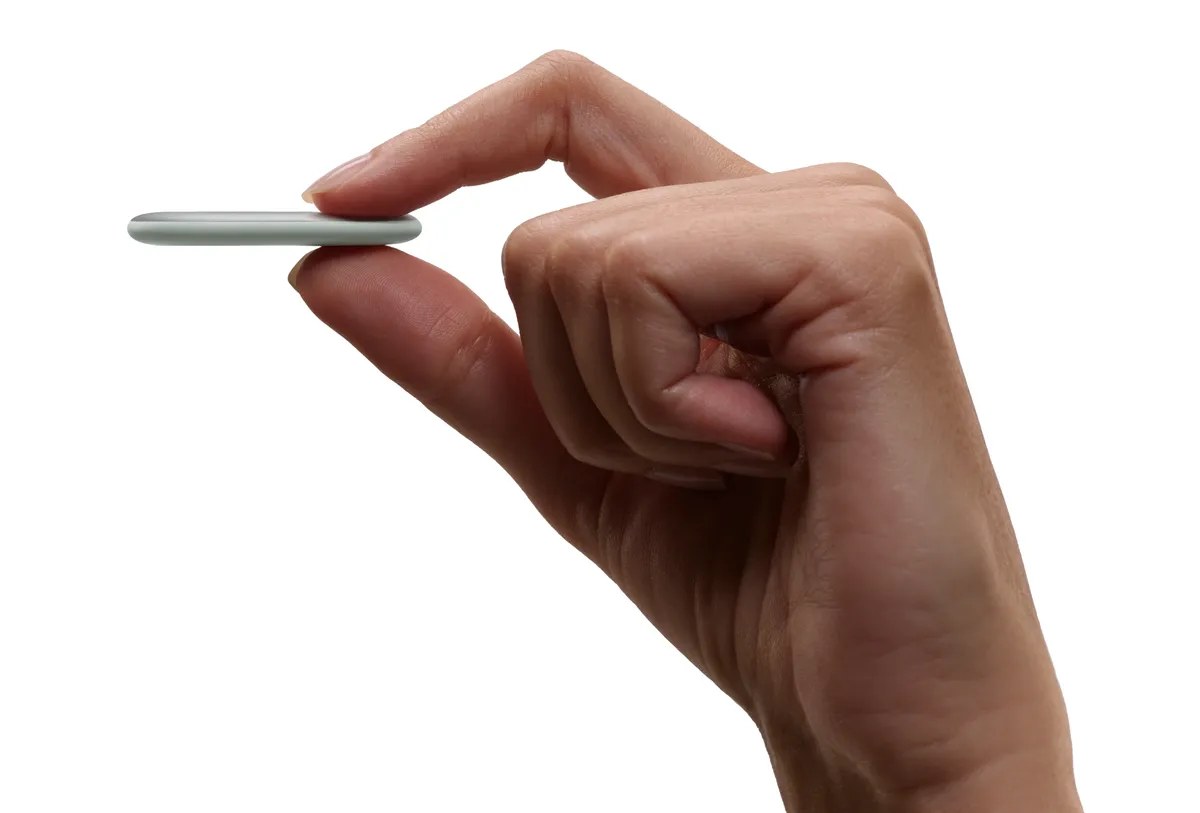
Google has finally launched Pixel Tag, giving Android users a first-party item tracker to compete more directly with Apple’s AirTag.
In its official Pixel Tag announcement, Google says the tracker is built to help users keep track of everyday items such as keys, bags and luggage through the Find Hub network.
The product is simple on the surface. Attach it to an item and use an Android phone to help find it. But the strategic value is bigger because trackers are ecosystem products. They become useful when enough devices can help locate them, and that is why Apple has had such a strong position with AirTag and the Find My network.
Google has been building its own answer through Android’s broader device network. Pixel Tag gives that network a Google-branded anchor. It also gives Pixel buyers another reason to stay inside the ecosystem alongside Pixel phones, Pixel Watch, Pixel Buds and Gemini services.
Google says Pixel Tag uses ultra-wideband support for precise finding with compatible Pixel phones, Bluetooth for nearby tracking and the Find Hub network when an item is farther away. It also includes a built-in speaker to make misplaced items easier to locate nearby.
The device is designed with privacy and unwanted-tracking alerts in mind, which is essential for this category. Item trackers have created real stalking and abuse concerns, and both Apple and Google have had to improve unwanted-tracking protections. A Google tracker needs those safeguards from day one because Android covers a massive range of devices and markets.
Pixel Tag also has a replaceable battery, IP67 dust and water resistance, and a customizable design with accessories for attaching it to everyday items. Google is clearly trying to make it feel like a practical add-on rather than a niche gadget.
The launch shows how Made by Google is becoming more than a phone event. The Pixel 11 line is still the centrepiece, but the surrounding products are what make the ecosystem feel complete. Watch handles health, Buds handle audio, Tag handles lost items, and Gemini is supposed to provide the intelligence layer across the whole thing.
Pixel Tag is not the flashiest announcement from the event, but it may be one of the most practical. If it works well, Android users finally get a clean Google-made tracker option. If it does not, the comparison with AirTag will be immediate and unforgiving.
Related Reading
More contextual TechBooky stories selected from tags, categories and article context.
Paul Balo is the founder of TechBooky and a highly skilled wireless communications professional with a strong background in cloud computing, offering extensive experience in designing, implementing, and managing wireless communication systems.
We use cookies to ensure that we give you the best experience on our website. If you continue to use this site we will assume that you are happy with it.