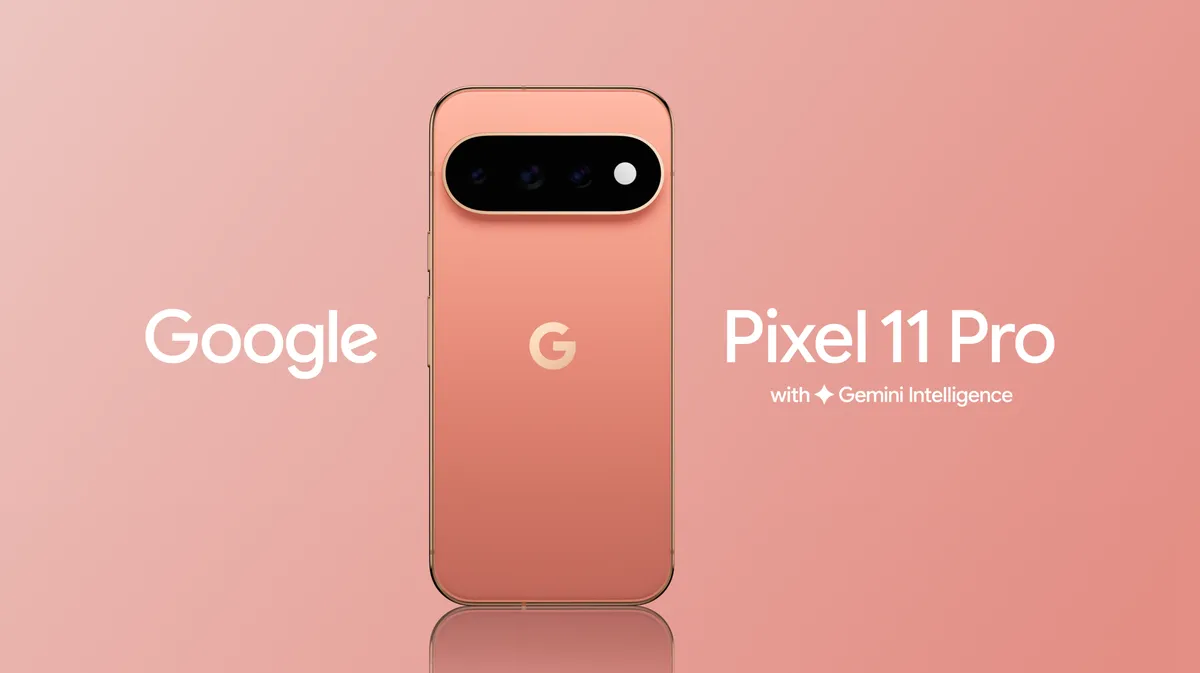
Google’s Made by Google 2026 event takes place today, August 12, and the official Pixel 11 pre-order page makes the hardware focus clear. But the more interesting story is not only the next Pixel phone. It is whether Gemini can become a real hardware habit.
The Google Store says Pixel 11 pre-orders begin on August 12 and invites users to tune in live for the Made by Google event. The launch is expected to include the Pixel 11 series, Pixel 11 Pro Fold, Pixel Watch 5 and new AI features tied to Android and Gemini.
That makes this event different from older Pixel launches. Google is not just trying to sell better cameras, brighter screens or another Tensor chip. It is trying to show that its AI assistant can live naturally across phone, watch, search, photos, messages and daily tasks.
A billion monthly users gives Google reach, but hardware gives it repetition. A phone is not just another app surface. It is the device people check constantly, use to take photos, send messages, search, pay, navigate, record and manage work. If Gemini becomes useful at that level, Google can make AI feel less like a destination and more like the operating layer of Android life.
That is why the rumoured and expected AI features matter more than the usual spec race. Pixel phones have rarely beaten Samsung or Apple purely on hardware scale. Their strongest argument has been Google’s software and machine-learning advantage. In the Gemini era, that argument becomes even more direct: buy Pixel because Google’s AI works better here.
The event also comes as Apple is under pressure to make Apple Intelligence more convincing and as OpenAI pushes deeper into devices and agents. We have already looked at Apple’s reported glass-centric iPhone redesign plan and OpenAI’s hardware ambitions. Google has a different advantage. It already owns Android and a huge consumer services layer.
The challenge is trust and usefulness. Users will not care that Gemini has 1 billion monthly users if the assistant feels intrusive, inaccurate or only occasionally helpful. On-device AI has to be fast, private where needed, and genuinely better than opening another app. It also has to work across languages and markets, not only for U.S. launch demos.
For Africa and other emerging markets, the Pixel event is also worth watching because Google’s AI features often shape Android expectations even beyond Pixel sales. If Gemini becomes deeply integrated into Android workflows, app developers, device makers and telecom partners will all have to think about how AI changes mobile behaviour.
The safest way to read today’s event is this: Pixel 11 is the product, but Gemini is the strategy. Google has the distribution, the model family and the operating system. Made by Google 2026 will show whether it can turn those advantages into a device experience people actually want to use every day.
Related Reading
More contextual TechBooky stories selected from tags, categories and article context.
Paul Balo is the founder of TechBooky and a highly skilled wireless communications professional with a strong background in cloud computing, offering extensive experience in designing, implementing, and managing wireless communication systems.
We use cookies to ensure that we give you the best experience on our website. If you continue to use this site we will assume that you are happy with it.