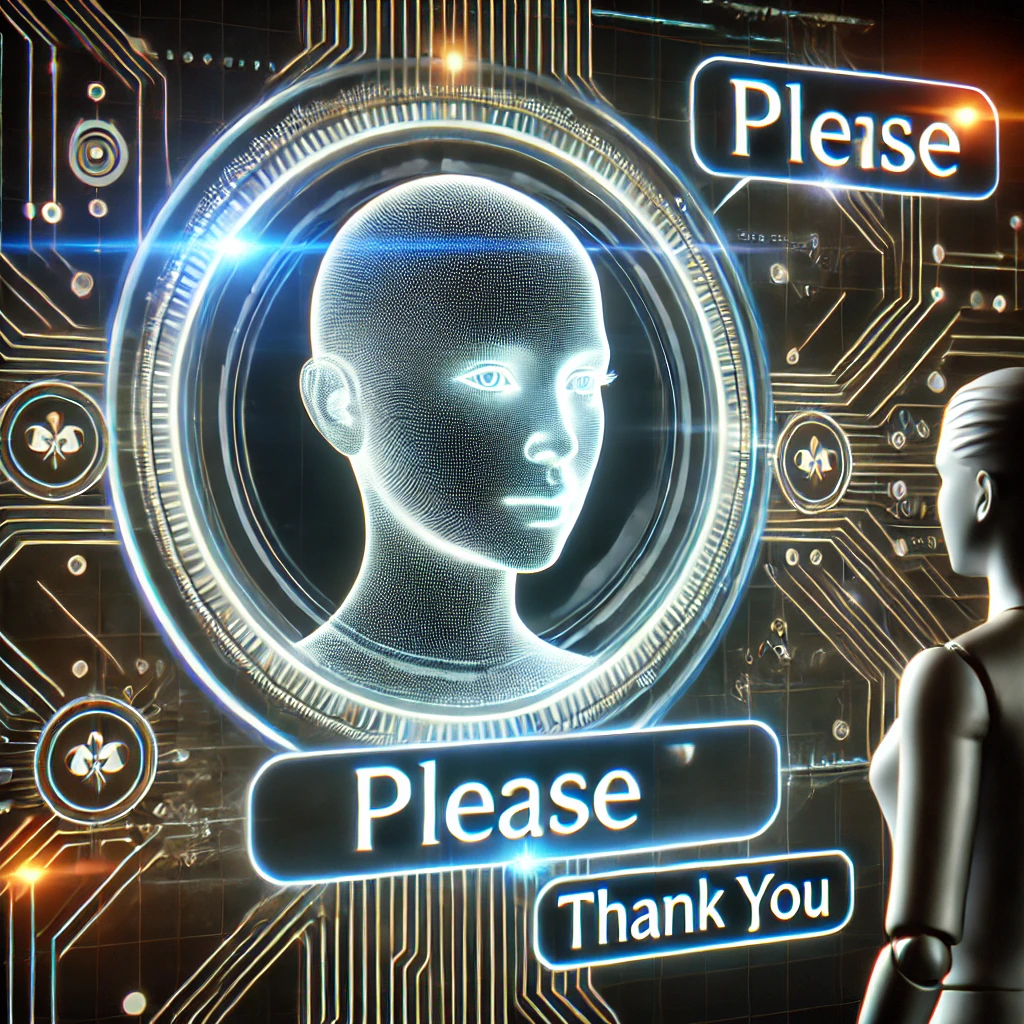
A writer from TechRadar recently shared an intriguing experiment about interacting with ChatGPT. The writer, like many of us, instinctively typed “Thank you, ChatGPT!” upon their first interaction. But after noticing some debates about whether AI should be treated politely or with direct commands, they decided to conduct a little test. They tried stripping their prompts down to blunt, emotionless instructions—no pleasantries, just commands. What they found was fascinating: not only did the responses feel less helpful, but the whole experience felt off.
This led the writer to ask a critical question: does politeness impact AI’s responses? Or is it simply a matter of perception? In this article, we’ll explore the results of the TechRadar writer’s experiment and delve into why politeness in AI interactions matters more than we might think.
Why Do We Use Politeness with AI?
It turns out that politeness in AI interactions is not uncommon. A recent study from Future (the owner of TechRadar) found that a significant number of people—71% of UK respondents and 67% of US respondents—tend to be polite when interacting with AI systems.
Being polite is deeply embedded in human behaviour, so when interacting with AI like ChatGPT, it’s natural to treat it with respect. As chatbots become more advanced and human-like, many of us instinctively start seeing them as more than just tools. This tendency to anthropomorphize technology is known as “anthropomorphism.”
But what does politeness in AI interactions really mean? Could it not just be a habit, but also a reflection of how we want to shape our communication with technology—and even how it might affect AI’s behaviour?
Interestingly, some users believe that politeness might even influence how AI “remembers” them, especially as it becomes more advanced. A portion of respondents in Future’s study (12% in the US) mentioned they are polite to AI because they believe it could impact how AI develops its understanding, especially as it evolves toward a level of sentience in the future.
How Politeness Influences AI’s Responses
On a technical level, AI models like ChatGPT are designed to process content, not tone. “Being polite doesn’t generally affect the accuracy of AI responses,” says Maitreyi Chatterjee, a software engineer at LinkedIn. However, the key insight from the TechRadar writer’s experiment was that AI tends to mirror the user’s communication style. So, when you ask a question politely, the AI may respond in kind, making the interaction feel more helpful and human-like.
Devansh Agarwal, a machine learning engineer at AWS, agrees with this observation but adds that it’s also about the AI model’s specific design. For instance, customer service chatbots often adjust their tone based on the user’s demeanour. If a user is polite, the bot may offer more detailed responses, whereas if the user is aggressive, the bot might stick to neutral and concise replies.
This mirroring effect plays a significant role in shaping how users perceive AI’s reliability. “Tone influences trust, even when accuracy doesn’t change,” says Chatterjee. Polite phrasing doesn’t make AI more intelligent, but it can certainly make it feel more approachable and helpful.
Context Matters: How Politeness Improves AI Responses
Politeness doesn’t just shape tone; it can also improve the quality of AI responses by providing more context. According to Scott Valdez, CEO of VIDA Select, polite prompts often include more detail, which allows AI to provide richer, more tailored answers.
For example, he compares two prompts:
“Give me dating advice!” – This is a vague command that’s likely to get a generic response.
“Could you help me understand how to build dating confidence?” – This polite phrasing adds layers of context, which results in a more focused, thoughtful answer.
The second prompt works better because it provides more context, which allows the AI to focus on a specific area (dating confidence) rather than a broad topic (dating advice). This creates a feedback loop where thoughtful, polite requests lead to more tailored, useful responses.
On the flip side, blunt prompts tend to degrade the quality of responses. If you give ChatGPT a vague command, it might return a generic answer, leading to frustration and an overall decline in the quality of interactions.
Research on Politeness and AI Performance
Several studies have investigated the role of politeness in AI responses. In a 2024 study, researchers found that polite prompts generated higher-quality outputs from large language models (LLMs) like ChatGPT. In contrast, impolite or aggressive prompts often led to lower-quality responses and, in some cases, more bias in AI-generated content.
However, researchers also discovered that extreme politeness isn’t necessarily better. “Moderate politeness” was found to produce the best results, suggesting that AI, like humans, responds best to balanced, clear communication.
Additionally, the study highlighted that cultural differences play a role in AI interactions. Since LLMs are trained on data from various languages and regions, they might reflect the politeness norms of the regions where they were trained, impacting how they interpret and respond to prompts.
How to Get the Best AI Responses
To get the most out of your interactions with AI, consider these tips:
Use balanced politeness: Research suggests that moderate, polite phrasing yields the best results.
Focus on clarity and context: AI doesn’t require rigid politeness, but providing clear, well-structured prompts will improve response quality.
Use politeness to reduce bias: Early studies suggest that impolite prompts may introduce bias, while neutral, polite prompts produce more reliable answers.
Be mindful of cultural differences: Keep in mind that politeness norms may vary across AI models, depending on their training data.
Does Politeness Really Matter in AI?
The question of whether we should be polite to AI is still up for debate. While some people argue for a more direct approach, research indicates that polite, well-structured prompts tend to lead to better, more reliable, and nuanced responses. This is especially important when it comes to minimizing bias in AI-generated content.
As AI continues to evolve, it’s possible that models will be trained to respond differently based on the level of politeness from the user. But for now, it’s clear that how we interact with AI can shape the quality of our interactions—and may even reflect broader patterns in our communication with technology.
Related Reading
More contextual TechBooky stories selected from tags, categories and article context.
Paul Femi Balo is the founder and publisher of TechBooky. He covers artificial intelligence, African technology, digital infrastructure, enterprise technology and the global digital economy.
We use cookies to ensure that we give you the best experience on our website. If you continue to use this site we will assume that you are happy with it.