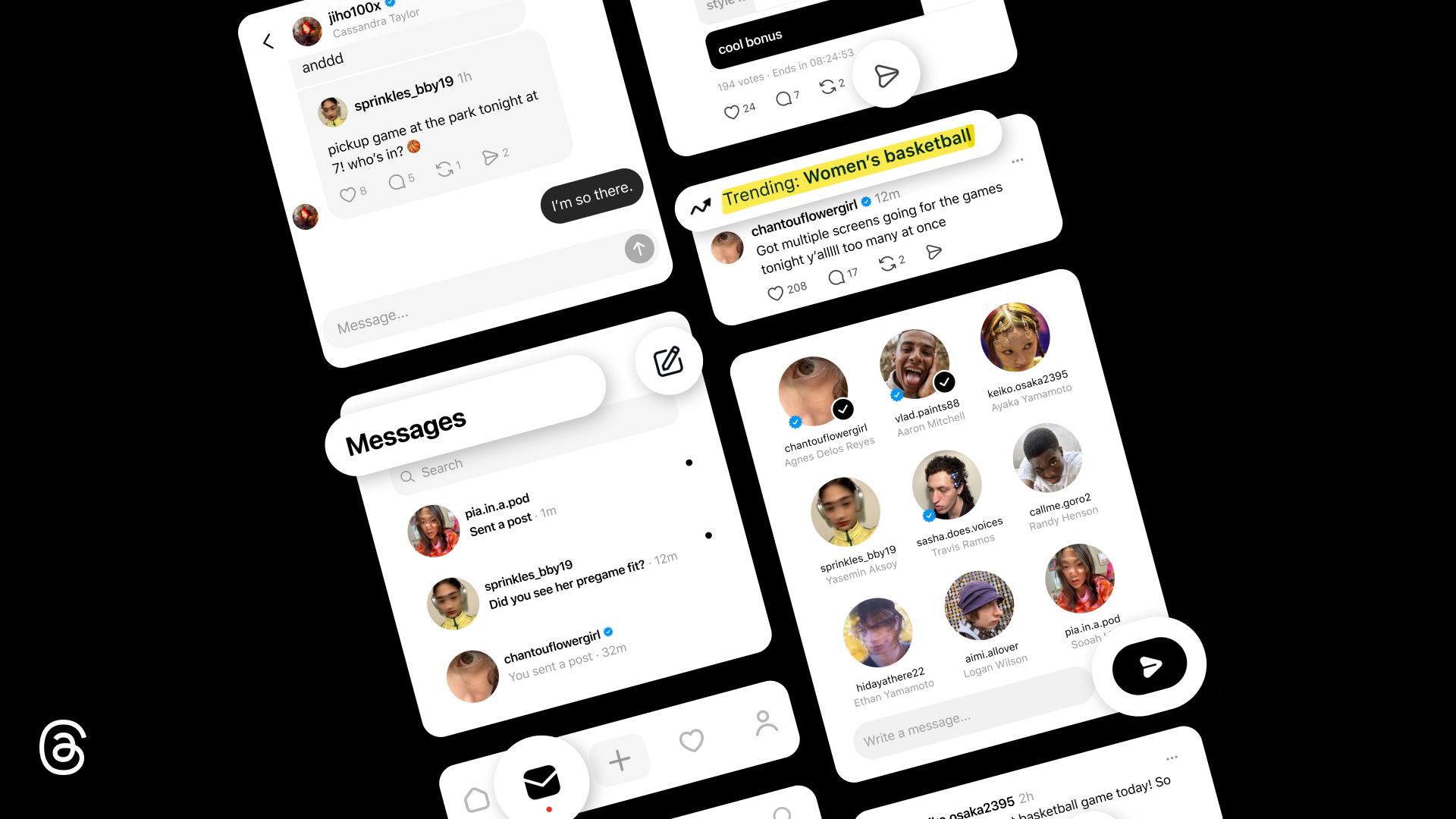
Meta is pushing its AI assistant deeper into Threads by letting all users send direct messages to Meta AI. It is a small product update, but it says a lot about Meta’s strategy. The company is no longer treating Meta AI as a separate assistant people must deliberately open. It is putting the assistant inside the same messaging surfaces where users already spend time.
Engadget reported that Threads users can now DM Meta AI directly, expanding access after the assistant had already been made available through Facebook, Instagram and WhatsApp. The feature gives Threads users another way to ask questions, generate ideas, get recommendations or use AI without leaving the app.
This fits Meta’s broader move to make AI part of its social layer. The company has been adding assistant features across its apps, from search and chat to image generation and productivity functions. A recent Meta announcement framed the assistant as something that can act on behalf of users, including planning, creating slides and connecting to email and calendar apps. Threads DMs are a lighter use case, but the direction is the same.
The strategic point is distribution. OpenAI has ChatGPT. Google has Gemini. Anthropic has Claude. Meta has billions of users already inside Facebook, Instagram, WhatsApp and Threads. If Meta can make its assistant feel like a normal part of messaging, feed discovery and content creation, it does not need users to form a new habit around a standalone AI app. It can insert AI into existing habits.
Threads is especially interesting because the platform is still trying to define itself against X. It has already been adding features around customisation, ephemeral posts, analytics and recommendation control. We earlier reported that Threads turning Dear Algo complaints into a feature showed how Meta is experimenting with more conversational ways for users to shape what they see. Meta AI inside DMs gives the platform another conversational interface, this time aimed at search, creation and assistance.
There is a risk. Adding AI everywhere can make a platform feel cluttered if users do not see clear value. Meta also has to deal with trust concerns around AI answers, data usage and whether conversations with the assistant feed into advertising or product personalisation. TechBooky’s earlier look at Meta AI and personalised ads showed why users will keep asking what happens to their AI interactions.
Still, the direction is commercially logical. Meta makes money when users spend more time inside its apps, discover more content and interact more often. An AI assistant that helps users find things, write posts, plan ideas or continue conversations can support that goal. Threads does not need Meta AI to be perfect immediately. It needs the assistant to become familiar enough that users stop thinking of it as a separate feature.
The update is therefore less about Threads alone and more about Meta’s AI distribution machine. By placing Meta AI in another inbox, the company is making a simple bet: the winning consumer AI assistant may not be the one with the cleanest standalone app, but the one that shows up where people already talk.
Related Reading
More contextual TechBooky stories selected from tags, categories and article context.
Paul Femi Balo is the founder and publisher of TechBooky. He covers artificial intelligence, African technology, digital infrastructure, enterprise technology and the global digital economy.
We use cookies to ensure that we give you the best experience on our website. If you continue to use this site we will assume that you are happy with it.